When an inspector asks for a child’s file, a staff clearance, or last month’s drill log, a dependable system turns a stressful scramble into a confident handoff. ChildCareEd’s CDA: Essential Tools for Record Keeping  Buy Now $16.00 offers practical strategies for documenting information and communicating it appropriately; explore the course if you want to strengthen your recordkeeping practice while building skills useful in daily work.
Why do licensing records matter beyond inspection day?
Records help demonstrate that the center follows applicable requirements and that important decisions are grounded in current information. A complete attendance record helps account for children; a current emergency contact sheet helps staff respond quickly; and an accurate medication log supports safe, consistent care. Documentation also creates continuity when staff are absent or responsibilities change.
Good records are not paperwork for its own sake. They help providers coordinate with families, identify patterns, and show what happened and what the program did in response. This can support thoughtful follow-up after an injury, illness, or safety concern. As ChildCareEd’s recordkeeping and documentation tips emphasize, timely, objective notes can keep important details clear for everyone who needs them.
Licensing agencies conduct onsite monitoring and document inspection results, including violations and corrective actions. Families may also be able to review these reports online, as explained by Childcare.gov’s overview of monitoring and inspections. A consistent documentation routine therefore supports safety, accountability, and family trust.
Which records belong in each child’s file?
Use an individual, consistently arranged file for each enrolled child. The exact forms depend on the state and program type, but licensing rules commonly call for records that help staff identify the child, contact guardians, understand health needs, and follow family permissions. Confirm the precise checklist in your current licensing regulations.
- Enrollment application and basic identifying information.
- Parent or guardian contact details and emergency contacts.
- Authorized pickup list and any applicable custody or release documentation.
- Health history, immunization documentation, allergies, dietary needs, and relevant care plans.
- Emergency medical consent and signed permissions required by your program or state.
- Medication authorization forms and administration records, when applicable.
- Incident or injury reports and documentation of family notification, when required.
- Signed acknowledgments of family policies or agreements, if required by your rules.
Make updates promptly when a family reports a new phone number, allergy, medication, or pickup arrangement. A file that was complete at enrollment can become unreliable if changes are not recorded. Keep sensitive information accessible only to staff who need it for their roles, and avoid leaving private documents visible in shared spaces. These #child records should support care without compromising family privacy.
What staff and program records should directors maintain?
Staff files help show that employees and other covered individuals meet applicable screening, qualification, and training requirements. Depending on state rules and the person’s role, a file may include an application, education or credential documentation, background-check results, orientation records, required health documentation, and training certificates. Track renewal and expiration dates rather than assuming a document stays current indefinitely.
Federal child care background-screening requirements apply to covered staff in licensed programs, and Childcare.gov’s staff background-check guidance describes key checks and renewal timing. Keep proof of required clearances and follow your licensing agency’s rules about when a person may have access to children. The specific documents and process can differ by state.
Maintain a separate, organized program file for records such as the current license, inspection reports, licensing correspondence, approved plans, written policies, and required postings or copies. Operational logs may include:
- Daily attendance and arrival/departure records.
- Medication logs and incident documentation.
- Fire, evacuation, lockdown, or shelter-in-place drill records, as applicable.
- Required facility, playground, sanitation, or maintenance checklists.
- Menus or food-program documentation when applicable.
- Staff schedules or other records used to demonstrate required coverage and ratios.
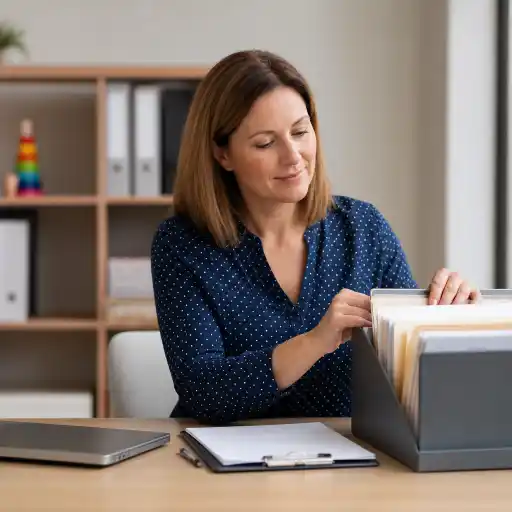
For example, North Carolina’s rule lists children’s and staff files, attendance, medication records, and drill logs among documents available for review.
How should centers handle daily logs, incidents, and medications?
Daily records are most useful when completed close to the event, not reconstructed from memory later. Establish simple procedures so staff know who records attendance, which information belongs in an incident report, where logs are kept, and who reviews them. A short end-of-day check can catch blanks while details are still available.
For an injury or unusual event, follow your state’s reporting rules and center policy. Record objective facts: date and time, what was observed or reported, the response, follow-up steps, and when the family or other required contact was notified. Avoid labels or speculation. Keep reports factual, respectful, and limited to people with a legitimate need to know.
Medication documentation should connect written authorization with each dose administered. Depending on the applicable rule, records may need the child’s name, medication, dose, time, route, staff member, and any observed reaction. Keep medication records and storage procedures aligned, and make sure staff know how to locate the current form. For more focused learning, ChildCareEd offers Administration of Medicine Buy Now $16.00, which addresses medication practices and parental consent considerations.
Use a #safety routine that fits the center: complete entries promptly, check that required fields are present, and escalate missing authorizations or unclear instructions before giving medication. The purpose is not merely a tidy log; it is reliable information that helps protect children and guide follow-up.
How long should records be retained and how can they be protected?
There is no single retention period that applies to every child care record nationwide. State licensing codes set many requirements, and different record types may have separate timelines. Programs that receive child care subsidies may also have obligations under their funding agreements.
Build a retention schedule from current, authoritative sources rather than relying on a general internet summary. Include the record category, the applicable rule or funding requirement, the date the retention period begins, and the planned review or destruction date. Some records may have extended retention rules, so confirm the details before discarding anything. State requirements vary - check your state licensing agency.
Whether records are paper or electronic, protect confidentiality. Store paper files in locked locations, limit digital access by role, use strong account protections, and avoid sending sensitive information through unsecured channels. Establish a secure process for approved disposal and backup of digital files. Your system should let authorized staff retrieve needed information without exposing private family or personnel details. Regular #privacy checks help keep convenience and confidentiality in balance.
What practical system keeps records ready without overwhelming staff?
A reliable system is one staff can use on a busy day. Keep the structure simple and consistent across classrooms, and assign clear responsibility for completing, reviewing, and filing records. A practical approach is to maintain three coordinated locations: an individual file for each child, a staff personnel file for each employee, and a central program file for licenses, policies, and operational logs.
- Use the same labels and document order in every file.
- Designate who completes each log and when a supervisor checks it.
- Use a dated “to file” location, then clear it on a daily schedule.
- Set reminders for renewals, annual reviews, and retention dates.
- Audit a small sample of child and staff files weekly; review the full system periodically.
- Prepare an inspection index showing where common records are stored.
📁 Quick practice: At a team meeting, ask staff to locate a sample attendance record, emergency contact, and drill log. If everyone can find them quickly and understands who updates them, your process is becoming dependable.
For additional practice with protecting sensitive documentation, consider ChildCareEd’s Privacy Matters: Documentation and Observation in Early Learning Buy Now $55.00. The course focuses on confidentiality and responsible documentation, making it a relevant next step for providers refining their records system.
Conclusion: What records should a center keep for licensing?
A child care center should organize child files, staff files, licensing and program documents, and ongoing operational records such as attendance, medication, incident, and drill logs. The exact list, required forms, retention periods, and access rules depend on your jurisdiction, license type, and funding arrangements. Use your state’s current regulations and licensing agency guidance as the final authority.
Strong recordkeeping is a steady practice, not a last-minute inspection project. Keep information accurate, complete it close to the event, protect confidentiality, and review files on a routine schedule. These habits help answer the central question—what records should a child care center keep for licensing?—while supporting safer care, smoother communication, and a more prepared team.
Explore five relevant ChildCareEd courses:
- CDA: Essential Tools for Record Keeping Buy Now $16.00 — practical documentation and communication skills.
- Privacy Matters: Documentation and Observation in Early Learning Buy Now $55.00 — confidentiality and appropriate documentation.
- Administration of Medicine Buy Now $16.00 — medication practices and parental consent considerations.
- Balancing Act: Record Keeping & Supervision Buy Now $16.00 — managing documentation alongside staff support.
- CDA Subject Area 5 Buy Now $80.00 — program operations, records, and compliance practices.
- 45 Hour Child Growth and Development
- CDA Family Child Care Credential
- CDA Family Child Care Credential with Portfolio Review
- Pediatric RSV First Aid & CPR/AED
- CDA Bridge Bundle: Family Child Care
- 24 Hour Texas Pre-Service
- CDA Bridge Bundle: Family Child Care without Portfolio Review
- CDA Bridge Bundle: Infant/Toddler without Portfolio Review
- CDA Bridge Bundle: Preschool without Portfolio Review
- Texas Director Credential
- Are You Thinking About Selling Your Center? Start Preparing Now
- How to Buy a Child Care Business Without Making Costly Mistakes
- Should You Open a Daycare or Buy an Existing Center?
- Child Care Business Broker vs. General Business Broker
- Why Child Care Owners Need an Exit Plan
- Before You Sell Your Daycare: 7 Things to Prepare
- What Kind of Property Works for a Child Care Center?
- Opening a Daycare Is a Business Decision, Not Just a Dream
- How to Get a Daycare License in Wisconsin
- Safe Temperature Regulations in Daycare: California Rules for Child Care Providers
- La mejor manera de hacer seguimiento a la capacitación de su equipo de daycare How to Organize Staff Training for Your Child Care Center Cómo organizar la capacitación del personal para su centro de cuidado infantil
- Childcare Broker vs. Business Broker: What’s the Difference?
- Nevada Daycare Center Standards: What Providers Need to Know
- MN Daycare Rules and Regulations 2026: Current Requirements and Upcoming Changes
- Ready to Become a Georgia Child Care Director? Start with the 40-Hour Training
- What Does Illinois DCFS Check Most Often During a Day Care Center Licensing Visit?
- How to Start a Daycare Business: What Should You Figure Out First?
- How Do You Start a Daycare in Illinois: Home Daycare or Child Care Center?
- What Certifications Do I Need to Open a Daycare? License, Training, and Credentials Explained
- What Records Should a Child Care Center Keep for Licensing?
