Introduction
This article helps child care providers and directors answer one big question: what do people need to work in child care? We explain basic rules, education, certificates, and helpful steps you can use today. The tone is friendly and practical — like a colleague sharing tips. You will find short lists, examples, and links to trusted resources so you can plan next steps for your team.
What basic qualifications must staff have to begin working?
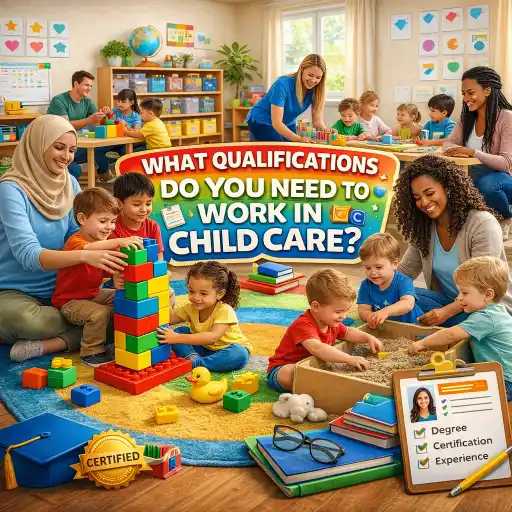
Most programs want a few key items before someone works with children. Here are the usual basics:
- 🔹 Background checks (often fingerprinting).
- ✅ Health forms (TB, immunizations, or other local rules).
- 🔸 CPR and First Aid certification for on-site staff.
- 🔹 Initial health and safety training and child abuse reporting training.
- 🔸 Minimum education (many places want a high school diploma or GED).
Practical tips:
- Keep a one-page new-hire checklist for #qualifications and health items.
- Scan and save certificates right away in a shared folder.
- Set calendar reminders for renewals (CPR, background checks).
For an easy planning guide, use the ChildCareEd resource on workforce qualifications: Child Care Workforce Qualifications and Training Requirements.
What education and credentials help staff grow into lead roles?
After meeting the basics, staff often move toward credentials and degrees. These help people teach better and lead classrooms. Common paths include:
- 🔹 On-the-job training and short courses (45-hour courses like child growth and curriculum are common). See ChildCareEd 45-Hour Child Growth & Development Buy Now
$399.00$379.00 and 45-Hour Preschool Curriculum Buy Now
 $399.00$275.00. - ✅ The Child Development Associate (CDA) credential. The CDA is national and helps staff become stronger teachers. Read FAQs at CDA Certification: FAQs and learn about testing at Pearson VUE CDA exam.
- 🔸 College coursework and degrees in early childhood education. Community colleges and local colleges often offer certificates that meet licensing rules. Examples at community college program pages show clear course lists and how they map to permits.
- 🔹 Director and administrator coursework for people who will lead programs. State rules often ask for extra admin training.
Choose training that matches your program goals. For a step-by-step how-to for teachers, see How to Become a Preschool or Daycare Teacher. Earning credentials like the #CDA makes staff more confident and helps with hiring and promotion.
How do state rules, certifications, and training hours work?
States set the licensing rules. That means hours, topics, and who must be certified vary by place. Important note: state requirements vary - check your state licensing agency.
Key steps to follow:
- 🔹 Find your state’s training list and required hours. Many states require health/safety, child development, and abuse reporting topics. ChildCareEd explains state rules at State Child Care Training Requirements Explained.
- ✅ Use approved courses. Not every course counts in every state. Confirm approval before you pay.
- 🔸 Track hours and renewals. Create a training tracker with course name, date, hours, and expiration.
- 🔹 For special certificates (like the 90-hour child care or director credentials) follow the full checklist of training, work hours, portfolios, and verification visits. See How to Earn Your 90-Hour Certification and the explanation of why it matters.
For CPR and pediatric first aid, choose a course that matches your state or local EMS rules. ChildCareEd and national providers describe what to expect: First Aid & CPR (ChildCareEd) and the Red Cross California child care course California: Pediatric First Aid & CPR.
Why does this all matter and how can you avoid common mistakes?
Why it matters:
1. Safety and trust: Trained staff keep children safer and families trust your program.
2. Quality and stability: Clear staff #training plans help teachers grow and stay, which makes classrooms better for kids.
Common mistakes and how to avoid them:
- 🔹 Mistake: Taking a course the state won’t accept. Fix: Confirm state approval before purchase.
- ✅ Mistake: Losing certificates. Fix: Scan and store certificates in two places (paper + digital).
- 🔸 Mistake: Only tracking hours, not topics. Fix: Track topics (health/safety, abuse reporting, development) as well as hours.
- 🔹 Mistake: Waiting to renew CPR or background checks. Fix: Set calendar reminders 60 days before expiration.
Final practical steps:
- Build a simple career ladder for your staff.
- Offer online courses and study time during work hours when possible.
- Keep an ongoing training file for each person and review it at hire and annually.
When staff follow a clear path toward #safety and better skills, your program will be stronger. Remember to support staff with affordable training options and clear records.
Conclusion
Working in child care usually starts with background checks, basic health and safety training, and CPR. From there, staff can earn certificates like the #90-hour child care training or the #CDA, and college coursework helps with lead or director roles. Use online resources from ChildCareEd and local state guides to make sure your team meets rules and grows professionally. Keep records, set reminders, and build a simple career path to help staff stay and thrive. state requirements vary - check your state licensing agency.
FAQ (quick):
- Q: Do I always need a GED? A: Many programs want a high school diploma or GED for lead roles. Check your state.
- Q: Is CDA worth it? A: Yes — it is national and helps with jobs and skills. See CDA FAQs.
- Q: Where do I log hours? A: Use a folder plus digital backup. Track topic and expiration dates.
- Q: Who pays for training? A: Programs, grants, or staff can share costs. Look for workforce supports.
Helpful links: Workforce Qualifications (ChildCareEd), How to Become a Preschool Teacher (ChildCareEd), State Training Rules (ChildCareEd).
Key words to remember: #qualifications #training #CDA #safety #teachers
- 45 Hour Child Growth and Development
- CDA Bridge Bundle: Family Child Care
- CDA Bridge Bundle: Family Child Care without Portfolio Review
- CDA Bridge Bundle: Infant/Toddler without Portfolio Review
- CDA Bridge Bundle: Preschool without Portfolio Review
- Role of Play in Learning
- Texas Director Credential Renewal
- Texas Director Credential
- Capacitación Previa al Servicio para Proveedores de Cuidado Infantil en Dakota del Norte
- How to Buy a Child Care Business Without Making Costly Mistakes
- Child Care Resource Center in North Carolina: What Is It and How Can It Help?
- 45-Hour Child Care Training in Illinois: Requirements and Options
- Daycare Jobs in Virginia: How Old Do You Have to Be?
- Daycare Jobs in North Carolina: How Old Do You Have to Be?
- What Qualifications Does a New York Child Care Director Need?
- MN Daycare Rules and Regulations 2026: Current Requirements and Upcoming Changes
- How to Become a Daycare Owner: What Qualifications Do You Actually Need?
- What Daycare Certification Requirements Must You Complete Before You Can Start Working?
- Daycare Job Qualifications: What’s Required vs. What Helps You Stand Out
- What Do I Need to Become a Pre-K Teacher? 7 Things to Have Ready Before You Apply
- What Are the Requirements to Work at a Daycare—and When Can You Actually Start Working With Children?
- What Certifications Do I Need to Open a Daycare? License, Training, and Credentials Explained
- What Certifications Do I Need to Open a Child Care Center? Owner vs. Director Requirements Explained
- Preschool Teacher Requirements in Florida: Do You Need a CDA, FCCPC, or College Degree?
