What children experience in ordinary moments—arrival, play, meals, transitions, and conflict—teaches them who belongs. This guide translates diversity, equity, and inclusion into practical decisions you can use with children, families, and colleagues; for deeper learning, explore Diversity, Equity, and Inclusion in Education  Buy Now $16.00 to strengthen culturally responsive practice and support professional development goals.
Why does everyday inclusion matter in early childhood settings?
Inclusion is not a special event or a display on the wall. It is the consistent practice of ensuring that every child can participate, form relationships, communicate, and see their identity treated with respect. NAEYC’s position statement on advancing equity describes equitable learning opportunities as a professional responsibility, while the OECD emphasizes that organizational and pedagogical practices can reduce inequality in early childhood education and care.
This work matters because young children are actively forming ideas about themselves and other people. When classrooms reflect many cultures, languages, abilities, family structures, and lived experiences, children receive two important messages: “I belong,” and “differences are part of our community.” These messages support #belonging, confidence, empathy, and engagement.
Inclusion also benefits adults. Clear, responsive practices help teachers plan more effectively, reduce unnecessary barriers, and build stronger relationships with families. Equity does not mean giving every child identical materials or expectations. It means examining barriers and providing the access, support, and flexibility each child needs.
- Children participate in meaningful routines and play.
- Families see their knowledge and identities respected.
- Teachers focus on strengths rather than limitations.
- Directors can evaluate observable practices instead of vague intentions.
State requirements vary - check your state licensing agency when revising policies, training plans, or accommodations.
How can the physical environment communicate inclusion?
The environment is a daily curriculum. Before an educator says a word, children notice whose faces appear in books, whether materials are reachable, what languages are visible, and whether there is space for different ways of moving, communicating, and regulating. A culturally responsive classroom should feel familiar without suggesting that one culture represents everyone.
Begin with a respectful environmental audit. Review books, dramatic-play materials, dolls, puzzles, music, photographs, posters, and art supplies. Look for authentic representation across skin tones, cultures, abilities, family structures, languages, ages, and occupations. Avoid reducing cultures to costumes, food, or occasional holiday activities. Instead, integrate varied identities throughout the year and connect materials to children’s real experiences.
- Place books and materials at children’s height.
- Keep pathways open and arrange furniture for flexible movement.
- Use photographs and words to label centers and routines.
- Provide visual schedules, choice boards, and first-then cues.
- Create a calm area that supports regulation and is never used as punishment.
- Offer adaptive tools such as thick crayons, larger handles, or alternate seating.
Ask families for input before displaying personal photographs, cultural objects, or religious materials. Representation should be accurate and welcomed, not performative. The goal is a room that tells every child, “You can enter, choose, communicate, and contribute here.”
How can teaching and play become more equitable?
Equitable teaching begins with flexible planning. Rather than expecting children to adapt to one activity format, educators can offer multiple ways to engage and demonstrate understanding. A child might draw, build, gesture, sign, move, speak, or use a communication system. These options reflect Universal Design for Learning principles and support children with disabilities, dual language learners, varied temperaments, and different strengths.
During group time, for example, invite children to sit, stand, use a cushion, or participate from a nearby space. Pair spoken directions with gestures, objects, pictures, or demonstrations. Break complex routines into short steps and allow additional processing time. When an activity is difficult, ask, “What can I change about the task, material, timing, or environment?” before asking a child to change.
Play is also a powerful context for inclusion. Model how to invite a peer into block building, offer roles in dramatic play, and teach language such as “Can I play?” “My turn,” and “How can we help?” Avoid assigning a child to be the permanent helper or cultural representative. Peer support should be reciprocal and based on shared interests.
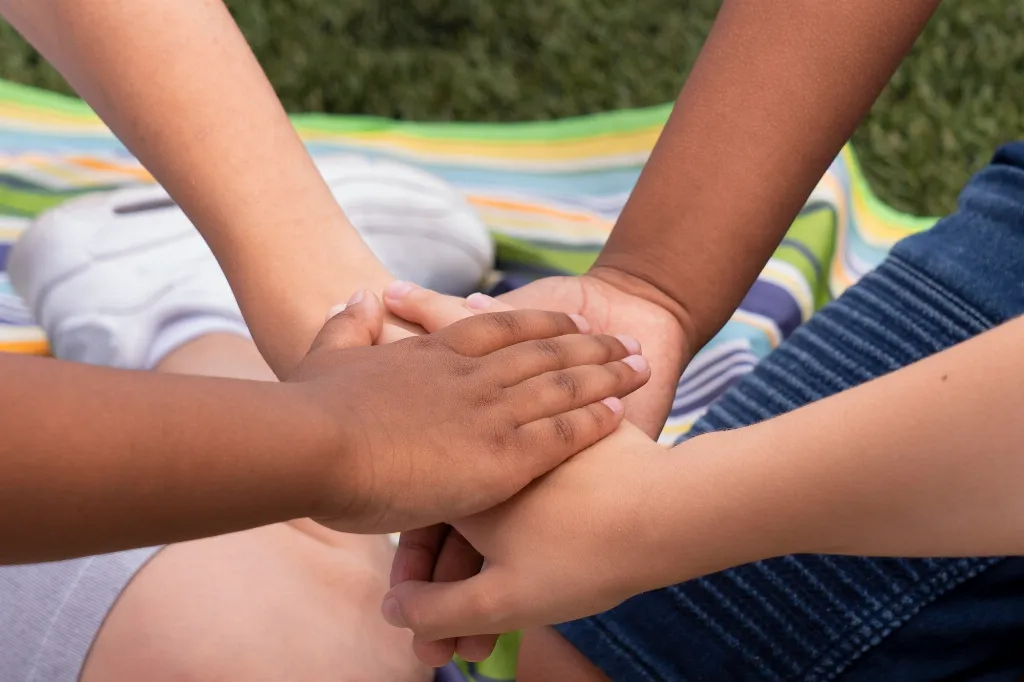
- Offer choices without making participation feel optional or isolating.
- Use open-ended questions that welcome multiple perspectives.
- Represent diverse families naturally in stories and pretend play.
- Teach children to notice differences respectfully rather than ignore them.
- Celebrate effort, communication, cooperation, and growth—not conformity.
These small decisions make #equity visible in ordinary classroom moments.
How should educators honor language, culture, and family identity?
Culturally responsive practice starts with curiosity and humility. Families are knowledgeable partners, not guests invited only for a cultural celebration. Ask what names children use, how names are pronounced, what languages are spoken at home, which routines provide comfort, and what the family wants educators to understand about the child.
Home languages should be treated as strengths. Indiana University’s Early Childhood Center explains that welcoming children’s home languages can affirm identity while supporting language development; multilingual environments benefit all children. Educators do not need fluency to begin. Learn a few meaningful words, use gestures and pictures, invite families to record songs or phrases, and allow children time to respond. Never require a child to translate for adults or classmates.
When children ask questions about skin color, clothing, bodies, languages, or family structures, respond calmly and directly. “Yes, people have different skin colors,” or “Families can be made in many ways,” is more helpful than shushing the question. Honest, age-appropriate responses help children develop #empathy and respectful language.
- Use correct names and pronunciation.
- Provide translated communication or qualified interpretation when needed.
- Ask families what traditions or experiences they want represented.
- Avoid assumptions about holidays, food, religion, parenting, or household roles.
- Use books and materials that show diversity as part of everyday life.
Build on family strengths while protecting privacy and choice. A family may prefer to share a story, photograph, recipe, song, or no personal information at all. Respectful inclusion never pressures families to educate the program.
How can programs respond to bias and support children with diverse abilities?
Bias can appear in adult expectations, discipline patterns, curriculum materials, enrollment procedures, or assumptions about communication and behavior. Self-reflection is therefore essential. Educators can review whose behavior is described as “challenging,” who receives more reminders, who is interrupted, and whose ideas are extended during conversation.
When bias occurs between children, intervene promptly and teach. Acknowledge what happened, affirm dignity, provide accurate information, and guide a more respectful action. For example: “You said her hair is strange. Hair can look different, and differences are normal. You may ask respectfully or choose another way to describe it.” Silence can unintentionally communicate approval.
Inclusion for children with disabilities means participation with appropriate supports—not forced sameness and not unnecessary separation. Use visual cues, adapted materials, flexible seating, sensory breaks, communication supports, and additional time. For children with IFSPs or IEPs, coordinate with families and authorized specialists so strategies are used consistently across routines.
- Observe what happens before and after a behavior.
- Teach replacement skills such as requesting help or a break.
- Document objective observations rather than labels.
- Keep supports within group activities whenever possible.
- Review discipline and referral data for patterns across identity groups.
Common mistakes include treating one child as an expert on an entire culture, holding a single “culture day,” using stereotypes, or expecting children to overcome inaccessible routines. Correct these patterns through ongoing coaching, team reflection, and practical environmental changes.
How can directors make inclusion consistent across classrooms?
Directors turn values into systems. A shared inclusion statement should be translated into a few observable commitments, such as offering more than one way to participate, using strengths-based language, honoring home languages, and teaching expectations before correcting behavior. These commitments should appear in orientation, lesson planning, family communication, substitute guidance, and coaching tools.
Consistency does not mean every classroom looks identical. It means children encounter dependable respect and access while teachers individualize support. For example, every room may use a visual schedule, while one child receives a smaller sequence of pictures or a first-then card. Program leaders can conduct supportive walkthroughs, asking whether materials are reachable, pathways are accessible, representation is authentic, and children have multiple ways to communicate.
Family partnership should be part of the program structure. Use a strengths-and-supports profile, establish respectful information-sharing procedures, and create time for staff to exchange practical strategies during shift changes. Protect confidentiality by sharing only information necessary for care and storing records securely.
- Choose one inclusion priority for the month.
- Define what adults will say and do.
- Provide materials, modeling, and coaching.
- Collect feedback from children, families, and staff.
- Review evidence such as participation, peer invitations, and family communication.
Professional development can help teams move from good intentions to reliable practice. Relevant options include Building Equity: Inclusionary Practices in Preschool Buy Now $10.00, Building Bridges for Dual Language Learners Buy Now $16.00, and Family Connections: Creating Inclusive Relationships Buy Now $55.00. Directors should confirm whether a course meets local professional-development or licensing requirements.
Conclusion
What does diversity and inclusion look like in everyday childcare practice? It looks like a child hearing their name pronounced correctly, finding familiar languages and families in classroom materials, reaching the art shelf, joining a song through movement or pictures, receiving support without public embarrassment, and being guided through bias with honesty and care. It also looks like families being asked—not assumed—what will help their child feel known and respected.
The most effective approach is steady and reflective:
- Audit environments and materials for authentic representation and access.
- Plan multiple ways for children to participate and communicate.
- Honor home languages, cultures, abilities, and family knowledge.
- Interrupt bias while teaching respectful alternatives.
- Align staff practices, family partnerships, coaching, and documentation.
Inclusion is built through repeated choices, not perfection. Each thoughtful adjustment strengthens the #community and expands children’s opportunities to learn, connect, and thrive.
Which courses can support continued professional learning?
- Strength in Differences: Cultural Diversity Buy Now $24.00—explores cultural competency and intercultural communication.
- Planning for Every Child: Responsive Strategies in Action Buy Now $55.00—focuses on responsive curriculum, accessibility, and individualized planning.
- Professional Presence in Early Childhood
- Diversity, Equity, and Inclusion in Education: For Workforce Solutions
- Bienvenido! Welcoming All Families
- CDA Bridge Bundle: Family Child Care without Portfolio Review
- Diversity, Equity, and Inclusion in Education
- Creating Environments that Nurture Growth and Community
- Diversity, Equity, and Inclusion in Education
- Texas Director Credential
- Access for All: Inclusion and the ADA
- Supporting Families and Caregivers in Language and Literacy
- 🌙 ¿Cómo afecta el tiempo frente a las pantallas el sueño y el comportamiento infantil? 😴
- 🌎 ¿Cómo apoyo a las familias diversas mientras honro su cultura y valores? 💜
- Cómo Abrir Una Quardería En Casa Sin Dinero?
- ¿Cómo hacer actividades navideñas inclusivas para todas las familias?
- Apoyo en Español para Capacitaciones Grupales Presenciales y por Zoom en Cursos Selectos
- Que es Título 22 en California?
- Regulaciones de Licenciamiento de Cuidado Infantil en California para Centros y Hogares de Cuidado Infantil Familiar
- Normas de Licenciamiento de Cuidado Infantil en Virginia para Centros Diurnos Infantiles y Hogares Diurnos Familiares
- Lista para Guardería en Casa en Illinois: Cómo Iniciar una Guardería en el Hogar
- Cómo Trabajar en el Cuidado Infantil en California: Requisitos y Pasos
- Capacitación Previa al Servicio para Proveedores de Cuidado Infantil en Dakota del Norte
- How can child care programs use culturally responsive activities to support young children?
- How Can I Build a Diverse and Inclusive Classroom Library?
- How can I teach Black history to young children year-round?
- Diversity and Inclusion in Childcare: What Does It Look Like in Everyday Practice?
- How Would You Approach Inclusivity and Diversity in a Childcare Setting? A Strong Interview Answer With Real Examples
- How Can Child Care Providers Respect Different Family Structures?
- How Can Preschools Celebrate Hispanic Heritage Month Meaningfully?
- ¿Todos los niños deben participar en el tiempo de círculo?
- How Can Child Care Providers Create Inclusive Thanksgiving Activities That Celebrate Different Families and Traditions?
