A child’s behavior may be communicating culture, language, family expectations, or a need for connection—not defiance. This guide helps providers replace quick judgments with culturally responsive observation, practical guidance, and stronger family partnerships; for deeper professional learning, explore Roots & Resilience: Understanding What Shapes a Child  Buy Now $55.00, which connects cultural, familial, biological, and environmental influences to responsive care.
Why can cultural differences look like behavior problems?
Child care programs operate within shared expectations: children are often expected to make eye contact, speak at a particular volume, separate comfortably from family, sit in a group, use utensils in a prescribed way, or answer adults directly. Yet these expectations are not culturally neutral. Families teach children how to greet adults, express emotion, participate in groups, show respect, seek help, and demonstrate independence. A behavior that seems unusual in one setting may be ordinary, respectful, or adaptive in another.
Culture is also dynamic. A child may be influenced by family traditions, community experiences, religion, migration, disability, socioeconomic conditions, media, and more than one language. Avoid treating a cultural group as uniform or assuming that one child represents an entire community. The purpose of cultural responsiveness is not to excuse unsafe behavior; it is to improve interpretation before deciding what support is needed.
Research and professional guidance emphasize that inclusive early learning depends on adapting interactions and practices to children’s identities, languages, and family contexts. A culturally sensitive classroom recognizes continuity between home and care while maintaining clear, developmentally appropriate limits.
Which communication differences are commonly misread?
Language and communication are among the most frequent sources of mistaken behavior referrals. A child learning the program’s language may watch silently, use gestures, repeat phrases, avoid speaking in a group, or respond in a home language. These behaviors can be mislabeled as inattentive, oppositional, delayed, or socially withdrawn. In reality, the child may be processing meaning, protecting confidence, or demonstrating understanding in another language.
Communication style also includes eye contact, physical distance, facial expression, turn-taking, and the use of silence. Some children are taught to listen quietly while adults speak; others are encouraged to ask questions and respond enthusiastically. Direct gaze may communicate engagement in one family and disrespect or discomfort in another. Similarly, a child who speaks softly may be demonstrating self-control rather than a lack of confidence.
- Use gestures, photographs, objects, and visual schedules alongside spoken directions.
- Allow additional processing time before repeating or simplifying a question.
- Invite the child to demonstrate understanding through pointing, acting, drawing, building, or home-language responses.
- Learn a few meaningful words from the child’s home language and ask families which communication cues are familiar.
- Observe language use across settings before drawing conclusions.
Supporting dual language learners does not mean lowering expectations. It means separating language acquisition from intentional noncompliance and creating multiple pathways for participation. Professional learning such as Building Bridges for Dual Language Learners Buy Now $16.00 can help teams strengthen language support and family communication.
How can family expectations about independence and respect be misunderstood?
Families differ in how they teach self-help, cooperation, adult-child roles, and responsibility. In some homes, children are expected to dress themselves, choose activities, and speak directly with adults early. In others, children learn through observation, close assistance, shared routines, and deference to elders. A child who waits for an adult to help may be described as dependent, while a child who takes charge may be labeled controlling. Both interpretations may overlook the child’s learned expectations.
Group participation can create similar confusion. Some children are accustomed to learning collectively, helping younger relatives, or remaining near adults. Others have extensive experience with individual choice and independent exploration. During cleanup, meals, or transitions, a child may resist because the classroom routine conflicts with familiar patterns—not because the child rejects boundaries.
Providers can preserve program expectations while building bridges:
- Explain the purpose of a routine rather than simply demanding compliance.
- Model the expected skill and offer guided practice.
- Provide choices within the limit: “You may carry the books or put away the blocks.”
- Teach independence gradually instead of assuming that all children should perform a task immediately.
- Ask families what responsibility, respect, and help-seeking look like at home.
Document what happened in observable terms. “Maya watched cleanup for two minutes, then placed three blocks in the basket after the teacher modeled” is more useful than “Maya refused to cooperate.” Strengths-based language protects the child’s dignity and gives the team information for planning.
Which emotional and social expressions may be culturally shaped?
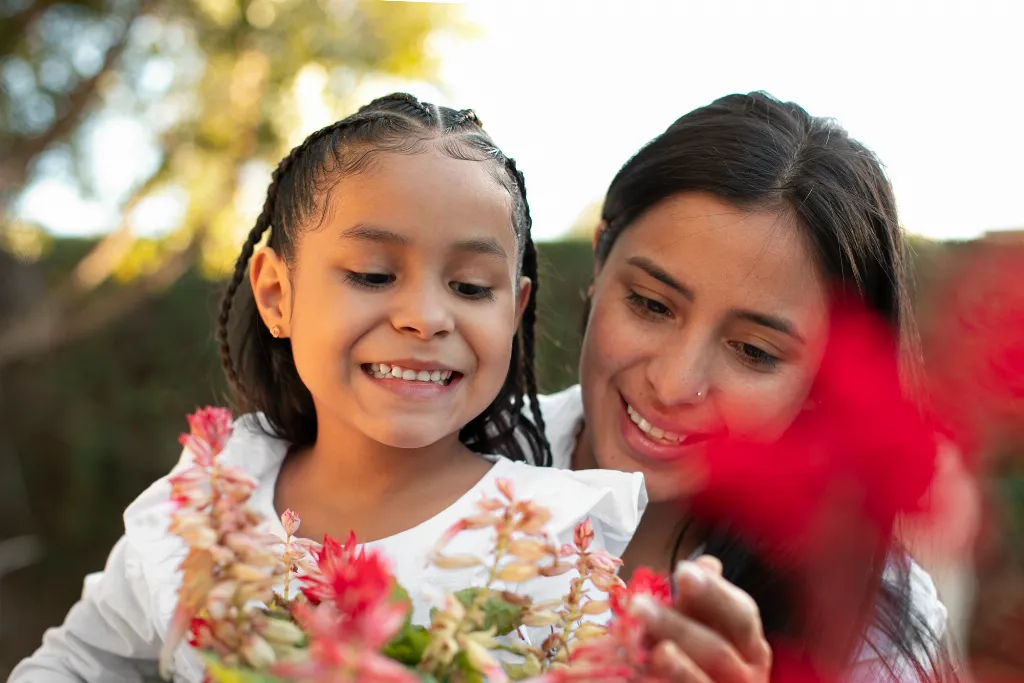
Culture influences emotional display rules: when feelings may be expressed, how intensely, with whom, and through which behaviors. A child who cries openly may come from a family where emotional expression is accepted and supported. A child who becomes very quiet may have learned that restraint communicates respect or protects privacy. Neither pattern should automatically be treated as unhealthy.
Comfort practices also vary. Families may use holding, rocking, prayer, singing, proximity, quiet observation, or a familiar object to help children regulate. Some children expect adults to stay close during distress; others prefer a brief pause before reconnecting. A provider who insists on one calming method may unintentionally escalate the situation.
Start with connection and curiosity. Get to the child’s level, name the observable feeling without assigning motive, and offer culturally respectful choices: “Your body looks tense. Would you like me to sit nearby, or would you like a quiet space?” Teach safety limits clearly when needed, while avoiding shame about how the child feels or expresses emotion.
Positive teacher-child relationships are especially protective. Warm greetings, calm voices, active listening, and responsive guidance can reduce challenging behavior and strengthen children’s security, as illustrated in the CSEFEL guidance on positive teacher-child relationships. Emotion coaching should expand children’s options, not force every child into one culturally preferred style.
How should providers distinguish cultural variation from a developmental concern?
Cultural responsiveness does not mean assuming that every concern is cultural. It means using a careful process before making a conclusion. Consider frequency, intensity, duration, context, developmental expectations, safety, and the child’s functioning across settings. A behavior that occurs only during English-only group time suggests a different question from behavior that occurs across home, care, and community environments.
Use multiple observations and avoid relying on a single difficult moment. Record who was present, what happened before, the child’s exact actions or words, adult responses, and what happened afterward. Compare observations across routines, times of day, educators, and communication contexts. Review strengths as deliberately as concerns.
Family knowledge is essential. Ask open questions such as, “How does your child communicate frustration at home?” or “What helps during transitions?” The CDC recommends listening carefully, acknowledging family perspectives, and discussing concrete developmental examples when concerns arise. Use interpreters or translated materials when necessary, rather than asking a young child to interpret sensitive information.
Common mistakes include:
- ❌ Treating one family’s practice as representative of an entire culture.
- ❌ Confusing limited English with limited comprehension.
- ❌ Comparing children with peers instead of examining individual progress.
- ❌ Recording labels such as “rude” or “defiant” instead of observable actions.
- ✅ Delaying appropriate support because a concern is assumed to be cultural.
If objective observations across contexts show persistent safety or developmental concerns, follow referral procedures and collaborate with families and specialists. State requirements vary - check your state licensing agency.
What can directors and providers change this week?
Program improvement begins with shared reflection. Directors can invite staff to identify classroom expectations that may reflect adult cultural norms rather than essential safety or learning goals. For each expectation, ask: Is it developmentally appropriate? Is it necessary? Have we taught it explicitly? Could a child demonstrate the same skill another way?
Then build practical supports into ordinary routines. Use visual schedules, family photographs with permission, books showing everyday cultural diversity, home-language labels, predictable transition warnings, and multiple ways for children to participate. Review incident and referral data for patterns by language, race, culture, disability, or classroom. Patterns do not prove bias, but they signal that the team should investigate.
Family partnership should be ongoing rather than limited to conferences or problems. Ask one brief question during enrollment, revisit it periodically, and include family preferences in individualized guidance plans. Begin difficult conversations with a strength, share one factual observation, and invite the family’s interpretation before proposing a plan.
Five useful courses for continued professional learning include:
- Culture, Communication, and Collaboration in Assessment Buy Now $55.00
- Family Voices Matter: Tools for Meaningful Collaboration Buy Now $55.00
- Diversity, Equity, and Inclusion in Education Buy Now $16.00
- Strength in Differences: Cultural Diversity Buy Now $24.00
- The ABCs of Behavior: Turning Challenges into Learning Opportunities Buy Now $55.00
Conclusion: How can cultural understanding improve behavior guidance?
Cultural differences can be mistaken for behavior problems when providers interpret communication, independence, emotional expression, family roles, or routines through only one cultural lens. The answer is not to remove expectations or ignore safety. It is to observe objectively, ask families, adapt instruction, teach replacement skills, and distinguish language or cultural variation from persistent developmental concerns.
When children see their identities and home knowledge respected, they are more likely to feel secure, participate, and build relationships. A reflective provider can transform “misbehavior” into useful information: What is this child communicating, what expectation needs clearer teaching, and what partnership will help? That shift supports #belonging, #culture, #language, #observation, and #empathy in every classroom.
- Building Bridges for Dual Language Learners
- Training Guide for Families from Diverse Language and Cultural Backgrounds
- Building Bridges for Dual Language Learners: For Workforce Solutions
- Roots & Resilience: Understanding What Shapes a Child
- CDA Family Child Care Credential
- Family Voices Matter: Tools for Meaningful Collaboration
- CDA Family Child Care Credential with Portfolio Review
- Training Guide for Families from Diverse Language and Cultural Backgrounds
- Culture, Communication, and Collaboration in Assessment
- Bridging Cultures: Family Communication & Collaboration
- CDA Certification en Español: Recursos y Consejos para Educadores Bilingües
- 🏡🗣️ ¿Cómo hablo con los padres sobre los comportamientos que su hijo aprendió en casa?
- 10 Ejemplos de Cómo la Cultura Influye en el Desarrollo Infantil
- Regulaciones de Licenciamiento de Cuidado Infantil en California para Centros y Hogares de Cuidado Infantil Familiar
- Proporciones de Cuidado Infantil y Tamaños de Grupo por Edad en Maryland (Guía Rápida para Centros y Hogares)
- Lista para Guardería en Casa en Texas: Cómo Iniciar una Guardería en el Hogar
- Ejemplos de Crianza Respetuosa vs. Crianza Permisiva
- Cómo Trabajar en el Cuidado Infantil en California: Requisitos y Pasos
- Cómo Trabajar en el Cuidado Infantil en Wisconsin: Requisitos y Pasos
- Capacitación Previa al Servicio para Proveedores de Cuidado Infantil en Dakota del Norte
- Celebrando la amistad en el cuidado infantil durante el Día de los Mejores Amigos
- What Cultural Differences Can Be Mistaken for Behavior Problems in Child Care?
- How Can Child Care Providers Set Age-Appropriate Expectations for Young Children?
- What Are Simple Ways to Build Emotional Regulation in Preschoolers?
- How Can Child Care Providers Build More Effective Classroom Management?
- How Can Child Care Providers Support Children With ADHD in the Classroom?
- When Families and Teachers See a Child Differently, How Can They Build a Shared Understanding?
- What Should Teachers Do When Children Don’t Want to Play Outside?
- How Can Child Care Providers Question Their First Interpretation of a Child’s Behavior?
- Why Might a Child Show Different Skills at Home and at Preschool?
