When a busy road meets your program door, small choices matter. This article helps Washington child care directors and providers think clearly about parking, barriers, and the side of the building that faces traffic. You will get practical steps you can take now, low-cost ideas, and places to learn more. Remember: state requirements vary - check your state licensing agency.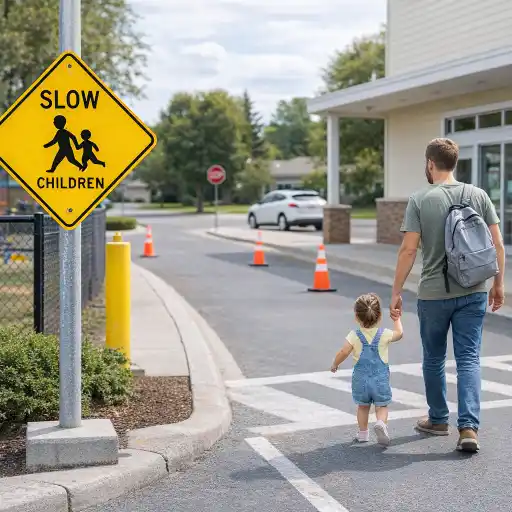
Why this matters:
Children are more likely to be hurt by cars than most people think. A few smart changes at the #parking edge of your site can make drop-off calmer, protect children near sidewalks, and make your team feel less stressed. Clear plans also help families trust your program. For helpful property-check ideas, see What Kind of Property Works for a Child Care Center? and Found a Building for a Daycare? Read This Before You Sign.
How can parking lots and drop-off zones become safer for children?
1) Look at your current flow.
- 🧭 Walk the arrival time and note where cars stop, where kids cross, and where staff stands. Use a simple map to mark trouble spots (near gates, behind parked cars, at blind corners).
- 🚗 Keep one clear drop-off lane. If you have space, make a single direction loop so cars don’t back up. A steady loop reduces sudden turns.
- 📏 Create a marked crosswalk and waiting line for children. Bright paint or cones help drivers see children. If you need design ideas, check Could That Empty Building Become a Child Care Center?.
2) Make quick rules families will follow.
- 🔔 One adult stays in the car during drop-off when possible.
- 🕒 Use short, staggered arrival windows to cut lines by 15–30 minutes.
- 📲 Send a morning text reminder on busy days (short note: where to park, drop-off window, who to call).
3) Add supervision and simple barriers.
- 👀 Station one staff person at the door and one outside during peak times.
- 🪧 Use signs, cones, and painted lines to guide drivers. Signs that say “Kids Crossing” work well.
- 🔒 If possible, add a low fence or planted buffer between the parking area and play area. Even a 2–3-foot-high curb or planter slows cars and gives children a visual edge.
4) Check car seat and passenger safety rules for transports. For research on child passenger rules, see the CDC's guidance at Child Passenger Safety | CDC.
Small changes in lanes, signs, and staff placement can cut risk fast. For ideas on speed reduction near schools and parks, look at Vision Zero strategies and city speed-camera programs like Chicago’s Children’s Safety Zone test results.
What building-side changes reduce risk from nearby roads and traffic?
1) Treat the building side that faces traffic as a safety zone.
- 🔍 Inspect windows, doors, and playground gates on that side daily. Make sure doors lock, gates close, and sightlines are clear.
- 🧱 Add a physical buffer where possible: planters, raised curbs, or low fencing help keep children out of the path of a moving car. Even a simple planted strip can slow a driver who drifts off the road.
2) Think about sight lines and supervision.
- 👀 Move play areas so staff can see children and the street at the same time. If a room faces the road, keep the lowest furniture away from windows so staff can watch the yard.
- 🪟 Use film or shades on windows if glare blocks view during some hours—but never block emergency exit signals.
3) Control building access from the street side.
- 🔐 Keep doors locked and use a single staffed entrance during arrivals. This reduces chances a child slips outside when cars pull up.
- 📲 Use simple visitor check-in steps: greet, sign, and badge. Explain your safety steps to families and guests.
4) Address air and noise near busy roads.
- 🌬️ Place outdoor play and nap rooms away from heavy idling areas when you can. For indoor air tips, see the EPA guide Reference Guide for Indoor Air Quality in Schools.
- 🔇 Use landscaping as a sound buffer—trees and shrubs cut noise and can reduce distractions during rest time.
5) Accessibility matters. Make sure routes follow accessibility standards like UFAS for children and adults with mobility needs.
These building-side steps protect children twice: from moving vehicles and from outside hazards like noise and exhaust. For ideas builders use when renovating centers, see construction tips in Building bright futures: Constructing child care facilities in D.C.
How should Washington centers work with local rules, traffic plans, and community partners?
1) Start by checking local rules early.
- 📝 Ask your local zoning and licensing office whether your site needs special permits. For advice on zoning and property choices, see Found a Building for a Daycare? Read This Before You Sign and What Kind of Property Works for a Child Care Center?.
- ⚖️ Remember zoning can limit how many kids are allowed or where drop-off happens. In other states, new rules forced some home providers to change operations—see the Washington Post story about zoning impacts in Virginia: Virginia day cares worried about repairs.
2) Talk to local traffic and safety groups.
- 📞 Call your city or county traffic engineer. Many cities have school-safety or Vision Zero teams that can help plan crosswalks or signs. Read about Vision Zero thinking here: Review of Vision Zero Strategies.
- 🤝 Work with neighbors and police to find times for crossing guards or extra patrols during peak hours. Automated speed enforcement data from programs like Chicago’s shows how targeted programs reduce speeding over time: Chicago Children’s Safety Zone.
3) Coordinate with transit and big-event plans.
- 🚌 If your center is near a transit hub or an event route, check city transport updates and plan alternate drop-off routes for event days. ChildCareEd has messaging tips for big events in How can child care programs handle drop-off, safety, and schedules during the 2026 World Cup in big cities?.
4) Seek grants and local help.
- 💸 Washington state and local governments sometimes offer small safety grants or traffic-calming support. Reach out to your county or city for options—your center may qualify for help with signage, paint, or a new crosswalk.
Working with partners spreads cost and builds goodwill. In Washington, lawmakers are discussing provider supports that affect costs—see local coverage about licensing fee talks: Washington lawmakers seek solutions for childcare crisis. Always remember: state requirements vary - check your state licensing agency.
What practical steps can my center take now without high cost, and what common mistakes should we avoid?
1) Low-cost, high-impact steps to try today:
- 🧯 Do a safety walk: 1–2 people, 15 minutes, at arrival time. Note fences, blind spots, and where cars cluster.
- 🪧 Add temporary signs or cones, and mark a crosswalk with tape or paint. Repeat each morning for a week until families learn the pattern.
- 👥 Assign one staff to supervise the door and one to guide cars during busy windows. Use a bright vest so drivers see them.
- 📣 Send one clear family message (subject line + 3 bullets) about new rules or maps. See messaging ideas in this ChildCareEd guide.
2) Common mistakes and how to avoid them:
- 🚫 Mistake: Not measuring the problem. Fix: Time your drop-off and count cars for 20 minutes to know if flow is a real issue.
- 🚫 Mistake: Relying on one staff person alone. Fix: Have at least two people on duty for arrivals until the pattern is steady.
- 🚫 Mistake: Skipping community approvals. Fix: Ask neighbors and the city early—small fixes often need permission.
- 🚫 Mistake: Letting paperwork lag. Fix: Keep quick logs each day of incidents and drills. Good records protect your team; see recordkeeping help at Recordkeeping and Documentation Tips.
3) When to spend more:
- 🪙 If you need a curb, permanent fence, or crosswalk, get a cost estimate and ask the city about grants.
- 🏗️ For bigger builds, work with designers who know child care needs—read building-and-construction tips at Pizzano Contractors.
Practical next steps: run a 15-minute safety walk this week, add one visible sign, and hold a short staff huddle to practice your drop-off plan. Keep it simple: small actions build safer routines and more confident staff.
Conclusion
Summary: Rethinking parking lots, barriers, and building sides is both practical and urgent. Use low-cost fixes first (signs, cones, staff placement), then work with your city for bigger fixes (curbs, crosswalks). Keep written notes and share clear rules with families. For child care property and safety templates, ChildCareEd has many guides (for example, What Safety Rules Should Childcare Programs Follow?).
Quick FAQ
- Q: Can we change drop-off hours? A: Yes, if you follow licensing and tell families. State requirements vary - check your state licensing agency.
- Q: Who pays for curb or crosswalk work? A: Sometimes the city or grants help. Ask your public works or safe routes to school office.
- Q: Should we add cameras? A: Cameras help with reunification and documentation, but check privacy rules and your licensing agency first.
- Q: How often should we train staff on arrival safety? A: Monthly mini-huddles and practice drills are a good start.
You’re doing important work. Small changes to #design, #dropoff, and #supervision make a big difference for children and families. Start with a 15-minute walk and one clear sign this week.
- El Mes de Arándanos
- 🚨 Reporte Obligatorio en Nevada
- Cómo Trabajar en una Guardería Sin Experiencia en Cuidado Infantil
- ¿Cómo pueden los equipos de cuidado infantil practicar habilidades rápidas de primeros auxilios en situaciones reales?
- Capacitación en Salud y Seguridad Preventiva en Línea para Proveedores de Cuidado Infantil
- ¿Cómo solicito la licencia para una guardería en California?
- Regulaciones de Cuidado Infantil en Maryland para Centros y Hogares de Cuidado Infantil Familiar
- Requisitos de Cuidado Infantil en Nueva Jersey para Centros y Proveedores de Cuidado Infantil Familiar
- Proporciones de Cuidado Infantil y Tamaños de Grupo por Edad en Maryland (Guía Rápida para Centros y Hogares)
- Proporciones de Cuidado Infantil y Tamaños de Grupo por Edad en Nueva Jersey (Guía Rápida para Centros y Hogares)
- Proporciones de Cuidado Infantil y Tamaños de Grupo por Edad en Virginia (Guía Rápida para Centros y Hogares)
- Lista para Guardería en Casa en California: Cómo Iniciar una Guardería en el Hogar
- Lista para Guardería en Casa en Texas: Cómo Iniciar una Guardería en el Hogar
- Consejos de Supervisión Activa para Salones de Preescolar y el Juego al Aire Libre
- Retraso del Habla en la Guardería: Cómo Pueden Ayudar los Proveedores
- Cómo Trabajar en el Cuidado Infantil en Wisconsin: Requisitos y Pasos
- Capacitación Previa al Servicio para Proveedores de Cuidado Infantil en Georgia
- Capacitación Previa al Servicio para Proveedores de Cuidado Infantil en Nevada
- Cómo simplificar la capacitación para sus empleados de daycare
- Should Washington Child Care Centers Rethink Parking Lots, Barriers, and Building-Side Safety?
