That beautiful feather, smooth stone, or bright flower can spark a child’s curiosity—and a thoughtful question about whether it belongs where it is. Use simple routines to help children observe, investigate, and care for outdoor places; Building Early Science Foundations  Buy Now $16.00 offers practical ways to nurture inquiry through play. For ideas on shaping a rich outdoor learning space, explore Creating the Natural Outdoor Classroom Buy Now $16.00 as a complementary professional learning step.
Why does “ask before collecting” matter?
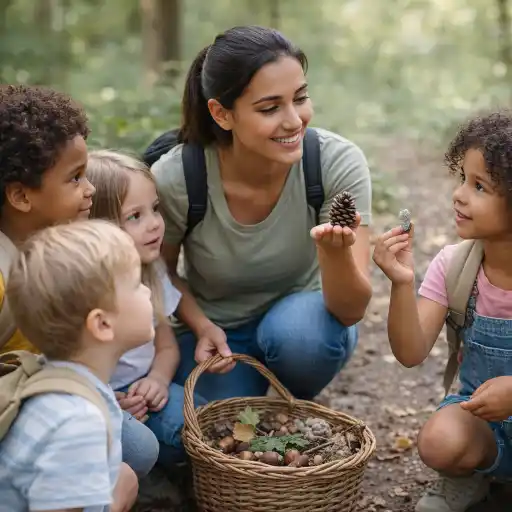
Children’s urge to pick up, pocket, and carry home outdoor discoveries is a form of active learning. They compare textures, notice color and shape, and create stories about what they find. With warm guidance, a moment of reaching for a flower or moving a beetle can become a chance to practice observation, decision-making, empathy, and respect for shared spaces.
The central lesson is not that nature is off-limits. It is that living things and natural objects have contexts: a leaf may shelter an insect, a nest belongs to a bird, and a park or garden may have rules about what can be removed. The National Park Service’s Leave No Trace Kindergarten resource frames outdoor exploration around respectful practices, while the Natural Start Alliance teaching guidance emphasizes educators modeling care for nature.
Asking first also supports early #science. Children can gather information with their senses, make a prediction, and discuss evidence without taking an item away. That combination of curiosity and care helps establish #stewardship as part of everyday play, not a lecture delivered only on special occasions.
How can educators explain what may be collected?
Use a short, consistent rule that children can remember: “Look closely; ask an adult; leave living things and anything that may be someone’s home.” Explain that program rules and local site rules can differ. In many places, the safest default is to observe rather than remove natural items, especially in protected areas. If a program permits collecting, limit it to approved, already-fallen materials in a designated area and follow site guidance.
Teach children a simple “look, ask, decide” routine:
- Look: Pause and notice whether the object is living, attached, or part of an animal’s habitat.
- Ask: Invite the child to check with a teacher before touching or taking it.
- Decide: Follow the program’s rule; when unsure, leave the item in place and observe it together.
Keep explanations concrete and non-shaming: “That flower is growing here, so we’ll leave it for the bees and other visitors.” For found litter, clarify that trash is different from nature treasures. Children should alert an adult rather than handle sharp, dirty, unknown, or potentially hazardous items. This routine keeps exploration open while making care and safety predictable.
How can a visual guide turn the rule into a habit?
A picture-based visual guide can support children who are still learning language, children who benefit from predictable steps, and mixed-age groups. The Outdoor Finds Look-and-Ask Visual Guide can be used before a walk, carried on a clipboard, or posted near the outdoor exit. Point to the images as children encounter real examples, and make the guide a conversation prompt rather than a “right answer” test.
Possible visual categories include:
- 👀 Look: Observe with eyes and describe color, shape, size, or movement.
- Ask first: Check before touching or collecting anything.
- Leave it: Living plants, animals, nests, eggs, mushrooms, and objects in protected or restricted areas stay where they are.
- Tell an adult: Point out litter, broken glass, unknown substances, or an animal that may need help; do not pick these up.
- Collect only if approved: Follow the teacher’s direction and local site rules for permitted loose items.
Use real photos from your play space when possible, while avoiding images that suggest children can handle wildlife. Make the visuals accessible with clear contrast, concise wording, and spoken or tactile alternatives as appropriate. A printable or posted prompt can be featured alongside the Outdoor Finds Look-and-Ask Visual Guide resource, with staff adapting examples to the site’s actual rules.
What can educators say when a child finds something fascinating?
Start by affirming the child’s attention: “You noticed a tiny pattern on that leaf.” Then guide the next step with a curious prompt. Early science learning is strengthened when adults listen, help children describe what they notice, and invite questions instead of rushing to supply every answer. The Primary Science Teaching Trust’s Play, Observe & Ask resource offers strategies for supporting young children’s science thinking through play.
Try language such as:
- “What do you notice about it?”
- “Is it growing, moving, or attached to something?”
- “What might use this place as a home?”
- “How could we learn about it without taking it away?”
- “What should we do if we are not sure?”
Children can sketch an object, photograph it with program-approved devices, compare it with a picture card, or describe it to a peer. These alternatives preserve the discovery while practicing vocabulary, memory, and representation. Invite children to share observations later; drawing or oral storytelling can document learning without removing the item from its outdoor setting.
Keep the tone collaborative: “Let’s find out together” positions the educator as a co-investigator. Connect the moment to #observation and #inquiry by asking children to look again, compare details, and explain their thinking. Their answers may change as they gather new clues—that flexibility is part of learning.
How can programs balance exploration, safety, and respect?
Before going outdoors, staff should review the route, boundaries, supervision roles, and site-specific rules. Scan for hazards and remind children not to taste plants or fungi, touch unknown substances, disturb animals, or pick up litter. Adults should handle any cleanup using the program’s procedures and protective equipment; children can help by pointing out litter from a safe distance.
Adapt participation so every child can contribute. A child who prefers not to touch can photograph, draw, point, or dictate an observation. Offer visual cues, mobility-accessible routes, adequate time, and a choice of roles such as “noticer,” “sketcher,” or “question asker.” Nature play can be child-led while adults maintain attentive supervision and clear boundaries.
Common pitfalls are easy to avoid:
- Giving a vague rule: Replace “Be careful” with specific instructions about what to observe, leave, and report.
- Turning every find into a prohibition: Offer safe alternatives such as looking closely, drawing, or comparing.
- Assuming all outdoor spaces share rules: Check property and site guidance before planning a collection activity.
- Letting children handle litter: Have them tell an adult; follow program procedures for removal.
State requirements vary - check your state licensing agency, and confirm local site policies when planning outdoor learning.
Conclusion: How do we make respectful discovery part of everyday practice?
Teaching children to ask before collecting does not dampen curiosity; it gives curiosity a caring direction. A dependable “look, ask, decide” routine, adult modeling, accessible visuals, and open-ended questions help children investigate without harming living things or removing items from places where they belong.
Keep the approach practical: establish clear rules, use the Outdoor Finds Look-and-Ask Visual Guide to reinforce them, and offer alternatives such as sketching, describing, or photographing approved observations. Treat discoveries as opportunities for #care, #nature, and inquiry. When children learn to notice both the wonder of a find and its place in a larger habitat, they build habits of respect that can travel with them beyond the childcare setting.
Explore related English-language ChildCareEd courses:
- Building Early Science Foundations Buy Now $16.00 — strengthen play-based science and inquiry practices.
- Creating the Natural Outdoor Classroom Buy Now $16.00 — plan engaging outdoor environments for young learners.
- Basic Science in Early Childhood Buy Now $25.00 — explore ways to support children’s scientific reasoning.
- Tomorrow’s Einsteins: Infant and Toddler Science Buy Now $16.00 — connect young children’s curiosity with developmentally appropriate science experiences.
- 1,2,3, Eyes on Me: Classroom Safety Buy Now
$32.00$24.00 — review supervision and safety strategies for indoor and outdoor settings.
- 45 Hour Child Growth and Development
- CDA Home Visitor Subject Area 3 Part 3 Birth to 5
- CDA Home Visitor Subject Area 2 Part 3 Birth to 5
- Birth to Five CDA Credential with Portfolio Review
- Children at the Wheel: Emergent Curriculum
- Teach with Respect!
- Pediatric RSV First Aid & CPR/AED
- 45 Hour School Age Methods and Materials
- 45 hour Growth and Development Birth-age 12 ONLINE
- CDA Certification en Español: Recursos y Consejos para Educadores Bilingües
- 💛🧩 ¿Cómo puedo hacer que mi enseñanza sea inclusiva para los niños con autismo?
- Requisitos Para Ser Maestra Principal En Un Daycare: Lo Que Necesitas Para Empezar
- ¿Qué Se Necesita para Comenzar una Guardería en Casa en Texas?
- ¿Cuáles son las mejores actividades del Día de la Tierra para niños en casa o en el aula?
- ¿Cómo pueden los equipos de cuidado infantil practicar habilidades rápidas de primeros auxilios en situaciones reales?
- 10 Ejemplos de Cómo la Cultura Influye en el Desarrollo Infantil
- Normas de Licenciamiento de Cuidado Infantil en Virginia para Centros Diurnos Infantiles y Hogares Diurnos Familiares
- Proporciones de Cuidado Infantil y Tamaños de Grupo por Edad en Nueva Jersey (Guía Rápida para Centros y Hogares)
- Proporciones de Cuidado Infantil y Tamaños de Grupo por Edad en Virginia (Guía Rápida para Centros y Hogares)
- Cómo Trabajar en el Cuidado Infantil en Carolina del Norte: Requisitos y Pasos
- Cómo Trabajar en el Cuidado Infantil en California: Requisitos y Pasos
- Cómo Ser Maestra de Preescolar en Illinois
- Cómo Ser Maestra de Preescolar en Wisconsin
- Cómo Ser Maestra de Preescolar en Maryland
- Celebrando la amistad en el cuidado infantil durante el Día de los Mejores Amigos
- Canciones, juegos y preguntas de círculo para niños
- Cómo simplificar la capacitación para sus empleados de daycare
- Go on a Fall Hunt! Outdoor Learning Challenges for Preschoolers
- Nature Treasure or Litter? How Can We Teach Children to Ask Before Collecting?
