Infant lesson planning works best when it changes as rapidly as the children do. By connecting short, responsive experiences to emerging skills—and strengthening your approach through Meaningful Lesson Planning for Infants/Toddlers  Buy Now $24.00—you can create practical plans that support development while helping meet professional learning goals and training-hour needs.
Why should infant lesson plans change throughout the first year?
The first year is not one developmental stage. A newborn who is learning to focus on a caregiver’s face has different needs from a nine-month-old who is crawling toward a toy or a twelve-month-old who is pulling to stand. The CDC describes milestones across movement, communication, cognition, and social-emotional development, while emphasizing that children reach skills at different rates. Therefore, age ranges should guide planning without becoming rigid expectations.
Effective plans also recognize that infant learning is integrated. A simple activity such as placing a soft toy within reach may support visual tracking, motor control, attention, communication, and trust when an adult narrates the experience. The goal is not to deliver a formal lesson; it is to design intentional opportunities within responsive care.
Age-based planning matters because it helps teams choose appropriate challenges, avoid unnecessary frustration, and notice meaningful progress. It also gives directors a shared framework for coaching staff and communicating with families. Use developmental information as a planning lens, not as a test or a ranking system.
- Plan for the child’s current abilities and next small step.
- Offer repetition, choice, and time to respond.
- Adjust activities according to cues, temperament, culture, language, and health needs.
What should lesson plans emphasize from 0 to 3 months?
During the first three months, infants are building security, sensory awareness, and foundational motor control. Plans should be brief, relationship-centered, and closely connected to feeding, diapering, holding, and floor time. The primary curriculum is the caregiver’s calm, predictable presence.
Offer face-to-face interaction, high-contrast images, gentle singing, and opportunities to follow a slowly moving object. During supervised tummy time, place yourself or a simple toy where the infant can look toward you. Respond to coos, cries, and changes in facial expression as meaningful communication. Pause after speaking so the infant has time to participate in an early serve-and-return exchange.
For this age group, a weekly plan might include one or two goals such as “increase visual attention to a familiar adult” or “support brief head lifting during supervised floor play.” Do not require every infant to participate at the same time. One child may be alert after feeding while another needs rest.
- Use soft voices, slow movements, and familiar songs.
- Provide safe, uncluttered floor space rather than extended time in containers.
- Watch for overstimulation: turning away, stiffening, yawning, fussing, or crying.
- Always follow safe-sleep practices; supervised tummy time is for awake periods only.
Documentation should describe observable behavior, such as “looked toward caregiver’s voice and maintained gaze for four seconds,” rather than labeling an infant as attentive or inattentive.
How should planning change from 3 to 6 months?
From approximately three to six months, infants often become more socially engaged and physically active. They may smile, laugh, coo, reach, grasp, push up during tummy time, roll, or begin sitting with support. Plans can therefore include more opportunities for reciprocal interaction, movement, and exploration.
Place large, safe objects within reachable distance and vary their texture, color, sound, and shape. During floor play, position materials so infants can practice turning, reaching, swatting, and transferring objects. Use mirrors, family photographs, board books, and songs to invite visual attention and early communication. Narrate actions with simple language: “You reached for the red ball,” or “You heard the shaker.”
At this stage, lesson plans should still be flexible rather than organized around lengthy group activities. A short experience may be repeated several times across the day. For example, a caregiver might offer a rattle during morning floor play, revisit sound-making during diapering, and document whether the infant tracks or reaches toward it.
- 🎵 Pair movement with songs, clapping, or rhythmic vocal play.
- Offer toys that are easy to grasp and large enough to prevent choking.
- Provide supported sitting only when the infant is ready and the environment is safe.
- Allow infants to stop, rest, or observe without pressure.
Individualization is essential. One six-month-old may be rolling confidently while another is concentrating on head control. Both can work toward meaningful goals when the adult adjusts positioning, materials, and assistance.
What learning experiences fit infants from 6 to 9 months?
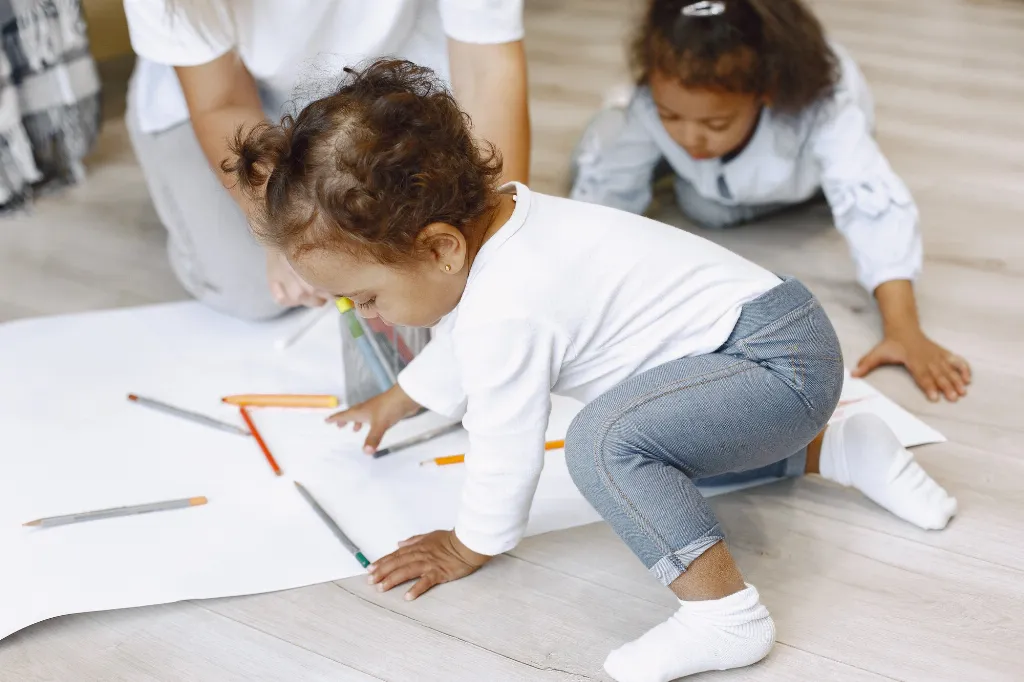
Between six and nine months, planning often shifts toward mobility, object exploration, emerging problem-solving, and increasingly intentional communication. Many infants sit independently, transfer objects between hands, respond to their names, babble with repeated consonants, and look for objects that disappear. Some begin crawling, while others move by rolling, scooting, or pivoting.
Design safe spaces that invite movement rather than expecting infants to remain in one location. Place a preferred toy slightly beyond reach, but close enough that the challenge remains achievable. Use soft blocks, low cushions, or open boxes to support reaching, moving around, filling, dumping, and cause-and-effect exploration. Peek-a-boo, hiding a toy under a cloth, and turn-taking with sounds support memory, anticipation, and social communication.
Language planning should become more responsive and descriptive. Repeat the infant’s sounds, add simple words, and acknowledge gestures such as reaching, pointing, or raising arms. Consistent signs or gestures for “more,” “up,” and “all done” may provide additional communication opportunities when used in partnership with families and program practices.
- Rotate a few materials instead of presenting an overwhelming selection.
- Use containers, scarves, and large objects to support early problem-solving.
- Build practice into transitions, meals, and outdoor exploration.
- Document how the child approaches challenges, not only whether the child completes them.
Safety planning must evolve with mobility. Recheck the room daily for small parts, unstable furniture, accessible cords, and objects that could be pulled down.
How should plans develop from 9 to 12 months?
From nine to twelve months, many infants become increasingly mobile, communicative, and purposeful. They may crawl, pull to stand, cruise, use a developing pincer grasp, imitate gestures, respond to familiar words, and search for hidden objects. Plans should offer more opportunities for choice, persistence, imitation, and early independence while preserving responsive relationships.
Create low, safe invitations to explore: sturdy furniture for cruising, large containers for putting in and taking out, chunky blocks for stacking or dropping, and books with flaps or textured pages. Invite infants to point to familiar people or objects, imitate gestures, and participate in songs with pauses. During care routines, offer simple choices when appropriate, such as selecting between two books or reaching for a washcloth.
At this age, caregivers can extend infants’ thinking without turning play into a performance. If an infant drops a block, describe what happened and provide time for repetition. If the infant points, name the object and respond to the request. If frustration appears, reduce the challenge, offer support, or allow a break.
- Provide stable surfaces and close supervision for pulling up and cruising.
- Use large materials; pincer-grasp practice must never involve unsafe small objects.
- Build early literacy through picture naming, rhythm, repetition, and shared attention.
- Coordinate expectations with families, especially around feeding, sleep, gestures, and language.
Plans for older infants should still remain short and adaptable. Developmental variation is expected; a child who is not yet walking may be making significant progress in balance, communication, or problem-solving.
How can providers organize, assess, and improve age-based plans?
A usable infant plan can fit on one page. Begin with one to three individualized goals for the week, identify materials, connect experiences to routines, and name one observation question. ChildCareEd’s infant lesson planning guidance similarly emphasizes personalization, developmental milestones, documentation, and family communication.
- Observe: Identify what the infant already does, enjoys, avoids, or attempts.
- Plan: Choose one attainable next step and a brief experience.
- Interact: Follow the infant’s cues, model language, and wait for responses.
- Document: Record a dated, objective anecdote tied to the goal.
- Reflect: Repeat, adapt, simplify, or extend the experience based on evidence.
Avoid common mistakes such as using one plan for every infant, scheduling rigid group lessons, setting too many goals, or confusing milestone checklists with assessments. The CDC recommends sharing concerns with families and health professionals when a child is not meeting milestones, loses skills, or prompts persistent concern. Providers observe and support; they do not diagnose.
Family partnership strengthens planning. Share a child’s strengths first, ask what the family notices at home, and offer one simple idea that fits the family’s routines. Keep records confidential and objective. State requirements vary - check your state licensing agency.
For additional professional learning, providers may explore Playing with a Purpose: Infant/Toddler Lesson Planning Buy Now $24.00, Baby Play: Planning Infant and Toddler Activities Buy Now $16.00, and Baby Steps to Milestones Buy Now $35.00.
Conclusion: How should lesson plans change across the first year?
Lesson plans for infants should become more mobile, interactive, exploratory, and choice-based as children develop from birth to twelve months. Newborn plans prioritize attachment, sensory regulation, visual attention, and early communication. Plans for three- to six-month-olds add reaching, grasping, movement, and reciprocal play. From six to nine months, caregivers emphasize mobility, object permanence, cause and effect, and intentional communication. From nine to twelve months, planning expands to problem-solving, imitation, early independence, and supported mobility.
The central principle remains constant: observe the individual child, offer a manageable next step, respond warmly, and document what you see. Brief, repeated experiences embedded in routines are often more meaningful than elaborate activities. When plans remain flexible and strengths-based, every caregiving moment can become purposeful learning.
Key takeaways:
- Use age ranges as guides, never rigid prescriptions.
- Plan across motor, language, cognitive, and social-emotional domains.
- Follow cues and adapt materials, timing, and support.
- Use objective observations to guide the next plan.
- Partner with families and consult appropriate professionals when concerns persist.
Thoughtful #lesson-plans, responsive #caregiving, meaningful #play, careful #observation, and strong #family-partnerships help infant rooms honor rapid growth while protecting each child’s security and dignity.
- 45 Hour Child Growth and Development
- CDA Infant/Toddler Credential
- Children at the Wheel: Emergent Curriculum
- Pediatric RSV First Aid & CPR/AED
- CDA Infant/Toddler Credential with Portfolio Review
- 45 Hour School Age Methods and Materials
- CDA Bridge Bundle: Infant/Toddler
- 45-Hour Infant and Toddler Curriculum
- Texas Director Credential
- Playing with a Purpose: Infant/Toddler Lesson Planning
- Cuáles Son las Señales de Alerta en el Desarrollo Infantil que Todo Educador Debe Conocer?
- 😫🧸 ¿Qué hacer cuando un bebé no quiere dormir la siesta en el aula?
- Cómo Escribir Mi Portafolio Del CDA
- Recursos en Español sobre el Sueño Seguro del Bebé
- ¿Cuáles son los pasos, los requisitos y las opciones en línea para la certificación de 90 horas para cuidado escolar en Maryland?
- Proporciones de Cuidado Infantil y Tamaños de Grupo por Edad en Maryland (Guía Rápida para Centros y Hogares)
- Proporciones de Cuidado Infantil y Tamaños de Grupo por Edad en Nueva Jersey (Guía Rápida para Centros y Hogares)
- Retraso del Habla en la Guardería: Cómo Pueden Ayudar los Proveedores
- Canciones, juegos y preguntas de círculo para niños
- Alaska Child Care Ratios and Group Sizes by Age: Daycare Center Guide
- Idaho Child Care Ratios and Group Sizes by Age: Daycare Center Guide
- Idaho Child Care Ratios and Group Sizes by Age: Home Daycare Guide
- How to Become a Childcare Worker in Idaho: Requirements and Steps
- How Should Lesson Plans for Infants 0–12 Months Change by Age?
- Proporciones para guarderías en casa bajo el Título 22: Cómo la mezcla de edades cambia su capacidad en California
- How Can Child Care Providers Support Safe, Responsive Infant Feeding?
- How Can Child Care Providers Plan Infant Activities Around Developmental Milestones?
- What Are the Social-Emotional Milestones From Birth to Age 5?
- What Should Child Care Providers Look For in Fine Motor Skills by Age?
- ¿Cómo puede la retroalimentación visual apoyar la fluidez en la multiplicación?
