When a child insists that a toy car is alive because it moves, you have the start of a meaningful science conversation. The Creating the Natural Outdoor Classroom course  Buy Now $16.00 can help you turn outdoor spaces into rich places for noticing, questioning, and exploring—while strengthening your practice with nature-based learning. Read on for a practical way to pair those experiences with ChildCareEd’s Sorting Mat - Living or Non-Living Buy Now $1.49.
Why does this distinction matter for early science?
Sorting living and nonliving things is more than a vocabulary exercise. Children notice characteristics, compare examples, group objects according to a rule, and explain—or reconsider—their choices. Those are early forms of scientific classification and reasoning. They also connect naturally with language, mathematics, collaboration, and attention.
Children bring their own theories to the activity. A vehicle that moves may seem alive; a plant that stays in one place may seem not alive. Rather than treating these ideas as mistakes to correct immediately, see them as useful starting points.
The goal is not instant mastery or perfect sorting. It is to help children move from “I think it’s alive” toward “I think it’s living because it grows and needs water.” A hands-on sort gives children concrete examples to discuss, while your questions help them look for evidence. Keep the experience playful, welcoming, and open to revision; learning often happens when a puzzling example invites another look.
How can you introduce living and nonliving things without oversimplifying?
Start with familiar, contrasting examples: a child, a plant, a rock, and a toy. Invite children to describe what they notice before introducing a definition. Living things generally grow and change, need nutrients and water, use air, and respond to their surroundings. No single visible clue—especially movement—is enough to classify something.
Use questions that encourage children to reason from evidence:
- “What do you notice about this object?”
- “Does it grow or change over time?”
- “What does it need?”
- “Does it move by itself, or does something make it move?”
- “What makes you think that?”
How can a sorting mat make the investigation hands-on?
Set up ChildCareEd’s Sorting Mat - Living or Non-Living Buy Now $1.49 as an invitation to investigate, not a test. The resource asks children to classify familiar images, including a puppy, tree, bird, fish, chair, rocks, car, and soccer ball. These contrasts provide a clear entry point for discussing growth, needs, and movement.
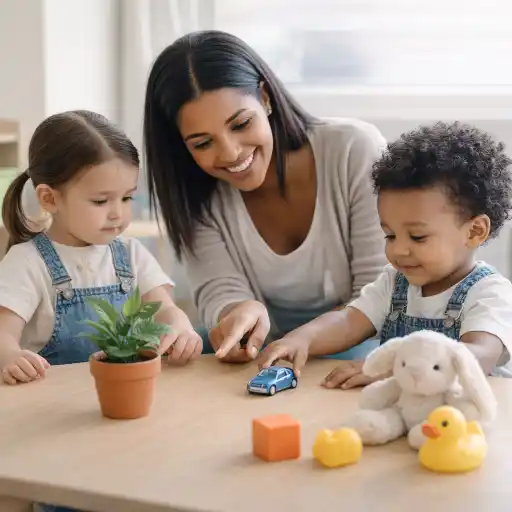
Before children begin, gather a few safe real objects or photographs to compare with the images: a classroom plant, a smooth stone, a toy animal, and a vehicle picture, for example. Model thinking aloud once—“The toy dog looks like a puppy, but it doesn’t need food or grow”—then let children take the lead. Ask them to place each picture and explain their reasoning. If a child changes a choice after discussion, treat that as evidence of learning, not failure.
- Offer large images, sturdy materials, and seated or standing options.
- Use picture cues, gestures, and home-language labels to support participation.
- Give children time to handle or closely examine safe items.
- 🌱 Include a plant to challenge the idea that living things must visibly move.
- Invite children to suggest another object for the group to classify.
Follow children’s questions rather than rushing through every card. A useful prompt is, “What clue helped you decide?” This turns a simple sorting activity into a shared investigation.
How can outdoor exploration extend the learning?
The natural environment offers living and nonliving examples side by side: plants, birds, insects, stones, soil, and human-made structures. A short, well-supervised walk can make the distinction more tangible. Invite children to point, draw, or photograph what they notice; there is no need to collect natural materials to make the experience meaningful.
Before going out, establish boundaries and review expectations for observing without disturbing. Avoid unknown plants, sharp objects, animal waste, and materials that could pose allergy, contamination, or choking risks. Children can observe a tree from the path, watch an insect without touching it, or compare a rock with a leaf on the ground. Back indoors, revisit their sketches or photos and sort the examples together.
Outdoor learning also makes it easier to revisit ideas over time. Observe a plant across several days, record its changes, and discuss what it needs. A nature-rich setting can support curiosity through varied colors, sounds, and textures. For practical strategies to plan such experiences, explore ChildCareEd’s Creating the Natural Outdoor Classroom Buy Now $16.00 training. For more inspiration, see creative ways to use nature as your classroom and the outdoor classroom. Keep supervision active and make participation accessible to every child.
How can you support inclusion and document children’s thinking?
Children can show understanding in many ways: speaking, pointing, sorting, drawing, using a communication device, or discussing ideas in a home language. Offer multiple ways to participate and adjust materials to match children’s motor, sensory, and communication needs. Large cards, nonslip surfaces, adaptive tools, and photographs can keep the scientific goal intact while making the activity more accessible.
Listen for the reasoning behind each choice. Instead of recording only whether a child sorted an image correctly, note the evidence they used and whether their explanation changed. For example: “After comparing the toy car with the plant, Lina said the car moves only when someone pushes it.” That observation can guide what examples or questions you offer next.
- Notice whether children identify growth, needs, or responses to surroundings.
- Record how they explain or revise a category.
- Include children’s words, drawings, or photographs in a class chart.
- Revisit the sort later to see how explanations develop.
Families can extend the conversation during walks or everyday routines: “Is that tree living? What clues do you see?” Share a brief learning note with families so they can build on children’s interests at home. For further background on intentional science experiences, consider ChildCareEd’s Basic Science in Early Childhood Buy Now $25.00 training. State requirements vary - check your state licensing agency.
What common pitfalls should providers avoid?
A common pitfall is defining life only by movement. Children may then classify a toy car as living and overlook a plant. Invite them to examine several characteristics—growth, needs, and responses—rather than relying on one dramatic clue.
Another pitfall is turning the activity into a right-or-wrong quiz. Immediate correction can discourage children from sharing tentative ideas. Ask for their reasoning, offer a contrasting example, and give them time to reconsider. A third is introducing complex cases too early. Objects such as a seed, a fallen leaf, paper, or fire can raise nuanced questions. Add these when children have experience with familiar examples, and acknowledge that some classifications need more discussion.
Finally, avoid letting a worksheet replace exploration. A mat can organize a conversation, but children benefit from observing real plants and objects, revisiting questions, and listening to one another. Keep safety and access in view, and do not collect unknown or potentially hazardous materials outdoors. These small adjustments let the activity remain joyful while supporting careful thinking.
Conclusion: How can sorting nurture young science thinkers?
Teaching the difference between living and nonliving things works best when children can investigate, compare, explain, and revise—not simply memorize labels. Begin with familiar examples, include plants, and use questions about growth, needs, and change to build evidence-based explanations. The Sorting Mat offers a practical starting point; outdoor observations and accessible discussion can deepen the learning.
Most of all, treat children’s initial ideas as invitations to explore. Document their thinking, revisit tricky examples when they are ready, and connect classroom discoveries with everyday life. With thoughtful prompts and hands-on materials, a simple sort can support #science, #observation, #reasoning, #inclusion, and #nature—and help children see themselves as capable investigators.
- Moving About the Classroom: Effective Transitions for Everyday
- Creating the Natural Outdoor Classroom
- Pediatric RSV First Aid & CPR/AED
- 45 Hour School Age Methods and Materials
- CDA Bridge Bundle: Family Child Care without Portfolio Review
- CDA: Creating the Outdoor Classroom
- CDA Bridge Bundle: Infant/Toddler without Portfolio Review
- Texas Director Credential
- Moving About the Classroom: Effective Transitions for Everyday
- Trauma-Sensitive Care: Supporting Young Children with Empathy
- CDA Certification en Español: Recursos y Consejos para Educadores Bilingües
- 🔍 ¿Qué ves cuando observas a un niño aprender?
- 💛🧩 ¿Cómo puedo hacer que mi enseñanza sea inclusiva para los niños con autismo?
- Cómo usar tu certificación de 90 horas en Maryland para completar tu CDA
- 10 Ejemplos de Cómo la Cultura Influye en el Desarrollo Infantil
- Proporciones de Cuidado Infantil y Tamaños de Grupo por Edad en Nueva Jersey (Guía Rápida para Centros y Hogares)
- Proporciones de Cuidado Infantil y Tamaños de Grupo por Edad en Virginia (Guía Rápida para Centros y Hogares)
- Actividades de Otoño Fáciles para Preescolares esta Temporada
- Lista para Guardería en Casa en Illinois: Cómo Iniciar una Guardería en el Hogar
- Cómo Trabajar en el Cuidado Infantil en Carolina del Norte: Requisitos y Pasos
- Cómo Trabajar en el Cuidado Infantil en California: Requisitos y Pasos
- Cómo Ser Maestra de Preescolar en Illinois
- Cómo Ser Maestra de Preescolar en Maryland
- Celebrando la amistad en el cuidado infantil durante el Día de los Mejores Amigos
- Canciones, juegos y preguntas de círculo para niños
- Cómo simplificar la capacitación para sus empleados de daycare
- How Can You Teach Young Children the Difference Between Living and Nonliving Things?
- How Do Children Decide Whether Something Is Living or Nonliving?
- How Do Children Decide Whether Something Is Living or Nonliving?
