An infant’s most engaged moment may appear between a feeding and a nap—and pass before you can set up an elaborate activity. Use the Simple Daily Lesson Plan Template for Early Childhood Educators Buy Now $1.00 to outline a brief play experience, gather a few materials, and note how you might adapt it to the infant’s cues and interests. Keeping the plan flexible lets you respond when the child is ready and pause when they need a break. For more guidance, explore Playing with a Purpose: Infant/Toddler Lesson Planning  Buy Now $24.00, which offers practical support for planning age-appropriate experiences that fit real classroom days.
Why does a brief play window deserve your attention?
Infant play is not measured by how long a baby stays with a toy or how many activities an adult completes. A few minutes of calm, attentive interaction can offer a rich opportunity to explore movement, sound, faces, language, and relationships. Responsive back-and-forth exchanges—sometimes described as “serve and return”—help create a supportive foundation for development, as explained in the Harvard Center on the Developing Child’s guide to serve and return.
Short play also fits the reality of infant care. Babies need individualized feeding, rest, comfort, and changing routines; they do not all become available for play at the same time. Rather than trying to keep an activity going, providers can treat brief moments as complete experiences: notice a cue, offer an invitation, respond to the baby, and stop when the infant signals a need for something else.
This approach supports both children and educators. It replaces pressure to “fill the schedule” with a clear purpose for each interaction, while keeping basic care and emotional security at the center. Small, repeated experiences can build familiarity and give caregivers useful insights into each infant’s interests and emerging abilities.
How can you recognize when an infant is ready to play?
Start with observation rather than a predetermined activity. Newborns and young infants move through changing states of sleep and alertness. A calm, awake infant with open eyes and a relaxed body may be ready to look at a face, listen to a song, or reach toward a toy. The American Academy of Pediatrics describes the quiet-alert state as a particularly receptive time for interaction in its overview of newborn states of consciousness.
Read the whole infant, not one isolated signal. Engagement may show up as steady looking, turning toward your voice, relaxed movement, reaching, or cooing. Turning away, yawning, stiffening, fussing, or losing focus may mean the child needs a pause, a calmer setting, comfort, or rest. Cue patterns differ from baby to baby and can change with health, temperament, or a busy classroom environment.
- Pause and check whether the infant is comfortable, fed according to their plan, and ready to be awake.
- Offer one simple invitation, such as a face-to-face exchange, a short song, or a baby-safe object to look at or reach for.
- Wait for the infant’s response; a pause gives the child time to process and participate.
- End or adapt the interaction when the infant communicates “enough.”
There is no need to interpret every cue perfectly. The useful practice is to observe, respond gently, and check whether your response helps the baby settle or re-engage.
How can you plan an activity that fits a few minutes?
Make plans small enough to use in the moment. Choose one developmental intention—such as looking, reaching, listening, grasping, or exchanging sounds—and prepare one or two safe materials in advance. The goal is not to deliver a mini-lesson; it is to make a meaningful invitation that can flex around the infant’s interest and state.
A simple plan can fit on a short staff note:
- Goal: Encourage visual tracking.
- Invitation: During a calm, awake moment, slowly move a high-contrast baby-safe object from one side of the infant’s view toward the other.
- Adult response: Follow the baby’s gaze, name what you notice, and pause.
- Observation: Note whether the infant looks, follows, turns away, or vocalizes.
Other quick options include singing a familiar verse, looking at one or two pages of a board book, offering supervised tummy time with an interesting object nearby, or describing the infant’s exploration of a safe texture. Adapt each idea to the child’s abilities, preferences, and care plan. The UNICEF collection of learning activities for babies and toddlers offers examples that can be modified by age and ability.
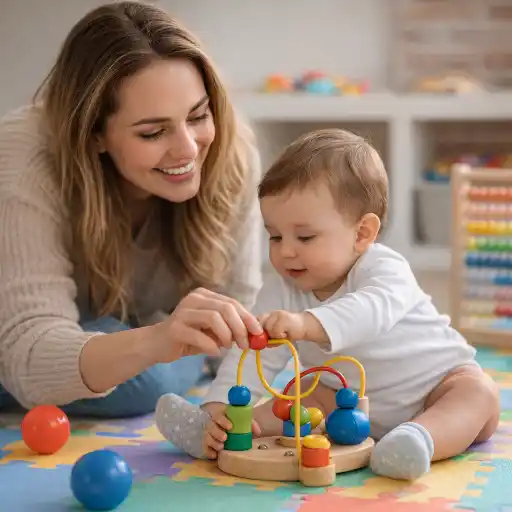
Keep materials clean, age-appropriate, and free of choking hazards. Stay close and actively supervise throughout play. For a more complete framework for individual infant activity planning, explore ChildCareEd’s Meaningful Lesson Planning for Infants/Toddlers Buy Now $24.00.
How can care routines become natural invitations to play?
Play does not need to be separated from care. A baby may be ready to connect during a diaper change, while being held after feeding, or during a quiet transition before rest. These routines already offer face-to-face attention, touch, language, and repetition. When adults narrate gently and wait for responses, ordinary care can become a warm exchange rather than a rushed task.
For example, during a diaper change, a caregiver might describe each step, sing a brief song, and pause when the infant makes a sound. During a calm post-feeding moment, the adult may share a short book or offer a safe object to explore. The sequence should still follow the baby’s cues and the program’s care and safety procedures; play is an invitation, not a reason to delay feeding, comfort, or sleep.
- Use a soft voice and simple language to describe what is happening.
- Pause for eye contact, a movement, a sound, or another response.
- Repeat a familiar song or game if the infant remains engaged.
- Transition to comfort or rest when the baby shows signs of tiredness or disengagement.
Predictable routines can provide a sense of security, while responsive timing respects individual differences. For classroom planning that connects routines with individualized schedules, consider ChildCareEd’s Balancing Act: Schedules and Routines Buy Now $16.00. State requirements vary - check your state licensing agency for applicable care, supervision, and documentation rules.
How can staff observe, document, and adjust without overplanning?
Useful documentation can be brief. Record what the infant did, the context, and the adult’s response—not a judgment about the child. For example: “After a diaper change, Maya watched the scarf move for about a minute, reached twice, then turned away. We stopped and offered a quiet cuddle.” This note can help another caregiver recognize a pattern and plan an appropriate next opportunity.
Observation is most valuable when it informs action. Head Start’s guidance on child observation and individualizing responsive care emphasizes using what educators learn about a child’s interests, strengths, and needs to adapt experiences. In practice, staff can use a short cycle:
- Notice: What captured the infant’s attention? What cues showed readiness or a need for a break?
- Reflect: Was the activity comfortable, accessible, and suitable for the child at that moment?
- Adapt: Repeat, simplify, change the material, or wait for another window.
- Share: Pass along a useful observation during a handoff or family update.
Avoid turning every brief interaction into paperwork. A clear sentence or agreed-upon notation is often enough to support continuity. Directors can help by choosing a consistent, privacy-conscious documentation method and building short cue-sharing into shift changes. Families can add valuable context about a baby’s interests, home-language experiences, and cues at home. If concerns about development arise, document observations objectively and follow program procedures for discussing them with families and appropriate professionals.
What common planning mistakes should providers avoid?
When time is tight, planning can become either too elaborate or too rigid. An infant may be calm and ready to explore, but a long setup can use up the moment. Conversely, adults may feel pressure to keep an activity going after a baby has turned away. Responsive planning keeps the activity simple and lets the infant’s cues determine whether to continue.
- Planning too many goals: Choose one clear intention for an interaction or short planning period.
- Expecting every infant to join at the same time: Offer activities in flexible windows rather than synchronizing babies to a group lesson.
- Overlooking disengagement cues: Pause or stop when the infant needs a break; attention is not something to demand.
- Using materials without checking safety: Select clean, suitable items and maintain active supervision.
- Confusing a short experience with a failed activity: A minute of shared looking or vocal turn-taking can be meaningful.
One helpful team practice is to prepare a small set of ready-to-use materials and agree on simple language for common cues. Keep a few options available—book, song, mirror, or graspable toy—without cluttering the play area. Then staff can respond promptly while protecting infants’ comfort and safety.
Professional learning can deepen this work. Playful Learning: Infant & Toddler Activities Buy Now $25.00 focuses on planning individualized activities suited to young children’s abilities, while CDA Infants/Toddlers: Benefits to Observing Buy Now $16.00 explores observation and documentation approaches. Review course details to determine which training best fits your team’s professional-learning needs.
Conclusion: How do you make a few minutes of infant play count?
Plan infant play around readiness, relationships, and safety—not the length of a scheduled block. Watch for a calm, alert moment, offer one simple activity, give the baby time to respond, and follow signals to continue, pause, or stop. Care routines can offer natural opportunities for connection, and short, objective observations can help staff individualize future experiences.
The central question—how to plan play when the best moment lasts only a few minutes—has a practical answer: prepare lightly, observe closely, and respond warmly. One brief exchange can support exploration and strengthen a trusting relationship. Your attentive presence, flexible planning, and respect for each infant’s cues are powerful parts of the classroom curriculum.
- 45 Hour Child Growth and Development
- 45 Hour Preschool Methods and Materials
- Birth to Five CDA Credential with Portfolio Review
- 45 Hour Infant and Toddler Methods and Materials
- Pediatric RSV First Aid & CPR/AED
- 45 Hour School Age Methods and Materials
- 45-Hour Infant and Toddler Curriculum
- Positive Attention: Interactions & Supervision for Infants & Toddlers
- Texas Director Credential
- The“Puzzle Pieces” of Sleep Stages in Children and How they Fit Together
- CDA Certification en Español: Recursos y Consejos para Educadores Bilingües
- How Your Words and Songs Help Infants Learn
- Recursos en Español sobre el Sueño Seguro del Bebé
- 10 Ejemplos de Cómo la Cultura Influye en el Desarrollo Infantil
- Proporciones de Cuidado Infantil y Tamaños de Grupo por Edad en Nueva Jersey (Guía Rápida para Centros y Hogares)
- Por Qué la Supervisión Activa Es Clave para la Seguridad en el Cuidado Infantil
- Consejos de Supervisión Activa para Salones de Preescolar y el Juego al Aire Libre
- Teaching Kids About Juneteenth Through Activities and Crafts
- What Positive Behavior Guidance Techniques Work in Child Care?
- Celebrando la amistad en el cuidado infantil durante el Día de los Mejores Amigos
- What Can the Golden Gate Bridge Teach Preschoolers About Connection?
- Canciones, juegos y preguntas de círculo para niños
- How can we ease separation anxiety when routines change?
- Maryland Daycare Ratios: What Happens When You’re Short-Staffed?
- How Can You Plan Infant Play When the Best Moment Lasts Only a Few Minutes?
- How Can Child Care Providers Help Children Return After a Long Break?
- How Can Child Care Providers Keep Indoor Play Manageable When Rain Lasts All Week?
- How Can Teachers Turn Everyday Classroom Problems Into Learning Opportunities?
- How Can Real After-School Plans Help Children Learn to Tell Time?
