A baby does not need to take steps to experience autumn: a breeze, shifting light, and a soft fabric can turn a short outdoor pause into a meaningful learning moment. Explore practical ways to plan a calm, safe texture walk, and build your infant curriculum skills with Playing with a Purpose: Infant/Toddler Lesson Planning  Buy Now $24.00, a course that supports developmentally appropriate activity planning for children from birth through age three. For ideas that extend beyond one walk, Creating the Natural Outdoor Classroom Buy Now $16.00 can help you consider how outdoor colors, sounds, and textures enrich children’s experiences.
Why does a texture walk matter for a nonwalking infant?
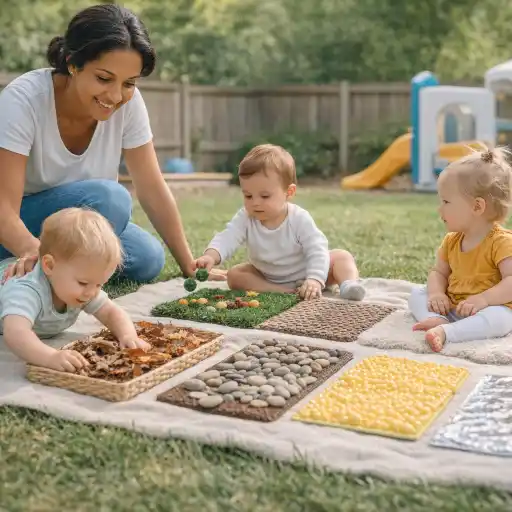
A fall texture walk is not a walking lesson. It is a brief, supported opportunity for an infant to notice the outdoor world while lying on a blanket, sitting with adult support, or being held. Providers can draw attention to a leaf moving overhead, the sound of a breeze, or the difference between a smooth cotton cloth and a soft fleece square. These encounters invite #sensory exploration and shared attention without expecting the baby to move independently.
Infants learn through their senses and relationships. As Head Start explains in its guidance on outdoor experiences for infants and toddlers, outdoor settings offer sights, sounds, smells, and tactile experiences not always available indoors. A responsive adult adds value by noticing what draws the baby’s gaze, narrating simply, and pausing to allow a response—perhaps a reach, a kick, a vocalization, or a relaxed look.
This kind of experience can support visual attention, early communication, body awareness, and emotional security. The aim is not to cover a list of autumn facts. It is to create a calm moment of connection and discovery, then adapt or stop according to the infant’s cues. Small, repeated experiences may be more meaningful than an elaborate seasonal activity.
How can you prepare a simple and inviting route?
For infants who are not yet walking, “walk” can describe the adult’s slow route through an outdoor area, with planned pauses rather than a trip the baby must complete on foot. Choose a quiet, accessible path with a stable place to stop. Before leaving, consider the infant’s feeding, sleep, and comfort needs, and coordinate with colleagues so supervision remains clear if you are caring for more than one child.
- 🍂 Choose a shaded, level spot for a clean blanket or mat, away from traffic, standing water, animal waste, and sharp or unstable objects.
- Keep the group small and the route short; pause where a baby can safely observe moving leaves, branches, or changing light.
- Bring only a few washable, large materials, such as cotton and fleece squares. Keep loose natural objects out of reach if they could be mouthed or become choking hazards.
- Pack wipes or hand-cleaning supplies, extra clothing, and a weather-appropriate layer.
- Position the adult within arm’s reach and maintain uninterrupted visual and auditory supervision.
Keep the setup uncluttered. A single leaf in view and a calm voice may be enough. Outdoor environments should be planned with the same care as indoor learning spaces; the Virtual Lab School’s outdoor environment guidance emphasizes developmentally appropriate surfaces, close supervision, and attention to infants’ varied movement abilities. A stroller or carrier may be useful for transition, but it should not replace a safe, supported opportunity to observe when the program’s practice and the infant’s needs allow.
Which fall textures and experiences are appropriate?
Offer sensory contrasts that are predictable and easy to supervise. The baby can explore through sight, sound, and adult-supported touch; direct contact with outdoor materials is not required. For example, watch leaves sway from a safe distance, listen to them rustle, or let the infant touch a clean, large piece of washable fabric while you describe how it feels.
- Look: Slowly point out one large leaf or a branch moving in the breeze. Keep it outside the infant’s mouth and allow time for visual tracking.
- Listen: Pause to notice wind, birds, or leaves rustling. Use a few simple words—“The leaves move”—then wait for the baby’s response.
- Touch: Offer a large, clean cotton or fleece square. Guide it to the infant’s hand or foot only if the child appears comfortable.
- Notice temperature: Let the baby experience comfortable outdoor air while dressed appropriately; do not use hot, cold, or wet materials to create a contrast.
- Share language: Name what the infant is attending to: “You’re watching the yellow leaf move.”
Avoid presenting small leaves, acorns, seeds, pinecones, or other objects that can break, shed pieces, or fit in a baby’s mouth. Natural materials can also carry dirt, mold, pesticides, or other contaminants. For ideas on simple fall play, ChildCareEd’s guide to babies exploring fall safely through simple play also stresses thoughtful material selection and responsive adult interaction.
How do you keep the experience safe and responsive?
Safety starts before the outing. Check the route and stopping areas, review family information about allergies or sensitivities, and follow your program’s outdoor procedures. Dress the infant for the weather and protect young babies from direct sun with shade and suitable clothing. The CDC’s outdoor play and safety guidance notes that babies six months and younger should be kept out of direct sunlight; sunscreen is not recommended for this age group.
Maintain close, active supervision throughout. Infants explore by mouthing, so screen every material for choking, sharp edges, breakage, loose parts, and sanitation concerns. Do not leave a baby unattended on a blanket or in a carrier. Avoid water-based activities during the walk; even small amounts of water require constant, undistracted supervision.
Watch the infant rather than trying to finish a planned activity. Relaxed posture, focused gaze, reaching, kicking, or gentle vocalizing may signal interest. Repeated turning away, stiffening, arching, yawning, crying, or rapid breathing may indicate the infant needs a pause or a change.
- Reduce stimulation: move to a quieter spot, put away extra materials, or slow your narration.
- Offer comfort and familiar care, and let the baby rest or return indoors.
- State requirements vary - check your state licensing agency, as well as your program’s policies, for applicable outdoor safety practices.
How can you individualize and document the walk?
Adapt the experience to each infant’s positioning, mobility, sensory preferences, health needs, and temperament. One baby may enjoy watching motion while lying on a mat; another may prefer being held close and listening to the rustle of leaves. A child with visual differences might benefit more from sound or carefully supported tactile exploration. Families can share useful information about comfort, routines, and materials the infant already knows.
Plan one modest intention, such as noticing a moving object, reaching toward a texture, or attending to a caregiver’s words. Then observe what actually happens instead of judging the experience by whether the baby touched a leaf. A short note could record: “During a shaded outdoor pause, Eli followed a moving branch with his eyes and relaxed when the caregiver named the breeze. Next time: offer a brief leaf-watching moment from the same comfortable position.”
Documentation helps staff make thoughtful next steps and share meaningful details with families. Directors can keep a small outdoor kit ready with a clean mat, washable fabric squares, weather supplies, and a route-check reminder. The ChildCareEd guide to infant and toddler lesson planning describes a useful cycle: observe, plan, try, document, and adjust.
Common pitfalls are easy to avoid: don’t expect every infant to touch natural materials, overload the setup with seasonal props, or treat participation as a developmental test. Responsive care means the child’s cues guide the experience.
Conclusion: What makes a fall texture walk successful?
A successful fall texture walk for a nonwalking infant is brief, safe, and led by the child’s attention. The baby can observe a moving leaf, hear a rustle, feel a clean fabric, and share a quiet exchange with a trusted adult—without being expected to walk or handle natural objects. Preparation, close supervision, comfortable conditions, and attention to infant cues turn a simple outing into a purposeful experience.
Begin with one clear intention, a short accessible route, and just a few safe materials. Observe, document what the infant actually notices, and use that information to plan a gentle next step. With this responsive approach, autumn exploration can support connection and #development while honoring each infant’s pace.
For further professional learning, these English-language ChildCareEd courses connect to planning and outdoor practice:
- What Makes Me Special: An Overview of Autism and ADHD
- Birth to Five CDA Credential with Portfolio Review
- 45 Hour Infant and Toddler Methods and Materials
- Pediatric RSV First Aid & CPR/AED
- CDA Bridge Bundle: Infant/Toddler without Portfolio Review
- CDA Bridge Bundle: Infant/Toddler
- 45-Hour Infant and Toddler Curriculum
- CDA Certification en Español: Recursos y Consejos para Educadores Bilingües
- 💛🧩 ¿Cómo puedo hacer que mi enseñanza sea inclusiva para los niños con autismo?
- 🚨 Reporte Obligatorio en Nevada
- Recursos en Español sobre el Sueño Seguro del Bebé
- ¿Qué Calificaciones Necesitas para Trabajar en Cuidado Infantil?
- ¿Cuáles son las mejores actividades del Día de la Tierra para niños en casa o en el aula?
- Capacitación en Salud y Seguridad Preventiva en Línea para Proveedores de Cuidado Infantil
- Proporciones de Cuidado Infantil y Tamaños de Grupo por Edad en Maryland (Guía Rápida para Centros y Hogares)
- Proporciones de Cuidado Infantil y Tamaños de Grupo por Edad en Virginia (Guía Rápida para Centros y Hogares)
- Actividades de Otoño Fáciles para Preescolares esta Temporada
- Celebrando la amistad en el cuidado infantil durante el Día de los Mejores Amigos
- Crunch, Stomp, Scoop! Fall Activities Toddlers Can’t Resist
- Rainy Fall Day? 12 Indoor Activities Preschoolers Won’t Want to Stop
- What’s Happening Outside? Fall Science Adventures for Preschoolers
- How Can Fall Sensory Activities Support Infant and Toddler Development?
- How Can Outdoor Fall Activities Support Children’s Development?
- How Can You Adapt Fall Learning Activities for Children of Different Ages?
- How Can Everyday Fall Routines Support Infant and Toddler Development?
- How Can You Plan a Safe Fall Texture Walk for Infants Who Aren’t Yet Walking?
- How Can Child Care Providers Offer Fall Foods While Honoring Each Infant’s Feeding Plan?
