Preschoolers learn kindness when they can see, practice, and talk about care—not just hear “be nice.” Washington educators can make empathy, fairness, and respectful communication part of daily routines; the Supporting Social Learning: Creating Classrooms that Care  Buy Now $24.00 course offers practical strategies for building relationships, community, and children’s problem-solving skills. For a complementary focus on positive relationships with children, families, and colleagues, explore Classroom Positivity Buy Now $24.00.
In Washington, this work aligns naturally with the state’s early learning guidance and its emphasis on social-emotional development. The seven activities below turn everyday moments—waiting for a turn, welcoming a new classmate, helping a peer, and resolving a disagreement—into approachable practice.
Why teach kindness as a skill rather than a rule?
“Be nice” expresses a value, but it does not tell a young child what to do when two friends want the same truck, someone is left out, or a peer looks upset. Kindness becomes learnable when educators name the action, make its impact visible, and offer words children can use. For preschoolers, empathy and fairness are developing capacities; children need repeated, supported opportunities to notice others, communicate needs, and consider solutions.
Secure relationships and consistent routines create a foundation for social-emotional learning. Head Start describes relationships, supportive environments, and practice with feelings and problem-solving as connected supports for children’s development. Washington’s Early Learning and Development Guidelines provide a state-specific reference for understanding children’s learning and development. Educators can also draw on Washington’s SEL framework, which highlights equity, culturally sustaining practice, universal design, and trauma-informed approaches.
This perspective is reassuring for staff: peer conflict does not mean the classroom community has failed. It signals a chance to teach a still-emerging skill. The aim is not perfect behavior or forced affection, but a classroom where children feel they belong and have tools to act with care. State requirements vary - check your state licensing agency.
How can daily routines build fairness and belonging?
Everyday routines create natural practice because children encounter them again and again. Keep the language short, concrete, and consistent across adults. Describe what you see rather than relying on broad labels: “You waited while your friend finished,” or “You moved over so there was room.” This helps children connect a specific choice with fairness and community.
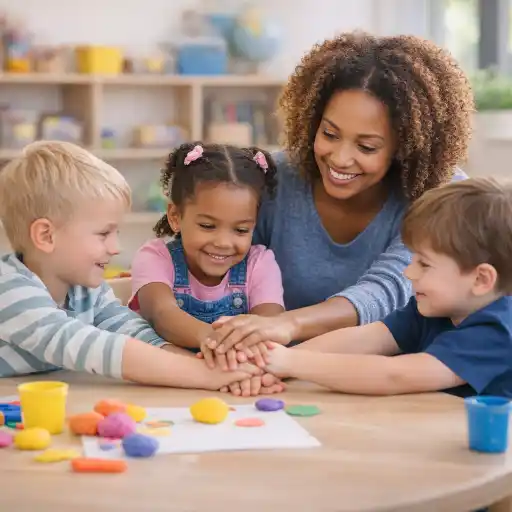
- Arrival: Greet children by name and invite peers to help a newcomer find a cubby or choose a play area. Phrase: “Would you like to show Noor where the blocks are, or would you like me to go with you?”
- Play: Keep turn-taking visible with a timer, turn card, or clear sequence. Phrase: “You are using the scoop now. When the sand timer is empty, Maya gets a turn.”
- Meals and cleanup: Make helpful tasks cooperative and accessible. Phrase: “You carried the cups together so everyone can reach one.”
- Transitions: Notice patience and making space. Phrase: “You waited while Sam tied his shoe. That helped our group move safely.”
Fairness does not always mean every child gets the same thing at the same time. It means children have a meaningful chance to participate, with support suited to their needs. Offer words, gestures, visuals, or communication devices as appropriate; allow time for children to respond. Avoid turning kindness into a contest or requiring public sharing. Quiet listening, giving space, or asking before helping can be caring choices, too.
What seven activities help children practice kindness?
Choose activities that are brief, playful, and connected to real classroom relationships. Model first, then invite children to try. Adapt participation so children can speak, point, sign, draw, use a communication device, or observe.
- Turn-taking with a visual cue: Use a turn card or sand timer with a popular material. Help children name the plan. Phrase: “You can say, ‘Can I have a turn when you’re finished?’”
- Welcome-a-friend tour: Pair a willing child with a new classmate to show one or two classroom choices. Phrase: “Let’s help Eli find a place to start. Would you like to invite him to the play kitchen?”
- Helping hands job: Rotate small, meaningful jobs—passing napkins, watering a plant, or returning books. Connect the task to the group. Phrase: “You brought the books back so everyone can choose a story.”
- Feelings-and-needs puppet play: Let puppets act out a disagreement or a friend who wants to join play. Ask children to suggest safe, respectful words. Phrase: “What could the puppet say to ask for space or an invitation?”
- Cooperative build: Give a small group one shared building goal and encourage planning, turn-taking, and ideas from each child. Phrase: “How can we make room for both ideas?”
- Kindness noticing walk: During the day, look for caring actions such as waiting, inviting, helping, or respecting a boundary. Reflect later without ranking children. Phrase: “What helpful action did you notice today?”
- 📚 Story pause and act it out: Pause before a story character responds to a problem. Invite children to predict a respectful next step, then use puppets or dramatic play to try it. Phrase: “What might the character need, and what could a friend say?”
Children do not need to perform kindness for praise. Acknowledge effort specifically and keep the focus on actions and impact, not on who is “the nicest.”
How should teachers coach disagreements respectfully?
When conflict becomes active, safety and emotional regulation come first. Move close, calmly stop unsafe actions, and use concise language. Once children are ready, support them to identify the problem and make a workable plan. NAEYC’s three-step approach to helping children navigate conflict recommends describing the behavior and feelings, explaining the impact, and guiding children toward an appropriate alternative.
For example, if two children reach for the same block, an educator might say: “You are both reaching for the blue block. You look frustrated. Grabbing can hurt hands, so I’ll hold it while we find a plan. Would you like to take turns with the timer, trade, or find another block together?” If one child cannot answer yet, offer a visual choice or wait quietly. This response validates feelings while maintaining a clear safety limit.
Repair should be meaningful and developmentally appropriate. A child might return an item, help rebuild a tower, check whether a peer is okay, or give space. Do not force a hug, eye contact, or a quick apology as proof of empathy. Children can learn respectful communication through phrases such as “I don’t like that; please stop,” “Can I join?” and “What can we do to fix it?”
How can educators make kindness inclusive and sustainable?
A caring classroom reflects the children and families who belong to it. Use books, dramatic-play materials, names, languages, and images that represent varied cultures, family structures, abilities, and ways of communicating. Ask families what respectful helping, greetings, and emotional expression look like in their contexts rather than assuming one style fits everyone.
Plan for access: provide visual scripts, enough space, predictable routines, and options for participating. Some children may prefer to watch before joining; others may communicate with gestures or assistive tools. Respecting a “no,” asking before touching, and allowing a child to decline help are important lessons in empathy and boundaries.
Directors can help staff sustain the practice by choosing a few shared phrases, discussing brief observations in team meetings, and reflecting on whose kind actions receive attention. A free Kindness & Respect Toolkit Buy Now $0.00 includes educator reflection, family communication, and preschool activities that can support planning. The prompt “What did you notice?” is a simple way to make care visible without scoring or comparing children.
Conclusion: What should Washington educators try first?
Teaching kindness beyond “be nice” means turning values into observable actions and useful language. Welcome new classmates, make turns predictable, create genuine ways to help, and coach disagreements with calm limits and child participation. These repeated experiences help preschoolers practice empathy, fairness, and respectful communication in the places where they naturally arise.
Start with one routine this week: introduce a turn card, invite a peer to welcome a newcomer, or name a helpful act during cleanup. Reflect with your team on what children are learning and which supports make participation easier. For a deeper professional learning experience, the linked ChildCareEd courses can help educators strengthen classroom relationships and positive practice; confirm whether any training meets your individual or program requirements.
Five practical teacher phrases to keep handy
- “You can ask, ‘Can I have a turn when you’re finished?’”
- “Would you like to invite your classmate to play, or should I help?”
- “You noticed your friend needed help. Let’s ask if they want it.”
- “You both have ideas. What could work for everyone?”
- “What can we do to make this right?”
With steady modeling and inclusive opportunities to practice, kindness becomes part of how the classroom community works—not just a phrase children are told to repeat.
More relevant ChildCareEd courses:
- 45 Hour Child Growth and Development
- CDA Preschool Credential with Portfolio Review
- 45 Hour Preschool Methods and Materials
- What Makes Me Special: An Overview of Autism and ADHD
- Birth to Five CDA Credential with Portfolio Review
- CDA Bridge Bundle: Preschool
- Brighter Futures: Social Emotional Development
- CDA Bridge Bundle: Preschool without Portfolio Review
- The Right Kind of Influence for Young Children
- CDA Certification en Español: Recursos y Consejos para Educadores Bilingües
- ❤️ ¿Cómo ayudan los educadores a las familias a acceder a los servicios que necesitan?
- Requisitos Para Ser Maestra Principal En Un Daycare: Lo Que Necesitas Para Empezar
- Proporciones de Cuidado Infantil y Tamaños de Grupo por Edad en Nueva Jersey (Guía Rápida para Centros y Hogares)
- Proporciones de Cuidado Infantil y Tamaños de Grupo por Edad en Virginia (Guía Rápida para Centros y Hogares)
- Cómo Trabajar en el Cuidado Infantil en Carolina del Norte: Requisitos y Pasos
- Cómo Ser Maestra de Preescolar en Illinois
- Cómo Ser Maestra de Preescolar en California
- Cómo Ser Maestra de Preescolar en Maryland
- Cómo Ser Maestra de Preescolar en Virginia
- Celebrando la amistad en el cuidado infantil durante el Día de los Mejores Amigos
- Canciones, juegos y preguntas de círculo para niños
- How Can Washington After-School Providers Support Homework, Social Skills, and Family Stability?
- How Can Child Care Providers Teach Empathy and Kindness in the Classroom?
- How Can Drawing and Dictation Help Children Respond to Juneteenth?
- How Can Educators Teach Children to Comfort a Friend Without Requiring Hugs?
- How Can We Help Young Children Notice Everyday Acts of Care?
- How Can Child Care Providers Teach Preschoolers About Fairness and Community on Martin Luther King Jr. Day 2027?
- How Can a December Kindness Countdown Build a Kinder Classroom Before the Holiday Rush?
- How Can Washington Preschool Educators Teach Kindness Beyond “Be Nice”?
