Small, thoughtful changes can help an autistic child feel safer, communicate more clearly, and take part in preschool life without asking them to hide who they are. Explore Effective Approaches for Autism and Inclusion  Buy Now $55.00 for practical training on adapting classroom environments, supporting communication, and partnering with families; for a play-centered extension, consider Play with Purpose: Supporting Children with Autism Buy Now $55.00. The ideas below offer a starting point, while these courses provide a more structured opportunity to build your professional knowledge and classroom practice.
Why does individualized support matter?
Autism is not a single classroom profile. Children may communicate, play, process sensory information, shift attention, and respond to routines in different ways. Each child also brings strengths, interests, relationships, and preferences that can guide meaningful support. The goal is not to make a child appear “typical”; it is to improve access, participation, autonomy, and belonging.
Start with respectful curiosity. A child who uses gestures, pictures, signs, speech, or an assistive communication device is communicating. Repetitive movement, humming, limited eye contact, or a preference for familiar play may serve a purpose for that child. Observe what happens before and after a behavior, consider the child’s perspective, and ask what the environment may be telling you.
Inclusive practices benefit the whole group. Clear routines, manageable directions, flexible participation, and predictable access to quiet or movement can help many preschoolers—not only autistic children. A welcoming #classroom recognizes that children may use different tools and approaches to learn together.
How can predictable routines and transitions help?
Predictable routines make the sequence of the day easier to understand. Predictability is not rigidity: a schedule can change, but staff can communicate the change clearly and keep other familiar cues in place. Visual supports—photos, objects, symbols, gestures, or words—can make information available after spoken directions have passed.
- Place a simple picture schedule where children can see and use it.
- Use a “now/next” or first-then card to clarify an immediate transition.
- Give advance cues with a timer, song, gesture, or short consistent phrase.
- Show routine steps for tasks such as cleanup, handwashing, or arrival.
- When plans change, replace the picture and explain briefly: “The playground is closed. We’ll play in the gym.”
Teach the child how to use the schedule: point to what is happening, indicate what comes next, and invite the child to turn over or move a completed card.
How can teachers support communication in multiple ways?
Communication includes much more than spoken sentences. A preschooler may use speech, echolalia, gestures, signs, pictures, objects, or a communication device. Treat each intentional attempt as meaningful and respond to the message rather than requiring a particular form.
- Pair concise spoken directions with a picture, object, or gesture.
- Offer manageable choices, such as “blocks or play dough?” and allow processing time.
- Model useful words and messages, including “help,” “more,” “stop,” “my turn,” and “all done.”
- Give one direction at a time and pause before repeating or adding language.
- Keep the child’s communication system available throughout the day; never remove it as a consequence.
For example, during snack, show pictures or real items to help a child choose between two foods. During play, model a short phrase, then wait without pressuring the child to repeat it. Coordinate with families and, when appropriate, speech-language professionals so adults respond consistently to the child’s established communication methods. Visual supports can clarify choices and expectations while helping children express preferences and needs. These strategies can strengthen #communication and reduce the frustration that may occur when a child’s message is missed.
How can you create a sensory-supportive environment?
A sensory-supportive room does not have to remove every sound, texture, or bright color. It offers practical options and reduces unnecessary barriers. Observe when a child disengages or becomes distressed: consider noise, crowding, lighting, visual clutter, transitions, fatigue, hunger, illness, and communication demands rather than assuming a single cause.
- Keep pathways clear and reduce visual clutter in busy areas.
- Separate louder activities from quieter choices when possible.
- Offer flexible seating and appropriate opportunities for movement.
- Provide a supervised, low-stimulation area the child can use for a break.
- Use agreed supports, such as headphones, when they are safe and helpful.
Teach children how to request and use supports while calm, and plan how they can return to play or learning when ready. A calm area is not a punishment space and must never be used to confine a child. Check materials for safety, follow program policies, and maintain active supervision. Making ordinary choices available to the whole group—such as a quieter seat or a movement break—can reduce stigma and support #sensory regulation in an inclusive way.
How can play and peer connections foster inclusion?
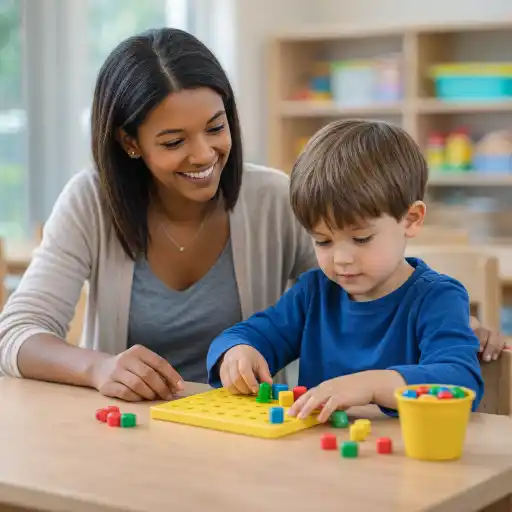
Play is both a relationship and a learning opportunity. Begin with the child’s interests: sit nearby, notice what they are doing, and join without taking control. If the child is lining up cars, you might line up a car too; once connection is established, add one gentle variation, such as rolling a car along a track. Follow the child’s response rather than treating a particular kind of play as the only successful outcome.
- Arrange materials to make playing near peers comfortable and accessible.
- Start with brief shared moments before expecting extended cooperative play.
- Connect children through shared interests and provide duplicate materials when useful.
- Model simple peer invitations and turn-taking with objects or visual cues.
- Recognize participation in many forms: watching, imitating, sharing space, or taking a short turn.
Research on play-based social strategies notes that scripts, video modeling, and offering choices can create natural opportunities for children to engage with peers. Avoid making eye contact or conventional pretend play a measure of connection. Respectful, child-led play supports #play, communication, and a sense of belonging. For more guided examples, Play with Purpose Buy Now $55.00 focuses on using play to support engagement, social interaction, and regulation.
How can staff and families build a consistent support plan?
Families know the child’s interests, preferred communication, home routines, cultural context, and strategies that have helped before. Begin conversations with strengths and specific observations: “He used the picture to ask for more at snack,” rather than a broad judgment such as “He was difficult.” Ask what the family would like the classroom team to know and share useful observations in return.
A concise support snapshot can help teachers, assistants, directors, and substitutes respond consistently. Include:
- How the child communicates needs, choices, discomfort, and enjoyment.
- Interests, preferred activities, and familiar routines.
- Situations that may be challenging and supports that have helped.
- Relevant safety information and family priorities.
- One or two observable participation goals to review together.
With family consent, coordinate with the child’s educational team or relevant specialists. Follow an applicable IEP or IFSP and communicate objective observations; classroom staff should not diagnose autism or prescribe therapy. Directors can support implementation by modeling strategies, sharing consistent staff language, orienting substitutes, and making time to review what is working. State requirements vary - check your state licensing agency. For focused professional learning on inclusive strategies and family collaboration, explore Coaching for Success: Inclusive Strategies to Support Children with Autism Buy Now $55.00$45.00.
Conclusion: What are the most important ways to support an autistic preschooler?
Effective support begins with a respectful relationship and careful observation. Make routines visible, communicate in more than one way, offer sensory options, and build on the child’s interests through play. Work in partnership with families and specialists, and adjust supports based on how the child responds.
Keep the aim practical: help the child participate, communicate, feel safe, and belong—not simply comply or look like peers. Choose one adjustment to try, share what you notice with the team, and celebrate meaningful progress, including small steps toward connection and independence. Consistent, individualized changes can make preschool a more welcoming place for the child and the whole group.
For further learning, consider these English-language ChildCareEd courses:
- Effective Approaches for Autism and Inclusion Buy Now $55.00
- Play with Purpose: Supporting Children with Autism Buy Now $55.00
- Coaching for Success: Inclusive Strategies to Support Children with Autism Buy Now
$55.00$45.00 - Autism Awareness in Child Care Buy Now $16.00
- Special Needs: From Referral to Inclusion Buy Now $24.00
- CDA Preschool Credential
- CDA Home Visitor Subject Area 3 Part 3 Birth to 5
- Lesson Planning for Preschoolers
- CDA Home Visitor Subject Area 5 Part 3 Birth to 5
- Children at the Wheel: Emergent Curriculum
- CDA Bridge Bundle: Family Child Care without Portfolio Review
- CDA Bridge Bundle: Infant/Toddler without Portfolio Review
- CDA Bridge Bundle: Preschool without Portfolio Review
- Texas Director Credential
- Effective Coaching & Mentoring in ECE
- CDA Certification en Español: Recursos y Consejos para Educadores Bilingües
- 🔍 ¿Qué ves cuando observas a un niño aprender?
- 💛🧩 ¿Cómo puedo hacer que mi enseñanza sea inclusiva para los niños con autismo?
- 👶 ¿Cuáles son las proporciones y grupos requeridos en Dakota del Norte? 🏫
- 10 Ejemplos de Cómo la Cultura Influye en el Desarrollo Infantil
- Proporciones de Cuidado Infantil y Tamaños de Grupo por Edad en Maryland (Guía Rápida para Centros y Hogares)
- Proporciones de Cuidado Infantil y Tamaños de Grupo por Edad en Virginia (Guía Rápida para Centros y Hogares)
- Lista para Abrir una Guardería en Casa en Dakota del Norte: Cómo Empezar
- Celebrando la amistad en el cuidado infantil durante el Día de los Mejores Amigos
- Cómo simplificar la capacitación para sus empleados de daycare
- How Can Your Program Effectively Support Autistic Children?
- When Is Repetitive Speech Typical—and When Should Teachers Pay Closer Attention?
- How Can Visual Daily Schedule Cards Turn Classroom Chaos into Calm?
- How Can Predictable Classroom Routines Support Autistic Children?
- What Should a Teacher Do If They Suspect Autism?
- How Can You Support an Autistic Child in a Preschool Classroom?
- How Can You Help an Autistic Preschooler Join a Group Game on Their Own Terms?
- How Can Preschool Providers Handle Unexpected Routine Changes with Confidence?
- How Can Teachers Support an Autistic Child in a Preschool Classroom?
- How Can You Prepare an Autistic Child for a Small Change in the Arrival Routine?
