A small shift at drop-off—such as a different greeting, classroom entrance, or first activity—can feel significant when a child is counting on a familiar sequence. With clear, respectful preparation, providers can help the child feel secure and participate without treating flexibility as a demand. The [Autism Awareness in Child Care course  Buy Now $16.00] offers focused learning about autism and supportive child care practices, while [Self-Regulation & Change: Helping Children Cope Buy Now $16.00] explores practical ways to support children through transitions and unexpected changes.
Why can a small arrival change feel so big?
Arrival is more than entering a room. It may involve separating from family, navigating sounds and movement, greeting adults, putting belongings away, and shifting into the first activity. A child may rely on the order and cues of these steps to understand what is happening. If one detail changes without explanation, the whole sequence can feel uncertain.
Autistic children are individuals, so the meaning of a change will vary. A different staff member, a crowded doorway, a new greeting, or a change in where the child puts a backpack may affect communication, sensory comfort, or readiness to separate. Some children may show distress through crying or protest; others may become quiet, pause, or move away. These responses are information about the experience, not evidence of intentional noncompliance. Guidance on supporting autistic children in early years settings emphasizes observing what happens before distress and noticing the child’s communication and sensory context.
Predictability is not the same as insisting that every morning be identical. Rather, it gives the child understandable information and a dependable way to find the next step. A visible cue can support #security and participation while leaving room for flexibility. ChildCareEd’s guidance on predictable classroom routines likewise emphasizes that routines should prepare children for change, not make the classroom rigid.
How should providers choose and explain the change?
First, define the change in concrete terms. “Arrival will be different” may be too broad; “Today we enter through the side door” tells the child what to expect. Keep the rest of the arrival sequence as familiar as possible. If the greeting changes, preserve the usual cubby, visual schedule, and first activity when you can.
Tell the family and staff team what will happen, when the child will hear about it, and which adult will provide support. If the change is planned, introduce it before arrival, using a method the child understands: a brief spoken explanation, photograph, familiar object, drawing, or simple written note. Consider the child’s communication preferences and home language. A short preview can be more useful than a detailed explanation.
- Identify the exact changed step and what will remain the same.
- Use neutral, direct wording: “Today Ms. Lee will greet you at the side door.”
- Show a photo of the person, entrance, or first activity if that is meaningful to the child.
- Allow time to notice the information and respond; avoid repeated rapid prompts.
- Offer a genuine, limited choice where possible, such as carrying the arrival card or holding a comfort item.
Families can share phrases, objects, and strategies that help with transitions at home. This is a partnership, not a request that home and child care be identical. When adults agree on concise wording and a calm handoff, the child encounters a more coherent message.
How can arrival cards make a changed routine understandable?
Visuals make a sequence available to look at again after spoken words have passed. Morning Arrival Routine Cards can show key steps such as entering, greeting a teacher, putting belongings away, and choosing the first activity. For a small change, providers can replace or add just one card—for example, a photograph of a different doorway—while keeping the familiar cards in their usual order.
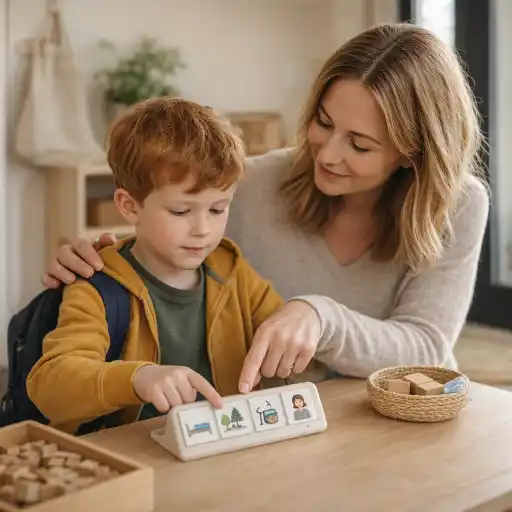
Choose images the child can interpret. Real photographs of the classroom and people may be clearer than generic illustrations; some children may prefer objects, symbols, words, or a combination. Keep the sequence short enough to scan. A two-card “now/next” strip can be more accessible than a full-day schedule if the child is overwhelmed by too much information.
- Show the child the familiar arrival sequence and point out the changed step.
- Use a clear “different today” or “change” card only if the child understands that symbol.
- State what happens next in one calm sentence, then pause for processing.
- Let the child move a completed card, match it to the location, or carry it as appropriate.
- Keep cards available and consistent across the adults who support arrival.
Teach the cards during calm moments rather than first introducing them when the child is already distressed. Visuals are supportive tools, not tests: successful use does not require the child to look at the card on demand. For practical background on schedules and visuals, see ChildCareEd’s article on visual schedules in inclusive classrooms.
What should adults do during the first changed arrival?
Prepare the space before the child arrives. Keep the entry path clear, have the relevant card ready, and make sure the adult responsible for greeting knows the agreed words and plan. A familiar adult can support the handoff when available. Avoid crowding the doorway or adding several new expectations at once.
When the child arrives, greet them warmly without requiring a particular response, such as eye contact or spoken words. Show the visual and use a brief, factual cue: “Today we came through this door. First backpack, then blocks.” Give the child time to process before offering another prompt. If they need support, break the routine into manageable actions and model or gesture toward the next step.
- 🌟 Notice effort specifically: “You came in through the new door. I’ll walk with you to your cubby.”
- Offer an available comfort item, quiet space, or short settling activity when appropriate.
- Accept communication through speech, gesture, pictures, movement, or other established methods.
- If distress rises, reduce language and sensory demands, stay nearby, and support safety.
Validate the child’s experience without pretending the change did not happen: “You expected the front door. Today we used the side door. I’m here.” Avoid lengthy explanations in the moment; when a child is overwhelmed, extra language may make it harder to process. Once the child is calm, reconnect with a familiar activity rather than framing the morning as a failure.
How can the team learn from the experience and prevent common pitfalls?
Afterward, share an objective observation with the family and team. Record what changed, the cue used, how the child communicated, what support helped, and how the child entered the next activity. Keep notes brief and focused on patterns rather than judgments. For example: “The photo of the side entrance was shown at drop-off; after a pause and a hand gesture, the child walked to the cubby.” This information helps staff adjust the plan and strengthens consistency.
Common pitfalls include introducing several changes at once, assuming the child understands an unfamiliar symbol, using a visual only after distress begins, or interpreting hesitation as defiance. Another risk is promising that a change will never happen again. Be honest and concrete: explain what is different today and what remains predictable. If distress persists, consider sensory load, separation needs, communication access, timing, and whether the first activity is welcoming and meaningful.
- Keep the visual sequence accurate; update it if the plan changes again.
- Use shared phrases and make the cards accessible to substitutes and floaters.
- Ask the family what cues or routines work well without expecting one universal approach.
- Review whether adult prompts can be reduced while leaving helpful visuals available.
- State requirements vary - check your state licensing agency.
Conclusion: How can providers make a small arrival change more manageable?
Prepare an autistic child for a small change in the arrival routine by naming the specific difference, preserving familiar steps where possible, and giving clear information in a form the child understands. Use Morning Arrival Routine Cards or another individualized visual to make the changed step visible, then offer calm, patient support during the handoff. The goal is not perfect compliance or an emotion-free arrival; it is to help the child feel informed, safe, and able to participate.
Observe what helps, coordinate respectfully with families and colleagues, and revise the plan based on the child’s responses. Small, consistent adjustments can make arrival more welcoming and support growing #independence, communication, and belonging.
- CDA Certification en Español: Recursos y Consejos para Educadores Bilingües
- 💛🧩 ¿Cómo puedo hacer que mi enseñanza sea inclusiva para los niños con autismo?
- Cómo Abrir Una Quardería En Casa Sin Dinero?
- 10 Ejemplos de Cómo la Cultura Influye en el Desarrollo Infantil
- ¿Cómo solicito la licencia para una guardería en California?
- Regulaciones de Licenciamiento de Cuidado Infantil en California para Centros y Hogares de Cuidado Infantil Familiar
- Proporciones de Cuidado Infantil y Tamaños de Grupo por Edad en Nueva Jersey (Guía Rápida para Centros y Hogares)
- Proporciones de Cuidado Infantil y Tamaños de Grupo por Edad en Virginia (Guía Rápida para Centros y Hogares)
- Lista para Abrir una Guardería en Casa en Carolina del Norte: Cómo Empezar
- Lista para Abrir una Guardería en Casa en Dakota del Norte: Cómo Empezar
- Lista para Guardería en Casa en Illinois: Cómo Iniciar una Guardería en el Hogar
- Capacitación Previa al Servicio para Proveedores de Cuidado Infantil en Dakota del Norte
- Celebrando la amistad en el cuidado infantil durante el Día de los Mejores Amigos
- Canciones, juegos y preguntas de círculo para niños
- Cómo simplificar la capacitación para sus empleados de daycare
- How Can Predictable Classroom Routines Support Autistic Children?
- How Can Providers Build Strong Routines That Reduce Challenging Behavior?
- How Can You Support an Autistic Child in a Preschool Classroom?
- How Can You Prepare an Autistic Child for a Small Change in the Arrival Routine?
- How Can Child Care Providers Help Autistic Children Follow Routines Without Spoken Answers?
