When a child risks trying something new, the way an adult responds can help that child feel capable—or make them depend on approval. Build everyday practices that recognize effort, progress, and contribution, and explore ChildCareEd’s Mental Health in Early Childhood  Buy Now $24.00 course to deepen your understanding of children’s emotional well-being; it addresses signs of stress and sadness and supports professional learning in social-emotional development. Thoughtful recognition can become more than a certificate: it can help children notice their own growth.
Why does recognition matter for children’s confidence?
Confidence grows through repeated experiences of feeling safe, capable, and valued—not through one award or a stream of compliments. When educators notice a child’s effort or problem-solving, they communicate that learning is a process the child can influence. A child who hears, “You tried a different way to make the tower stand,” receives useful information about their own actions, not simply an adult verdict about whether the result is good.
Warm, respectful relationships also make it easier for children to explore, ask for help, and take manageable risks. NAEYC notes that trusting teacher-child relationships can support children’s willingness to ask questions, solve problems, try new tasks, and express their thinking. Head Start similarly describes social and emotional development as a foundation for relationships, learning, and mental health.
This matters for providers and directors because a recognition practice shapes classroom culture. Children should see that different strengths and forms of progress are noticed. A child may be developing letter knowledge, another may be learning to join play, and another may be persisting with a challenging self-help task. Each kind of growth can be meaningful.
- Recognition is most helpful when it is sincere, specific, and connected to something observable.
- Children’s worth is never measured by performance, speed, or whether they receive an award.
- Inclusive acknowledgment can strengthen belonging as well as emerging #confidence.
How can educators encourage without overpraising?
Encouragement gives children information they can use; generic or inflated praise often gives only an adult’s evaluation. “You’re the smartest!” may feel positive, but it can tie approval to a fixed label. “You kept trying different pieces until the puzzle fit” points to a strategy the child can use again. The distinction is not about withholding warmth. It is about combining warmth with accurate, descriptive feedback.
Try a simple three-part response: notice an action, name the skill or strategy, and invite reflection when the moment allows. For example: “I saw you wait while Maya finished. You practiced patience. What helped you wait?” Keep the language natural and brief; children do not need every moment turned into a lesson.
Effective encouragement also respects individual differences. Some children enjoy being noticed in a group; others prefer a quiet comment, gesture, or note home. A child may communicate with words, gestures, pictures, or assistive tools. Adapt the response so recognition feels affirming rather than exposing, and make space for the child’s own perspective.
- Try: “You tested the bridge with another block when it wobbled.”
- Try: “You asked for a turn instead of grabbing. That helped keep the play safe.”
- 🔍 Ask, “What did you notice?” or “What would you like to try next?” instead of judging the result.
- Avoid labels such as “perfect,” “the best,” or “a good child”; describe what the child did.
How can Learning Skills Awards be used thoughtfully?
ChildCareEd’s Learning Skills Awards Buy Now $1.49 resource offers printable recognition for emerging skills. Used with care, an award can give a child a concrete reminder of something they have been practicing. The resource can complement everyday feedback, especially when the educator explains what the child learned and how their effort contributed.
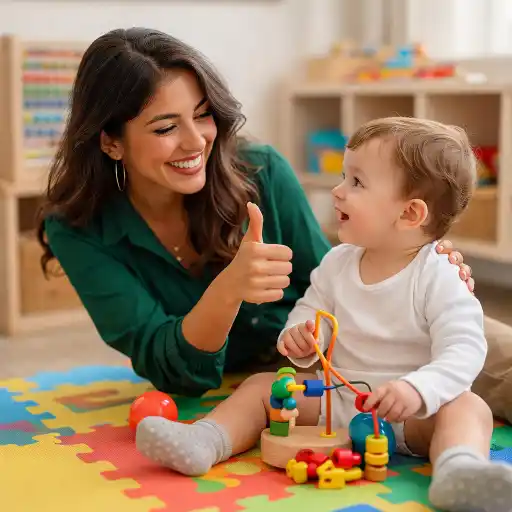
Set a clear purpose before presenting an award. Recognize a particular milestone or a child’s progress toward an individual goal, rather than claiming that the child is generally superior. Adapt how children demonstrate a skill: recognizing a letter might involve naming it, pointing, matching it, or using a communication device. Children develop at different rates, and accessible opportunities help ensure that each child can participate meaningfully.
Keep awards low-pressure and avoid ranking. Do not use a limited supply of certificates to create winners and losers, compare children’s papers, or connect recognition to popularity or compliance. Consider whether the child would prefer a public celebration, a private acknowledgment, or taking the award home. The certificate should support a relationship and a learning moment—not become the reason the child participates.
- Name the specific learning or effort: “You counted each object carefully and checked again.”
- Notice different strengths across the group, including quiet progress and helpful contributions.
- Offer recognition in ways that respect a child’s communication, culture, preferences, and abilities.
- Pair the award with a chance to keep exploring or choose a next step.
What everyday practices help confidence grow?
Certificates are occasional markers; most confidence-building happens in ordinary moments. Create a predictable, welcoming classroom where children can make meaningful choices, access materials, attempt tasks, and receive support without an adult taking over. Break a new task into manageable steps, model when helpful, then allow time for the child to try. A child who is learning to put on a coat, for instance, may need one prompt and patient wait time—not an adult completing every step.
Build recognition into play and routines. During block play, notice planning; at cleanup, notice cooperation; during a conflict, notice a child’s attempt to use words or seek help. Such comments show that learning includes social, emotional, and practical skills, not only academic milestones. NAEYC’s suggestions for positive classroom language also include noticing children’s accomplishments and sharing positive information with families.
Programs can make the approach sustainable by agreeing on a few shared principles. Directors might invite staff to practice descriptive feedback at a team meeting, then reflect on which children and skills are being noticed. Keep observation brief and respectful. Look for patterns over time rather than turning recognition into a tally or scorecard.
- Offer choices that are real but manageable, so children can experience agency.
- Normalize mistakes as part of learning and provide low-stakes chances to try again.
- Share specific, strengths-based observations with families and invite their perspective.
- Review whether children with different temperaments, abilities, languages, and learning paces are being seen.
What pitfalls should providers avoid?
Even well-intended recognition can unintentionally create pressure. Repeatedly honoring the same children, announcing a “top learner,” or comparing certificates can lead children to focus on status rather than growth. Awards based on sitting still, being quiet, or pleasing adults may reward temperament or circumstance instead of the skill educators hope to nurture. Keep each child’s value separate from achievement and award status.
Another common pitfall is using praise so broadly that it loses meaning. “Amazing!” may be kind, but it does not tell a child what they did. On the other hand, feedback can become overbearing if adults comment constantly or expect children to explain every choice. Brief, sincere observations and room for independent satisfaction often serve children better.
Public recognition is not comfortable for every child. Ask or observe how a child responds and offer alternatives such as a quiet word, a family note, or keeping a certificate private. When a child feels disappointed, acknowledge the feeling without promising an award. Explain that skills emerge on different timelines and identify a realistic opportunity to practice.
- Avoid winner-versus-runner-up language, public rankings, and popularity-based awards.
- Avoid comparing children or praising fixed traits such as intelligence.
- Do not take away recognition a child has earned as punishment.
- State requirements vary—check your state licensing agency when program policies or training requirements are involved.
Conclusion: How can recognition build lasting confidence?
Recognition and encouragement build confidence when they help children see their effort, strategies, growth, and contributions without making adult approval the measure of their worth. Use specific feedback in daily interactions, provide safe chances to practice, and adapt how children participate and demonstrate learning. Learning Skills Awards can mark a milestone, but they work best as one small part of a classroom culture where every child has opportunities to feel capable and included.
For child care providers and directors, the practical starting point is simple: notice one meaningful action, describe it honestly, and give the child room to respond. Make recognition equitable, low-pressure, and connected to relationships and learning. To strengthen your knowledge of emotional well-being and development, explore the Mental Health in Early Childhood course Buy Now $24.00 as a next step in your professional learning.
- Adult/Child/Infant CPR AED and Adult First Aid Blended
- 45 Hour Child Growth and Development
- Pediatric RSV First Aid & CPR/AED
- CDA Bridge Bundle: Family Child Care without Portfolio Review
- Art from the Heart for Preschoolers: Open Ended Art Projects that Build Self-Esteem
- CDA Bridge Bundle: Infant/Toddler without Portfolio Review
- CDA Bridge Bundle: Preschool without Portfolio Review
- Connections That Count: Building Relationships in Child Care
- Texas Director Credential
- Counting Candy Canes: The STEM of Holiday Fun for Early Learners
- CDA Certification en Español: Recursos y Consejos para Educadores Bilingües
- 👶 ¿Cuáles son las proporciones y grupos requeridos en Dakota del Norte? 🏫
- Curso de Comunicación de 9 Horas de Maryland
- 10 Ejemplos de Cómo la Cultura Influye en el Desarrollo Infantil
- Proporciones de Cuidado Infantil y Tamaños de Grupo por Edad en Nueva Jersey (Guía Rápida para Centros y Hogares)
- Proporciones de Cuidado Infantil y Tamaños de Grupo por Edad en Virginia (Guía Rápida para Centros y Hogares)
- Cómo Trabajar en el Cuidado Infantil en Carolina del Norte: Requisitos y Pasos
- Cómo Trabajar en el Cuidado Infantil en California: Requisitos y Pasos
- Celebrando la amistad en el cuidado infantil durante el Día de los Mejores Amigos
- Canciones, juegos y preguntas de círculo para niños
- Cómo simplificar la capacitación para sus empleados de daycare
- How can we help children build confidence without overpraising them?
- When Praise Stops Working, How Can Child Care Providers Offer Feedback That Builds Motivation?
- What Should Teachers Do When Children Compete for Adult Praise and Attention?
- Should You Take Away a Sticker a Child Has Already Earned?
- How Can Recognition and Encouragement Build Children’s Confidence?
