A sticker already placed on a child’s chart represents a moment of success—not a deposit an adult can withdraw after a difficult moment. For respectful, practical ways to guide behavior and respond to conflict, explore Teach with Respect ONLINE  Buy Now $24.00, a three-hour course that can strengthen your professional knowledge of nurturing relationships, encouragement, and children’s conflict resolution. Keep reading to consider how reward charts can support learning without turning mistakes into lost progress.
Why should earned stickers remain earned?
In most early childhood reward-chart systems, the answer is no: do not take away a sticker a child has already earned. The sticker recognizes a behavior that occurred. Removing it later changes the meaning of the chart from “your effort counts” to “your success can be canceled,” making the system feel unpredictable and punitive.
The CDC’s guidance on rewards is explicit: once a child earns a reward, it belongs to the child and should not be removed because of later misbehavior. A child who struggles after cleanup, for example, can still keep the sticker earned for putting materials away. The new behavior calls for a separate, calm response—such as setting a limit, helping the child regulate, or teaching a safer way to communicate—not retroactive erasure of an earlier success.
This distinction is central to positive #guidance. NAEYC reminds educators that young children are still learning social skills and need adults to teach from mistakes without holding those mistakes against them. Preserving earned recognition does not mean ignoring harm or dropping expectations. It means addressing the current situation directly while keeping the child’s previous achievement intact.
Why does taking away a sticker often work against learning?
Removing earned stickers can undermine trust in a chart. If a child cannot rely on adults to honor the stated rules, the chart stops being a clear record of progress and becomes a tool adults use to control behavior. The child may focus on avoiding loss, rather than understanding the skill they are practicing.
It can also create an all-or-nothing response: “I already lost my sticker, so why try now?” That reaction is especially understandable when a child is young, tired, frustrated, or still developing self-regulation. A sticker cannot teach a missing skill by itself. If a child hits, refuses a transition, or grabs a toy, investigate what happened before the behavior and what support might help next time.
At the same time, reward charts are not automatically harmful. They can help make a new, specific behavior visible and celebrate progress when used thoughtfully. The key is to frame them as a short-term teaching support—not a scorecard of whether a child is good or bad. Maintain dignity, use goals children can reasonably achieve, and pair stickers with meaningful interactions.
How can providers use a sticker chart fairly?
Start with one observable, positively worded goal. “Use gentle hands with classroom materials” is easier to understand and teach than “be good.” Identify when the behavior might happen and explain the plan in language children can follow. Give the sticker promptly after the behavior, and name exactly what the child did: “You waited until your friend finished, then asked for the truck.”
- Choose a skill that is realistic for the child’s age, ability, and current development.
- Keep the chart simple and private enough to protect each child’s dignity; avoid comparisons between children.
- Tell children in advance what earns a sticker and what the chart is for.
- Once earned, leave the sticker in place. If the target behavior does not happen later, simply do not award a new sticker for that instance.
- Pair the sticker with warm, specific encouragement so the child understands the skill—not just the prize.
ChildCareEd’s Sticker Reward Chart Buy Now $0.75 is one resource for making progress visible. Whatever chart you use, monitor whether it supports learning and connection for this particular child. Some children enjoy stickers; others may respond better to a helper role, a choice, shared play, or simple acknowledgment.
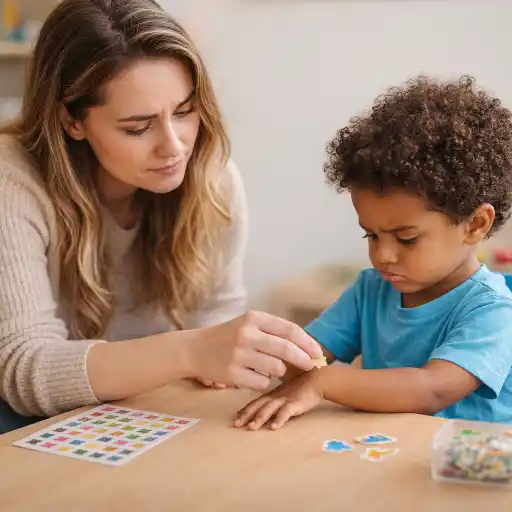
What should you do when a child misbehaves after earning a sticker?
Separate the earlier achievement from the behavior happening now. Keep the sticker and respond to the present need. If a child throws a block, for instance, stop the unsafe action calmly: “I won’t let you throw blocks. Blocks are for building.” Then help the child choose a safe alternative, such as throwing a soft ball outdoors or asking an adult for help.
After the child is calm, teach or practice a replacement skill. A child who grabs might practice saying, “Can I have a turn?” A child who has trouble transitioning may need a visual cue, a short warning, or a choice about what to put away first. When the child tries the new skill, notice that effort specifically. The point is to help the child move forward, not to make them repay a debt by earning back a sticker.
For staff consistency, directors can agree on shared language and procedures. A brief team plan can identify the target skill, prevention strategies, how stickers are awarded, and how staff respond to challenging behavior. If behavior is frequent, unsafe, or interfering with participation, collaborate with the family and appropriate specialists to understand the child’s needs. State requirements vary - check your state licensing agency.
What common reward-chart mistakes should teams avoid?
A chart can become discouraging when it sets an unrealistic standard, targets too many behaviors, or promises a distant reward that young children cannot connect to their actions. Requiring a child to earn every sticker in a day before receiving any recognition can turn practice into a perfection test. Begin with achievable steps and celebrate progress, including small improvements.
- 🚫 Avoid taking away earned stickers, using “bad” stickers, or threatening loss to gain immediate compliance.
- Avoid broad goals such as “listen all day”; define a skill and a manageable time or routine.
- Avoid public rankings that compare children or label some as winners and others as failures.
- Do not assume a child’s behavior reflects a lack of motivation; consider development, communication, sensory needs, fatigue, and the environment.
- Do not let a chart replace relationships, teaching, or calm safety limits.
When a chart does not seem to help, reassess rather than intensify the consequences. Is the goal clear? Can the child do it with current support? Is the sticker meaningful to them? Could a routine change or explicit teaching make success more likely? Reward systems are not the right fit for every child, and it is appropriate to adjust or discontinue one that is creating stress or competition.
How can providers build motivation beyond stickers?
Stickers can draw attention to a new skill, but they are only one possible form of reinforcement. Specific, genuine feedback helps children connect their actions with their impact: “You helped make space for everyone at the table.” Choices, predictable routines, meaningful classroom responsibilities, and opportunities to solve problems can also support children’s sense of competence and belonging.
As a skill becomes more consistent, gradually shift the emphasis from the chart to natural outcomes and relationships. You might give stickers less often, then retire the chart once the goal is established, while continuing to acknowledge effort and progress. This is not withdrawing recognition; it is helping the child experience success without needing a marker every time.
Adults also benefit from reflecting on their own responses. When a day feels hectic, it is easy to reach for a consequence that promises quick compliance. A steady, respectful approach makes room for both firm limits and encouragement. For a deeper look at respectful relationships, distinguishing praise from encouragement, and conflict resolution, consider Teach with Respect ONLINE Buy Now $24.00.
Conclusion: Should you take away an earned sticker?
Generally, no. An earned sticker should remain on the chart because it records a behavior the child successfully demonstrated. If the child later struggles, address that behavior in the moment: protect safety, understand what support is needed, teach an appropriate replacement skill, and recognize the child’s next effort.
Use a sticker chart only when it is clear, achievable, respectful, and useful for the individual child. Keep goals specific, award stickers promptly, avoid comparisons, and periodically check whether the chart still serves a learning purpose. The larger goal is not a perfect chart; it is a classroom where children can make mistakes, maintain belonging, and keep building the skills they need.
- CDA Home Visitor Subject Area 3 Part 3 Birth to 5
- Basic Life Support (BLS) Blended Healthcare Providers
- Birth to Five CDA Credential with Portfolio Review
- CDA Bridge Bundle: Preschool
- Pediatric RSV First Aid & CPR/AED
- CDA Bridge Bundle: Family Child Care
- CDA Bridge Bundle: Family Child Care without Portfolio Review
- CDA Bridge Bundle: Infant/Toddler
- Texas Director Credential
- Cómo Obtener la Credencial de Visitante de Hogar CDA
- Renovación de CDA gratis
- 🤔 ¿Cómo hablo con los padres cuando un niño no está avanzando en el entrenamiento para ir al baño?
- 😫🧸 ¿Qué hacer cuando un bebé no quiere dormir la siesta en el aula?
- 👧 ¿Cómo iniciar y abrir una guardería en Texas? Lo que necesitas saber
- 🚨 Reporte Obligatorio en Nevada
- CDA GRATIS
- Requisitos Para Ser Maestra Principal En Un Daycare: Lo Que Necesitas Para Empezar
- Recursos en Español sobre el Sueño Seguro del Bebé
- 45 horas para infantes y niños pequeños: cómo certificarse en línea
- Cómo obtener ahorro en costos universitarios y calificar para hasta 12 créditos con ChildCareEd y Rasmussen University
- ¿Cuáles son los pasos, los requisitos y las opciones en línea para la certificación de 90 horas para cuidado escolar en Maryland?
- ¿Cuáles son los pasos, requisitos y opciones en línea para la certificación de 90 horas en cuidado de Infantes/Toddlers en Maryland?
- ¿Cómo pueden los equipos de cuidado infantil practicar habilidades rápidas de primeros auxilios en situaciones reales?
- ¿Cómo empiezo mi certificación CDA en Florida en línea?
- Lista para Guardería en Casa en California: Cómo Iniciar una Guardería en el Hogar
- Retraso del Habla en la Guardería: Cómo Pueden Ayudar los Proveedores
- Cómo Ser Maestra de Preescolar en Dakota del Norte
- Capacitación Previa al Servicio para Proveedores de Cuidado Infantil en Dakota del Norte
- Should You Take Away a Sticker a Child Has Already Earned?
