Fall turns everyday discoveries—crisp leaves, changing weather, pumpkins, and outdoor sounds—into meaningful ways to connect with each preschooler’s strengths and next steps. Build your observation-to-planning skills with Planning for Every Child: Responsive Strategies in Action  Buy Now $55.00 and Inclusive Lessons for Preschoolers Buy Now $16.00; these courses offer practical approaches to individualized planning and accessible activities. Read on for ways to make seasonal experiences engaging, inclusive, and purposeful without adding a separate lesson for every child.
Why are fall experiences a strong starting point for individual learning?
Autumn provides real, familiar materials that invite children to notice, question, move, compare, and communicate. A leaf hunt, pumpkin investigation, or nature-based building challenge can engage several developmental domains at once: language, early math, science inquiry, motor coordination, persistence, and collaboration. Because the materials are concrete and children can approach them in different ways, teachers can support individual goals within a shared classroom experience.
Seasonal learning is most effective when it grows from children’s interests rather than relying only on a calendar theme. One child may be fascinated by leaf colors; another may prefer the sound of wind or the challenge of building a shelter for a toy animal. These interests are useful entry points, not distractions from learning. The Children & Nature Network’s Nature in Early Childhood toolkit describes how natural elements and open-ended outdoor spaces can encourage movement, creativity, sensory exploration, and connection with nature.
For teachers and directors, the central question is not whether every child completes the same task. It is whether each child can participate meaningfully and encounter an appropriate level of challenge. Thoughtful fall experiences make it easier to notice children’s strategies and plan a responsive next step.
- Use a seasonal activity to observe strengths and emerging skills.
- Connect one shared theme to different developmental goals.
- Offer participation choices so children can engage in ways that work for them.
How can observation help teachers identify each child’s needs?
Begin with a focused question: What does a child notice? How does the child communicate an idea, approach a problem, or respond to a new texture? Observe across activities and settings, since a child may show different skills during outdoor exploration, small-group discussion, or independent play. Record actions and words objectively, then consider what they may suggest about interests, knowledge, and supports.
For example, during a fall leaf-sorting activity, a teacher might write, “Nina placed four leaves in a group and said, ‘These are pointy.’” This note provides evidence of classification and descriptive language without making a broad claim about the child. Another child may demonstrate the same concept by pointing, matching picture cards, arranging leaves, or explaining in a home language. A broad view of participation gives teachers a more accurate picture than speech alone.
Use observations to decide what to offer next. If children compare leaf sizes, add measuring tapes, sorting trays, or words such as longer and shorter. If a child watches before joining, provide time, a clear visual cue, or a quieter way to participate. The Purdue ELM guides for observing and individualizing organize preschool planning across areas such as language, mathematics, science, self-regulation, and social-emotional development.
- Describe what the child did or said, including the context.
- Look for patterns across more than one observation.
- Use family knowledge to understand a child’s interests, language, and experiences.
- Keep documentation secure and follow program privacy practices.
How can one fall activity offer different ways to learn?
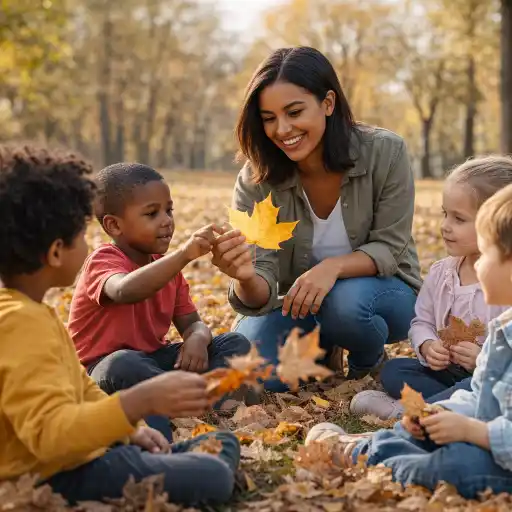
Plan one inviting activity with multiple entry points, rather than creating entirely separate lessons. In a fall nature investigation, children might collect approved fallen leaves, match photographs, listen for outdoor sounds, draw an observation, or sort objects by shape and color. Each option can connect to a shared learning intention—such as noticing similarities and differences—while allowing children to participate through movement, communication, sensory exploration, or visual attention.
Universal Design for Learning (UDL) encourages educators to plan varied ways for children to engage with information and express what they know. In an inclusive preschool science classroom, teachers can use choices, movement, peer interaction, and interest-based materials to support engagement and access. Apply those ideas by making picture prompts available, using concise directions, modeling an action, and accepting gestures, drawing, spoken language, or communication devices as responses.
Adjust the experience without assuming that all children with a particular diagnosis or learning profile need the same support. Some children enjoy touching leaves; others may prefer gloves, tongs, photographs, or an observation role. A child who finds uneven ground difficult might sort materials at a table or direct a partner. A quiet space or shorter participation period can also help. These adaptations preserve the learning purpose while reducing barriers.
- 🍁 Offer a choice of roles: gather, photograph, sort, draw, describe, or observe.
- Use lightweight, accessible materials and a seated participation option.
- Provide visual schedules, picture cards, and extra processing time.
- Let children engage with natural materials at a comfortable sensory distance.
How can teachers extend seasonal play into meaningful learning goals?
After an activity, connect what you observed to one or two manageable next steps. A child who sorts leaves by color may be ready to compare sizes, make a simple graph, or dictate a class observation. A group building with sticks and leaves could investigate stability, count materials, negotiate design ideas, and describe what changed when a structure fell. These extensions make learning visible without turning play into a test.
Individual goals work best when they are observable, relevant, and attainable. Instead of “learn more science,” a teacher might plan, “During the next two outdoor explorations, offer Sam a choice of two objects and invite him to indicate which is heavier by pointing, speaking, or using a picture.” The strategy and the evidence are clear, while the child retains different ways to respond. Review the plan after several opportunities and adjust based on what happens.
Keep documentation concise. A photo, a short factual note, and a possible next step can be enough to guide planning and share progress with families. Invite family input about seasonal experiences, home languages, traditions, and a child’s interests. This helps teachers avoid treating one cultural or family experience as universal. For more specific developmental guidance, the CDC’s four-year milestones page offers examples of skills many children demonstrate by age four; milestones are not a substitute for individualized observation or professional evaluation.
- Choose a priority that builds on the child’s current strengths.
- Embed practice in ordinary play and routines.
- Accept varied communication and response methods.
- Share concrete examples with families and invite their perspective.
What common pitfalls should educators avoid when planning fall activities?
A seasonal theme can become less responsive when adults focus on producing identical crafts or completing a long checklist. Children may have little room to explore their own questions, and teachers may miss evidence of learning that appears in unexpected forms. Keep the activity open-ended; if children become absorbed in comparing two leaves or listening for birds, follow that inquiry when it is safe and feasible.
Another pitfall is treating an observation as a label. A child who does not join a group hunt immediately may be watching, processing directions, navigating an unfamiliar texture, or choosing another role. Observe across contexts and offer flexible participation before drawing conclusions. Similarly, do not assume that a child’s family celebrates a particular holiday or has access to a particular seasonal activity. Ask respectfully and use inclusive, locally relevant examples.
Safety and accessibility belong in the plan from the start. Inspect outdoor areas for hazards, set clear boundaries, supervise actively, and avoid unknown plants, mushrooms, or small objects that may pose a risk. Consider mobility, weather, clothing, sensory preferences, allergies, and program policies. State requirements vary - check your state licensing agency. A practical backup—such as nature photographs, a leaf-sorting tray, or seasonal sounds—can keep learning accessible when outdoor conditions change.
- Replace “everyone makes the same project” with open-ended choices.
- Do not interpret one moment as a fixed ability or lack of interest.
- Plan alternatives for sensory, communication, movement, and access needs.
- Keep safety, supervision, and family context in view.
How can educators turn fall experiences into a consistent planning cycle?
A manageable cycle helps seasonal experiences support individual needs without overwhelming staff. First, choose a question or child interest to notice. Next, gather brief evidence during regular play. Then, interpret what the evidence may indicate and plan a small extension or adaptation. Finally, revisit the experience to see whether the support helped the child participate, explore, or communicate.
For example, a team might notice that several children are interested in how leaves move in the wind. Teachers can offer scarves, fallen leaves, simple fans used with close supervision, or photographs showing movement. Children might act out the wind, describe what they see, make marks on paper, or compare leaves that move differently. Teachers observe each child’s approach, then plan next steps—perhaps new vocabulary, a prediction question, or a calmer observation option.
Directors can make the process sustainable by providing a short shared planning template and a few minutes for staff reflection. Include the observation, a possible learning goal, planned materials or supports, and a review date. Professional learning can strengthen the practice: Preschool Assessments & Observations Buy Now $24.00 focuses on objective observation and using assessment to plan individualized experiences; Creating the Natural Outdoor Classroom Buy Now $16.00 supports intentional nature-rich outdoor environments; and Lesson Planning for Preschoolers Buy Now $24.00 addresses developmentally appropriate planning.
Conclusion: How can fall experiences support individual learning?
Fall experiences support individual learning when teachers begin with observation, offer several accessible ways to participate, and use children’s discoveries to guide next steps. Leaves, pumpkins, weather, and outdoor exploration can become shared contexts for language, science, math, movement, and relationships—without expecting every child to learn or respond in the same way. Keep activities safe and flexible, document strengths objectively, partner with families, and revisit plans. The goal is a classroom where every child can find a meaningful way into the season and grow from there.
Professional learning options: Explore Planning for Every Child: Responsive Strategies in Action Buy Now $55.00, Inclusive Lessons for Preschoolers Buy Now $16.00, Preschool Assessments & Observations Buy Now $24.00, Creating the Natural Outdoor Classroom Buy Now $16.00, and Lesson Planning for Preschoolers Buy Now $24.00.
- Moving About the Classroom: Effective Transitions for Everyday
- CDA Home Visitor Subject Area 3 Part 3 Birth to 5
- Tracking Progress, Shaping Futures: Observation & Assessment Skills
- Children at the Wheel: Emergent Curriculum
- CDA Bridge Bundle: Preschool
- Art from the Heart for Preschoolers: Open Ended Art Projects that Build Self-Esteem
- Creating Engaging and Meaningful Learning Experiences
- IEPs and IFSPs in Family Child Care
- Preschool Assessments & Observations
- CDA Certification en Español: Recursos y Consejos para Educadores Bilingües
- 💛🧩 ¿Cómo puedo hacer que mi enseñanza sea inclusiva para los niños con autismo?
- Proporciones de Cuidado Infantil y Tamaños de Grupo por Edad en Virginia (Guía Rápida para Centros y Hogares)
- How can preschool teachers use simple classroom management techniques that really work?
- Celebrando la amistad en el cuidado infantil durante el Día de los Mejores Amigos
- Canciones, juegos y preguntas de círculo para niños
- Preschool Classroom Schedule: A Full-Day Example from Arrival to Pick-Up
- First Week of Pre-K Lesson Plans: What Can You Learn About Your New Class?
- Types of Curriculum in Early Childhood Education: Which Approach Fits Your Classroom Best?
- How Can Teachers Support Children Starting Kindergarten This Fall?
- What Does a Developmentally Appropriate Daily Schedule Look Like?
- Which Printable Activities Belong in Every Preschool Classroom?
- ¿Todos los niños deben participar en el tiempo de círculo?
- How Can Preschool Teachers Make Quiet-Time Activities More Meaningful?
- How Can Preschool Teachers Use Fall Activities to Strengthen Family Engagement?
- How Can Child Care Providers Manage Classroom Transitions and Routines During Fall Celebrations?
- How Can You Adapt Fall Learning Activities for Children of Different Ages?
- How Can Teachers Use Fall Classroom Experiences to Document Children’s Development?
- How Can Preschool Teachers Use Fall Experiences to Support Individual Learning Needs?
- Juego Compartido y Autismo: Cómo Fomentar la Participación sin Exigir Contacto Visual
