How do you capture meaningful learning without stepping away from the children who need you? A simple observation system can help you document strengths, plan responsive experiences, and communicate clearly with families. Begin with the free Observation and Anecdotal Record Form Buy Now $0.00, then deepen your practice through Creating Engaging and Meaningful Learning Experiences  Buy Now $55.00, which supports purposeful play, individualized planning, and developmentally appropriate assessment.
Why does easier observation matter for children and providers?
Observation is not paperwork added to teaching; it is one of the ways teaching becomes responsive. When providers watch carefully and record what children say and do, everyday play becomes evidence of thinking, communication, persistence, relationships, and emerging skills. The National Association for the Education of Young Children describes observation, documentation, and assessment as essential processes for planning and evaluating children’s experiences. See developmentally appropriate observation and assessment for a fuller professional framework.
For busy educators, however, documentation can feel impossible. Children move quickly, routines overlap, and a beautiful learning moment may disappear while an adult searches for a clipboard. The solution is not to record everything. It is to create a small, predictable system that protects attention while preserving enough detail to guide decisions.
Useful documentation can help you:
- Notice progress that may otherwise be overlooked.
- Identify interests that can shape curriculum.
- Recognize patterns that suggest a need for additional support.
- Share concrete examples with families and colleagues.
- Reflect on whether the environment and teaching strategies are working.
Strong documentation keeps the child—not the form—at the center.
What should an anecdotal record include?
An anecdotal record is a brief, factual account of one meaningful event. The goal is to preserve a snapshot, not produce a lengthy narrative. The Anecdotal Record Observation Form Template Buy Now $0.00 is designed to organize observations across ages and developmental milestones while supporting next-step planning.
Use the five essential questions:
- Who: Which child or children were involved?
- What: What did the child say or do? Include direct quotes when possible.
- When: What was the date, time, or part of the daily routine?
- Where: What was the setting—block area, outdoor space, meal table, or another location?
- Why: What was the purpose or focus of the observation?
For example: “October 7, 10:15 a.m., block area. Maya placed three large blocks beneath two smaller blocks. When the tower fell, she said, ‘The bottom needs to be strong,’ selected wider blocks, and rebuilt it.” This record provides evidence of problem solving, spatial reasoning, language, and persistence without labeling Maya as “advanced” or “frustrated.”
Include context when it changes interpretation: what happened immediately before, who was nearby, and what occurred afterward. A concise record is often more useful than a polished paragraph written hours later.
How can you document while staying present with children?
Documentation works best when it is embedded into the rhythm of the day. Rather than waiting for a long uninterrupted planning period, use brief notes and a consistent follow-up routine. A provider might write three keywords—“tower, wider base, tried again”—and expand them during nap time or at the end of the shift.
Try this practical cycle:
- Prepare: Keep forms, a pen, and a clipboard accessible. If using digital records, follow program privacy policies and use only approved devices.
- Focus: Select one child, skill, interaction, or interest rather than attempting to observe the entire room.
- Capture: Record exact actions, language, and relevant context in short phrases.
- Complete: Add details as soon as supervision responsibilities allow.
- Review: Decide what the observation suggests about the child’s next learning opportunity.
Rotate children across days so every child receives attention, including those who are quiet, slow to warm, or consistently successful. Spontaneous observations remain valuable, but planned observations help ensure equitable coverage. The open educational text Using Observation Methods, Tools and Techniques also emphasizes that no single observation provides a complete picture.
🙂 A helpful team habit is to share one brief observation during a weekly meeting and ask, “What might this tell us about the child’s learning?”
How do you keep notes objective, equitable, and confidential?
Objective writing separates observable evidence from interpretation. “Jordan pushed the truck toward Eli and said, ‘My turn’” is observable. “Jordan was selfish” is an interpretation that may reflect adult assumptions rather than the event itself.
Use language that a second observer could verify:
- Describe movement, words, facial expressions, and interactions.
- Use direct quotes when they clarify language or meaning.
- Avoid diagnostic labels, motives, and judgments.
- Record strengths as intentionally as concerns.
- Compare observations with colleagues when possible to notice bias.
Bias can enter through expectations about culture, language, disability, temperament, or behavior. A child who communicates in a home language may demonstrate deep understanding that is missed by an English-only record. Families and community members can provide essential context, and assessment should be culturally and linguistically responsive. NAEYC’s guidance on Learning Stories and narrative documentation illustrates how children’s identities, interests, and family perspectives can enrich documentation.
Confidentiality is equally important. Store forms securely, limit access to authorized personnel, obtain required permissions for photographs or recordings, and follow program policies. State requirements vary - check your state licensing agency. For additional professional development, consider Privacy Matters: Documentation and Observation in Early Learning Buy Now $55.00, which addresses ethical documentation, privacy, and collaboration.
How can observations become engaging learning experiences?
The purpose of documentation is not simply to create a record; it is to inform action. After writing an observation, ask: What does this child already know? What interests or strengths are visible? What small change in materials, language, grouping, or timing could extend the learning?
Use a simple observe–interpret–plan–revisit process:
- Observe: Record the concrete moment.
- Interpret cautiously: Identify possible skills or interests while recognizing that one event is not a final conclusion.
- Plan: Offer a related experience, material, question, or scaffold.
- Revisit: Observe again and adjust the plan.
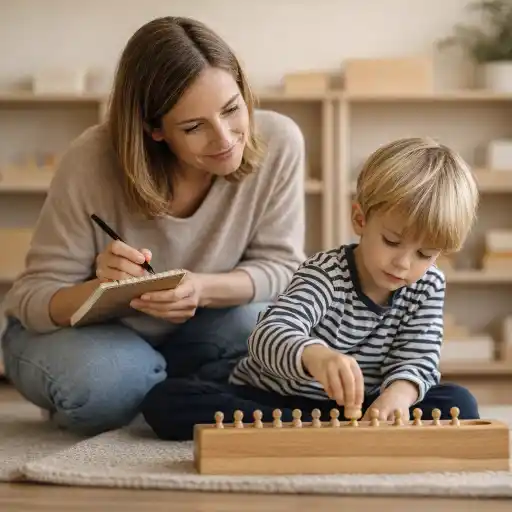
For example, if a child repeatedly sorts natural objects by color, add baskets, labels, magnifiers, and descriptive vocabulary. If toddlers return to watching ants outdoors, offer a picture book, a magnifying glass, and opportunities to discuss where ants travel. If children struggle to cooperate during a card game, model turn-taking and allow them to revisit the rules. These decisions honor child-directed exploration while making the teacher’s role intentional.
The course Creating Engaging and Meaningful Learning Experiences Buy Now $55.00 extends this work by exploring purposeful play, choice, independence, self-regulation, challenging behavior, and adaptations for diverse learners.
What common mistakes make documentation harder than it needs to be?
Most documentation problems are system problems, not evidence of poor commitment. Providers often need a smaller routine, clearer expectations, and protected time rather than more complicated forms.
- Trying to record everything: Choose one focus and one short event.
- Writing too late: Use keywords immediately, then complete the record promptly.
- Observing only concerns: Schedule strengths-based observations during play, routines, and transitions.
- Using vague language: Replace “did well” with specific actions, words, attempts, and outcomes.
- Confusing observation with diagnosis: Document patterns and follow referral procedures; do not label or diagnose.
- Creating forms no one uses: Select a format that fits staffing, ratios, and the classroom’s actual pace.
Directors can make the process sustainable by providing one shared template, modeling an objective note, scheduling a brief weekly review, and protecting confidentiality. A second observer can periodically review records—not to criticize, but to strengthen clarity and reduce bias.
Helpful companion courses include Tracking Progress, Shaping Futures: Observation & Assessment Skills Buy Now $55.00, which addresses multiple assessment methods, objective documentation, bias reduction, and goal setting, and Observations and Goal Setting in Childcare Buy Now $24.00, which connects observation to individualized planning.
Conclusion: How can observation be made easier without missing the moment?
Observation becomes manageable when it is brief, purposeful, objective, and connected to action. Keep a form nearby, capture the five essential questions, write what you see and hear, rotate attention across children, and revisit records with colleagues and families. The result is not merely better paperwork; it is more responsive teaching.
Start with one observation today:
- Choose one child and one routine.
- Write two or three factual sentences.
- Identify one strength, interest, or emerging skill.
- Plan one small extension for tomorrow.
When providers document learning without leaving the moment, children’s everyday discoveries become visible, valued, and teachable.
Frequently asked questions
How often should anecdotal records be written?
Short observations can be collected regularly, with the schedule adapted to program policy, staffing, and assessment needs. Consistency and balanced coverage matter more than producing lengthy notes every day.
Should every observation lead to a formal goal?
No. Some records simply build a fuller picture of a child. Patterns across multiple observations can inform goals, curriculum adjustments, or conversations with families.
Can photographs replace written observations?
Photographs and work samples can strengthen documentation, but they need dates, context, permissions, and written explanation. They should supplement—not automatically replace—professional observation.
What should I do if I notice a possible developmental concern?
Continue observing across settings and times, document objectively, consult your supervisor, and follow program and local referral procedures. Screening is not diagnosis, and families should be included respectfully.
How can directors support teachers?
Provide accessible forms, clarify expectations, protect time for completion, coach objective language, review systems for equity and privacy, and use team meetings to turn observations into meaningful planning decisions.
Related ChildCareEd courses
- Creating Engaging and Meaningful Learning Experiences Buy Now $55.00
- Tracking Progress, Shaping Futures: Observation & Assessment Skills Buy Now $55.00
- Observations and Goal Setting in Childcare Buy Now $24.00
- Privacy Matters: Documentation and Observation in Early Learning Buy Now $55.00
- CDA: Essential Tools for Record Keeping Buy Now $16.00
- Tracking Progress, Shaping Futures: Observation & Assessment Skills
- 45 Hour Infant and Toddler Methods and Materials
- CDA Bridge Bundle: Preschool
- CDA Bridge Bundle: Family Child Care
- CDA Bridge Bundle: Family Child Care without Portfolio Review
- CDA Bridge Bundle: Infant/Toddler without Portfolio Review
- CDA Bridge Bundle: Preschool without Portfolio Review
- CDA Bridge Bundle: Infant/Toddler
- Texas Director Credential
- Big feelings: Teaching Kids to Manage Difficult Emotions
- CDA Certification en Español: Recursos y Consejos para Educadores Bilingües
- 🔍 ¿Qué ves cuando observas a un niño aprender?
- ¿Cuáles son los pasos, los requisitos y las opciones en línea para la certificación de 90 horas para cuidado escolar en Maryland?
- Proporciones de Cuidado Infantil y Tamaños de Grupo por Edad en Maryland (Guía Rápida para Centros y Hogares)
- ¿Cuál es la Diferencia Entre la Crianza Respetuosa y la Crianza Permisiva?
- Celebrando la amistad en el cuidado infantil durante el Día de los Mejores Amigos
- Canciones, juegos y preguntas de círculo para niños
- Cómo simplificar la capacitación para sus empleados de daycare
- How can I stop missing staff training deadlines?
- How Can Child Care Providers Recognize "Learning in Disguise" During Everyday Activities?
- How Do You Look Up a Georgia Daycare’s Inspection History Before Enrolling?
- Examples of Anecdotal Notes for Preschoolers: 10 Real Classroom Moments, Written the Right Way
- How Can Observation Be Made Easier Without Missing the Moment?
- How Should Child Care Providers Respond When Preschoolers Lie?
- When a Teacher Agrees During Coaching but Nothing Changes, What Should You Do?
- How Can Providers Notice Developmental Progress Hidden in an Infant’s Daily Routine?
- What Should You Do When a Child Wants to Remove Their Contribution from Group Artwork?
- How Can You Coach a Teacher Through One Inclusive Classroom Change?
- What Should You Do When a Child Changes Their Vote on the Classroom Graph?
