November’s changing light, crisp air, and seasonal shifts give children a compelling reason to look closely at the world just beyond the classroom door. With a few thoughtful invitations, child care providers can turn an ordinary outdoor block into meaningful exploration, conversation, and movement; the Creating the Natural Outdoor Classroom  Buy Now $16.00 course offers practical guidance for designing nature-rich experiences that build classroom practice and professional knowledge.
For a focused next step, explore CDA: Creating the Outdoor Classroom Buy Now $16.00, which connects outdoor-environment planning with children’s physical and intellectual development. Together, these courses can help you move from seasonal ideas to intentional, child-centered outdoor learning.
Why is November a valuable time for nature exploration?
November can look different from one region to another. Some children may find fallen leaves and bare branches; others may notice rain, changing winds, migrating birds, seed pods, or simply shorter daylight. Rather than treating autumn as a fixed collection of symbols, invite children to observe what is actually happening in their local environment. As the ChildCareEd resource Nature’s Classroom: Why Fall Is the Best Season for Sensory Learning Outdoors notes, seasonal outdoor experiences can engage sight, sound, touch, smell, and movement.
These moments matter because young children build understanding by noticing, comparing, asking questions, and trying ideas. A crunch underfoot can prompt a conversation about sound; a nearly bare tree can lead to questions about seasonal change. Outdoor play also creates room to move, collaborate, and practice persistence. CDC guidance describes outdoor play as an opportunity to support physical activity and children’s learning, language, and emotional development.
Providers do not need a forest or elaborate equipment. A small yard, accessible path, courtyard, or safe view from a porch can become a site for close observation. The educator’s role is to keep curiosity alive: offer an inviting prompt, listen carefully, and allow children time to investigate at their own pace.
Which low-preparation November activities invite discovery?
Choose activities that help children notice rather than simply collect. Keep directions brief, use familiar spaces, and adapt each idea to your group’s age, abilities, and interests. Activities can be repeated over several days so children can compare what changes.
- Seasonal color walk: Look for colors in leaves, grass, the sky, buildings, or clothing. Invite children to point, describe, or photograph what they notice.
- Listen-and-wonder pause: Stand or sit quietly for a short time. What sounds are near or far? Is the wind moving branches, or can children hear birds?
- Texture and shape search: Look for jagged, rounded, long, or small forms. Children can compare textures visually or touch only materials that adults have checked and approved.
- Weather watchers: Notice cloud cover, wind, and temperature, then compare with yesterday. Record observations with drawings, symbols, or a class chart.
- Bird observation: Watch birds from a respectful distance and describe their movements. Avoid approaching nests or disturbing wildlife.
- 🍂 Build a temporary nature pattern: Arrange a few suitable fallen leaves or large sticks into a pattern, then leave the materials where found or return them after observing.
Seasonal sensory learning can be especially rich when adults use descriptive language. Try prompts such as “What do you notice?”, “What might have made that sound?” or “How is this spot different from last week?” The goal is not to reach one correct answer; it is to help children practice observation, vocabulary, and curiosity.
How can providers connect outdoor discoveries to learning goals?
Nature-based activities can support several developmental domains without turning play into a worksheet. When children sort leaves by shape, count visible birds, or compare the length of two branches, they encounter early science and #math in a meaningful context. When they describe a sound, dictate a nature story, or explain what they have built, they develop language and communication skills. Walking, balancing, reaching, and carrying appropriate materials provide opportunities to practice movement and coordination.
Follow children’s interests and extend them with a small number of open-ended questions. If a child notices a seed pod, ask where they think it came from or what might happen to it. If a group is fascinated by wind, offer ribbons attached securely to a staff-held wand or observe how leaves move—using materials that are safe for the age group and setting. The ChildCareEd article How Can Child Care Programs Use Easy Nature-Based Activities for Every Season? offers examples of connecting seasonal exploration with curriculum goals.
After returning indoors, keep the inquiry going. Children might draw what they saw, dictate a shared story, sort photographs, create a simple graph, or revisit an observation from a previous week. Take brief notes about children’s questions and strategies; these observations can guide the next activity and make learning visible to families.
How can outdoor activities include every child?
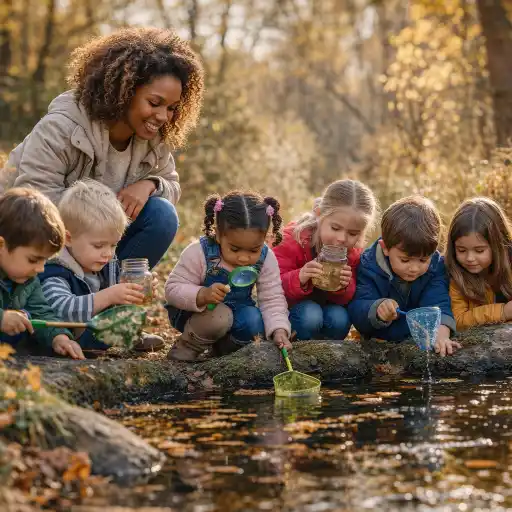
Inclusive planning begins with the understanding that children can participate in different ways. Some may want to walk and collect approved large materials, while others may prefer to observe from a seated spot, point, use a camera, draw, or partner with a peer. Offer choices that preserve the learning purpose—careful noticing and connection with nature—while allowing different sensory, communication, mobility, and energy needs.
- Use picture cues, gestures, or home-language vocabulary alongside spoken directions.
- Choose a route with clear boundaries and options for resting or turning back.
- Offer tools such as large-handled magnifiers, clipboards, or picture cards where they support access.
- Provide a quiet observation area for children who benefit from a calmer sensory experience.
- Invite children to share discoveries through words, movement, drawing, pointing, or assistive communication.
There is no single “right” way to appreciate nature. A child who listens intently to rain or watches a branch move is engaged in exploration just as surely as a child who walks the path. Providers can model respect for living things by observing wildlife from a distance, leaving plants undisturbed, and discussing how people can care for shared outdoor spaces. When families have different cultural relationships with nature or different outdoor experiences, invite their knowledge and preferences into planning without making assumptions.
What safety and planning practices support November outdoor play?
Before going outside, check the forecast, current conditions, clothing, daylight, and the play area. November weather can shift quickly, and wet leaves, mud, ice, or uneven ground may change a route’s suitability. CDC guidance on outdoor play and safety for children in ECE covers practical considerations such as supervision, sun, insects, and injury prevention.
Dress children for the conditions, with layers that can be adjusted and dry items available when needed. Watch for signs that a child is uncomfortable, too cold, or too warm, and shorten the activity or return indoors when conditions warrant. Inspect the space for hazards such as slippery surfaces, broken branches, traffic, standing water, animal waste, or unfamiliar plants. Children should not taste outdoor materials, and adults should assess objects before offering them for handling, particularly small items that may present choking concerns.
Active supervision remains essential: position adults to maintain sight and hearing, establish clear boundaries, count children during transitions, and assign staff roles where appropriate. Prepare an indoor alternative for severe weather, poor air quality, or other conditions that make outdoor play unsuitable. State requirements vary - check your state licensing agency for applicable guidance on outdoor time, supervision, clothing, and program policies.
How can teams avoid common planning pitfalls?
A frequent pitfall is making a nature activity so structured that children have little time to wonder. A checklist can help focus attention, but it should not become a race or a test. If children become absorbed in a shadow, a bird call, or the pattern of branches, pause and build on that interest. Another common misstep is planning around a narrow idea of what November “should” look like. Local environments and weather differ, so activities should respond to what children can actually observe.
Providers can also overlook access needs or safety details when choosing materials. Avoid assuming every child wants to touch leaves, soil, or insects, and do not collect unfamiliar plants, mushrooms, or wildlife. Choose tools and routes that fit the children’s abilities, and make sure adults can supervise every part of the activity. Keep the plan flexible: if rain increases, the surface becomes slippery, or children lose interest, adapt or move indoors.
Finally, avoid treating documentation as extra paperwork disconnected from learning. A photograph, a child’s quote, or a brief note about a question can show what children noticed and help the team plan a thoughtful follow-up. Small, responsive adjustments are often more effective than adding more materials or extending an activity beyond children’s interest.
Conclusion: How can November outdoor activities nurture nature appreciation?
November outdoor experiences can be simple, local, and meaningful. Invite children to notice seasonal colors, sounds, weather, birds, and patterns; connect those observations with language, science, mathematics, art, and movement; and offer varied ways for every child to participate. Safety planning, active supervision, and respect for children’s interests make the experience both purposeful and enjoyable.
The central goal is not to complete a list of activities. It is to help children feel capable of exploring, ask questions about the living world, and begin to care for the places they share. When providers make time for genuine observation and follow children’s curiosity, an ordinary November day outdoors can become a lasting learning experience.
Additional ChildCareEd courses for providers:
- Building Early Science Foundations Buy Now $16.00 — strategies for nurturing young children’s curiosity, exploration, and inquiry.
- Effective Supervision in Child Care Buy Now $25.00 — practical approaches to active supervision across child care settings.
- Inclusive Lessons for Preschoolers Buy Now $16.00 — ideas for adapting activities to welcome varied abilities and learning styles.
- Creating the Natural Outdoor Classroom
- CDA: Creating the Outdoor Classroom
- What Makes Me Special: An Overview of Autism and ADHD
- Children at the Wheel: Emergent Curriculum
- A Closer Look into Developmental Theories
- Sensitive Periods in Montessori: Guiding Natural Learning
- Self-Regulation & Change: Helping Children Cope
- Montessori Cultural Activities: Exploring the World Through Play and Learning
- Mindful Supervision: Balancing Safety & Independence in Montessori
- CDA Certification en Español: Recursos y Consejos para Educadores Bilingües
- 🔍 ¿Qué ves cuando observas a un niño aprender?
- 💛🧩 ¿Cómo puedo hacer que mi enseñanza sea inclusiva para los niños con autismo?
- ❄️ ¿Qué actividades al aire libre funcionan bien para los niños de Illinois en cada estación? 🌷🍂
- ¿Cuáles son las mejores actividades del Día de la Tierra para niños en casa o en el aula?
- Actividades de Motricidad Gruesa que Desarrollan el Equilibrio, la Coordinación y la Fuerza
- Proporciones de Cuidado Infantil y Tamaños de Grupo por Edad en Nueva Jersey (Guía Rápida para Centros y Hogares)
- Proporciones de Cuidado Infantil y Tamaños de Grupo por Edad en Virginia (Guía Rápida para Centros y Hogares)
- Actividades de Otoño Fáciles para Preescolares esta Temporada
- Consejos de Supervisión Activa para Salones de Preescolar y el Juego al Aire Libre
- Cómo Trabajar en el Cuidado Infantil en Carolina del Norte: Requisitos y Pasos
- Las Mejores Ideas de Excursiones para Guarderías en Georgia
- Celebrando la amistad en el cuidado infantil durante el Día de los Mejores Amigos
- Canciones, juegos y preguntas de círculo para niños
- How Can You Plan a November Preschool Curriculum Around Gratitude and Community?
- How Can November STEM Activities Encourage Curiosity and Discovery?
- How Can November Outdoor Activities Help Children Explore and Appreciate Nature?
- How Can Child Care Providers Help Families Recognize Their Children’s Developmental Progress in November?
- How Can November Classroom Observations Strengthen Family Communication?
- How Can November Activities Help Children Learn to Work Together Inclusively?
