This short guide helps #infants and #toddlers caregivers in #Michigan find the right online #training and #certification options. It is written for child care providers and directors who need clear steps, good choices, and ways to avoid common problems. Online courses can fit busy schedules and give approved hours for Michigan's MiRegistry. Remember: state requirements vary - check your state licensing agency.
What online courses meet Michigan's infant/toddler lead caregiver training?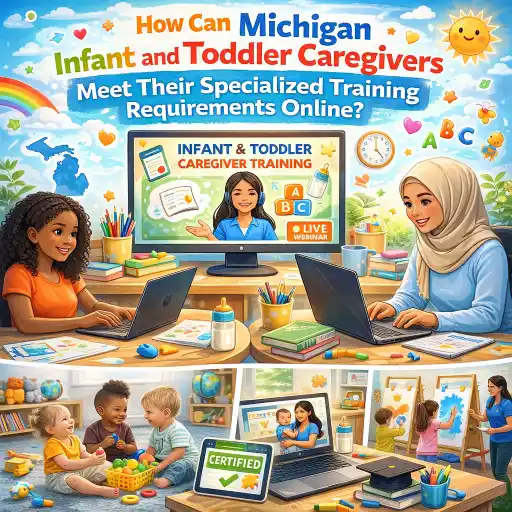
Michigan requires lead caregivers to have specific training hours and infant/toddler specialty credit. A common path is the 9 CEUs (90 hours) for lead caregiver pathways that include a 45-hour infant/toddler course. ChildCareEd offers programs designed for Michigan, such as the Michigan Infant/Toddler Lead Caregiver Career Program and the state-focused post about 45 Hour Training: Lead Caregiver Requirements in Michigan.
Key approved course types you can take online:
- 45-Hour Infant and Toddler Curriculum (self-paced) — see 45-Hour Infant and Toddler Curriculum
 Buy Now
 $399.00$275.00. - 120-Hour CDA Infant/Toddler course with portfolio review if you plan to earn a CDA — see CDA Infant/Toddler Credential Buy Now
$500.00$400.00. - Short safety classes like Safe Sleep and SIDS prevention — see Safe Sleep Training Buy Now $16.00 and SIDS training.
- Bundles made for Michigan credit that combine required hours and topics — see the Michigan Lead Caregiver program.
Tip: When you sign up, add your MiRegistry ID to your ChildCareEd account so completed hours are reported to the state automatically (if the provider supports reporting). For more course choices, browse ChildCareEd online trainings and the Michigan course list.
How do I complete the 45-hour infant/toddler requirement online — step by step?
Follow these steps to finish the 45-hour infant/toddler training online with less stress and clear proof you met Michigan rules.
- Choose the right course:
- ✅ If you need classroom hours only, pick the 45-Hour Infant and Toddler Curriculum Buy Now
$399.00$275.00. - ✅ If you want a credential, consider the CDA Infant/Toddler 120-hour program Buy Now
$500.00$400.00 (it covers more hours and portfolio work).
- ✅ If you need classroom hours only, pick the 45-Hour Infant and Toddler Curriculum
- Register and check format: live Zoom + online or fully self-paced. ChildCareEd lists formats on each course page (see Methods and Materials Buy Now $399.00 for hybrid examples).
- Make a plan: break 45 hours into weekly goals. For example, study 5 hours/week to finish in 9 weeks.
- Complete lessons and quizzes: most courses require an 80% passing score on tests to earn a certificate.
- Save your certificate & upload to MiRegistry or your employer. Add your Michigan Registry ID when prompted so training can be recorded (if supported).
Helpful resources: the step-by-step guide How to Get Your 45 Hour Infant and Toddler Certification Online and the general guide Get Your Infant and Toddler Certificate Online.
Why does this training matter for my program and the children in my care?
Why it matters: Specialized infant/toddler training helps staff give safe, loving, and developmentally right care. Babies and toddlers grow fast. Caregivers with focused training know how to follow safe sleep rules, manage feeding, support language, and notice early signs of delays. This makes the program safer and stronger.
Top reasons to prioritize this training:
- Safety first: Courses like Safe Sleep Training Buy Now $16.00 teach ways to reduce SIDS and keep infants safer.
- Better routines: Learning how to plan feeding, napping, and transitions reduces stress for children and staff.
- Stronger family partnerships: Training shows how to communicate with families and build trust.
- Higher quality care: Programs with trained staff meet licensing and quality standards. Parents notice the difference.
- Career growth: Courses can count toward lead caregiver or CDA requirements and help with promotions — see the Michigan Lead Caregiver program.
Extra note: trained staff can spot health or development concerns early and refer families to local services. Use free resources like Expect the Unexpected: Infants and Toddlers and Building and Strengthening Skills Buy Now $0.00 to keep learning.
How do I avoid common mistakes, and what questions do providers often ask?
Common mistakes & how to avoid them:
- 🛑 Waiting until the last minute — Plan weekly time and start early.
- 📁 Not saving certificates — Keep digital and paper copies of every certificate and receipt.
- ❓Choosing the wrong course for Michigan credit — Verify the course is accepted by MiRegistry or ask your licensing office.
- 🔁 Skipping safety modules like SIDS or Safe Sleep — Those are often required for infants; take dedicated classes such as Safe Sleep Training Buy Now $16.00.
- 🧾 Forgetting to add your MiRegistry ID — Add it to your ChildCareEd profile so hours report automatically when possible.
FAQ (short answers):
- Q: Can I complete all required hours online?
A: Yes. Many Michigan-approved courses are fully online. Check each course page for format and MiRegistry reporting (see Online Childcare Trainings). - Q: Does ChildCareEd report hours to MiRegistry?
A: Often yes — add your MiRegistry ID to your account and confirm reporting on the course page. - Q: Do I still need CPR/First Aid?
A: Usually yes. CPR/First Aid is often a separate requirement for licensing and employment. - Q: Is the 45-hour course enough to become a lead caregiver?
A: The 45-hour infant/toddler course is required for infant/toddler specialty credit. Michigan lead roles commonly need 90 total hours or a CDA — review the lead caregiver guide. - Q: Who can I contact if I have course questions?
A: ChildCareEd support is listed on each course page. For licensing rules, contact your state office — and remember: state requirements vary - check your state licensing agency.
Conclusion: Online training gives practical paths to meet Michigan infant/toddler requirements. Pick approved courses, plan your time, save certificates, and use resources from ChildCareEd to support staff and families. You are doing important work — keep learning and protecting the children in your care.
- 45 Hour Child Growth and Development
- 45 Hour Infant and Toddler Methods and Materials
- Pediatric RSV First Aid & CPR/AED
- CDA Infant/Toddler Credential with Portfolio Review
- CDA Bridge Bundle: Family Child Care without Portfolio Review
- CDA Bridge Bundle: Infant/Toddler without Portfolio Review
- CDA Bridge Bundle: Preschool without Portfolio Review
- CDA Bridge Bundle: Infant/Toddler
- Texas Director Credential
- 45-Hour Infant and Toddler Curriculum
- Childcare Training
- Why do I need a CDA Credential?
- Navigating Michigan's Child Care Crisis through a Rewarding Career Change with ChildCareEd
- Invest in Your Skills, Invest in Children: ChildCareEd Training for Michigan Providers
- CDA Certification en Español: Recursos y Consejos para Educadores Bilingües
- 45 horas para infantes y niños pequeños: cómo certificarse en línea
- ¿Cuáles son los pasos, requisitos y opciones en línea para la certificación de 90 horas en cuidado de Infantes/Toddlers en Maryland?
- ¿Cómo empiezo mi certificación CDA en Florida en línea?
- What are preservice trainings in Michigan and how do providers complete them?
- Regulaciones de Licenciamiento de Cuidado Infantil en California para Centros y Hogares de Cuidado Infantil Familiar
- Proporciones de Cuidado Infantil y Tamaños de Grupo por Edad en Nueva Jersey (Guía Rápida para Centros y Hogares)
- Proporciones de Cuidado Infantil y Tamaños de Grupo por Edad en Virginia (Guía Rápida para Centros y Hogares)
- Lista para Guardería en Casa en Texas: Cómo Iniciar una Guardería en el Hogar
- Capacitación Previa al Servicio para Proveedores de Cuidado Infantil en Maryland
- How is ChildCareEd becoming the go-to professional development platform for Michigan childcare workers?
- How can Michigan infant and toddler caregivers meet their specialized training requirements online?
- How Many Annual Training Hours Do Michigan Child Care Providers Need?
- Cómo simplificar la capacitación para sus empleados de daycare
- What Daycare Certification Requirements Must You Complete Before You Can Start Working?
- What Certifications Do I Need to Open a Daycare? License, Training, and Credentials Explained
