When a child’s home and classroom routines connect, everyday care becomes more predictable, responsive, and reassuring. This guide helps providers turn family knowledge into practical classroom supports, while Bienvenido! Welcoming All Families  Buy Now $16.00 offers additional strategies for engaging families across backgrounds and schedules and can support ongoing professional learning.
Why Do Home Routines Belong in a Classroom Support Plan?
Children move between home and early learning settings with different expectations, sensory experiences, relationships, and rhythms. A classroom support plan that ignores these contexts may unintentionally ask children to adapt without sufficient preparation. By contrast, learning about home routines helps educators design supports that are familiar, respectful, and feasible.
Routines are more than schedules. They include how a child wakes, eats, rests, separates from caregivers, communicates needs, manages transitions, and receives comfort. These details can reveal strengths as well as possible stress points. The NAEYC guidance on daily routines and classroom transitions emphasizes that predictable routines contribute to supportive learning environments.
Family input is also an equity practice. Families hold essential knowledge about their children, and developmentally appropriate practice calls for reciprocal partnerships rather than one-way information sharing. A support plan should therefore be co-constructed, not simply delivered to caregivers.
What Information Should Providers Gather About Home Routines?
Use a strengths-based interview rather than a deficit-focused questionnaire. The goal is not to judge family practices or demand identical routines. The goal is to understand what helps the child participate, regulate, communicate, and recover when something changes.
- What does the child’s morning, mealtime, rest, toileting, and bedtime routine usually look like?
- Which parts of the day does the child anticipate or enjoy?
- How does the child signal hunger, fatigue, discomfort, excitement, or a need for help?
- What words, gestures, songs, objects, or visual cues are familiar at home?
- How does the family support separation, clean-up, waiting, and unexpected changes?
- Who participates in caregiving, and how should the program describe the child’s family?
- Are there cultural, linguistic, religious, dietary, or accessibility considerations to honor?
The sellable Home-to-Classroom Routine Interview Forms can make this process consistent across enrollment, conferences, and plan reviews. Keep questions optional where appropriate, explain confidentiality, and invite families to add information in their preferred language. Avoid asking children to translate for adults; NAEYC recommends using interpreters or community resources when needed.
How Can Interview Responses Become Usable Classroom Supports?
Interview data becomes useful when it is translated into observable strategies. Avoid copying family comments into a plan without identifying what staff will do, when they will do it, and how the team will know whether the support is helping.
A practical planning sequence is:
- Identify the routine. For example, arrival, snack, toileting, rest, or transition outdoors.
- Describe the child’s current participation. Use objective observations rather than labels such as “noncompliant.”
- Record family knowledge. Note successful cues, preferences, relationships, and calming strategies.
- Select a classroom adaptation. Consider visuals, timing, materials, language, proximity, or peer support.
- Define the desired outcome. Make it observable, such as “moves to the handwashing area with one visual reminder.”
- Review and revise. Ask the family whether the strategy remains culturally and practically appropriate.
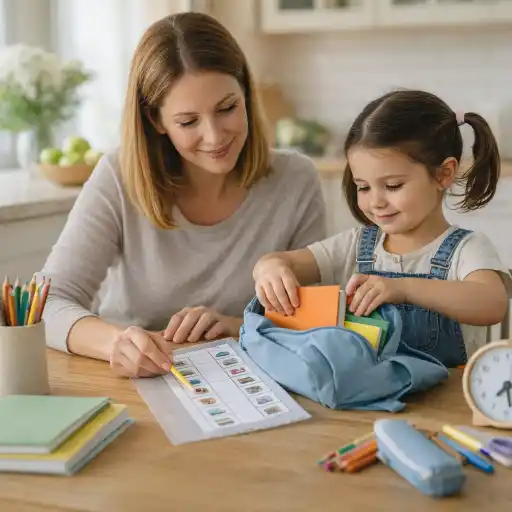
For example, if a family reports that a child transitions successfully after a short song and a two-step warning, staff might use the same song, show a picture of the next activity, and provide a brief countdown. This is not about reproducing home exactly; it is about building a familiar bridge. Head Start’s individualization resources similarly emphasize access, participation, and individualized teaching opportunities.
How Can Providers Honor Culture, Language, and Family Choice?
Routine interviews can strengthen inclusion, but only when educators approach families with curiosity and humility. A provider’s familiar practice is not automatically the universal or “correct” practice. Cultural beliefs, language, caregiving roles, housing conditions, work schedules, and community expectations all shape routines.
Ask open questions such as, “What would you like us to understand about this routine?” or “Which part of this plan feels most comfortable for your family?” Reflect back what you heard before proposing a classroom change. The Head Start resource on cultural perspectives in caregiving recommends examining personal assumptions and learning directly from families’ lifeways and preferences.
Language access matters as much as cultural respect. Provide forms in the family’s preferred language when possible, use qualified interpretation, and preserve important home-language words for comfort, toileting, food, and emotional communication. A child’s home language is an asset, not an obstacle.
- ✅ Offer multiple ways to respond: conversation, paper form, phone, or secure digital message.
- 🤝 Ask families to review the final support plan and identify anything that feels inaccurate or unrealistic.
- 🌱 Represent family routines in classroom books, dramatic play, songs, and visual materials without stereotyping.
State requirements vary - check your state licensing agency before changing documentation, medication, toileting, sleep, or supervision procedures.
How Should Teams Implement and Monitor the Plan?
A strong support plan is shared by the adults who interact with the child. Directors can schedule a short team review, identify one primary routine to address, and ensure that all staff use consistent language and cues. The plan should be accessible while protecting confidential information.
Implementation may include:
- a picture schedule or first-then board;
- a consistent arrival greeting and separation sequence;
- familiar songs, objects, or phrases;
- additional transition time or a smaller group;
- a designated relationship-based support person;
- calm choices taught before the child becomes distressed.
Collect brief data rather than relying on memory. Staff might record the routine, support provided, level of assistance, child response, and relevant context. Review patterns weekly with the family when possible. If the child continues to struggle, ask whether the routine, environment, communication method, or expectation needs adjustment. Do not assume that more adult prompting is always the answer.
Common mistakes include treating family information as a compliance checklist, promising identical home practices, changing too many routines at once, and using a calm area as punishment. A reflective team instead asks: What worked? What did the child communicate? What did we miss? What can we simplify?
What Are Practical Tools and Conversation Starters?
Pair the Home-to-Classroom Routine Interview Forms with a short implementation page. This keeps the resource useful for both families and staff.
Suggested form sections include:
- Routine snapshot: What happens before, during, and after the routine?
- Child strengths: What does the child already do independently?
- Communication: What words, signs, gestures, or behaviors should adults recognize?
- Comfort and regulation: What helps the child feel safe and ready?
- Family priorities: What outcome matters most to the family?
- Classroom plan: What will staff do, and what materials are needed?
- Review date: When will the team revisit the plan?
Conversation starters can make meetings less intimidating: “Tell me about a time this routine went well,” “What does your child do when they need a break?” and “What should we try first at school?” These prompts position families as partners and help providers notice competence.
For additional professional development, consider Family Voices Matter: Tools for Meaningful Collaboration Buy Now $55.00, which focuses on culturally responsive communication, family questionnaires, assessment, goal setting, and collaboration. Providers interested in predictable routines can also explore Every Moment Matters: Schedules and Transitions Buy Now $55.00 for strategies involving schedules, transitions, temperament, and classroom climate.
Conclusion: How Can Home Routines Strengthen Classroom Support?
Home routines strengthen classroom support plans when educators treat family knowledge as essential evidence for responsive practice. The process begins with respectful questions, continues through specific and observable classroom adaptations, and depends on regular review with families and staff.
The central principles are straightforward:
- Listen before planning.
- Document strengths, preferences, and successful supports.
- Translate information into observable staff actions.
- Honor culture, language, family structure, and choice.
- Monitor what happens and revise collaboratively.
When providers use the Home-to-Classroom Routine Interview Forms thoughtfully, they create a practical bridge between a child’s most familiar relationships and the classroom community. That bridge can support #belonging, #communication, #routines, #partnerships, and #inclusion—while helping children participate with greater confidence and security.
- Teacher-Child Interactions for Stronger CLASS® Outcomes
- The ABCs of Behavior: Turning Challenges into Learning Opportunities
- Texas Primary Caregiver Qualification
- Classroom Setup for Child Care
- Texas Director Credential
- FCCLH Pre-Service Course
- Every Moment Matters: Schedules and Transitions
- Everyday Safety: Creating Healthy Environments
- Spicing Up the Classroom: Learning Centers
- Supporting Families and Caregivers in Language and Literacy
- CDA Certification en Español: Recursos y Consejos para Educadores Bilingües
- Guiding the Future: Directors and Administrators Are the Heart of ECE in Pennsylvania
- 10 Ejemplos de Cómo la Cultura Influye en el Desarrollo Infantil
- How Can New York Providers Support Health, Family, and Learning Together?
- How can we best prepare preschool children for kindergarten?
- Can we build early literacy skills through play in high-quality child care?
- How can child care programs best support Dual Language Learners?
- Your Classroom Is Teaching Too: How the Environment Supports Children’s Learning
- From Mealtime to Manners: How Cultural Influences Show Up in Everyday Child Care
- How Can Child Care Providers Support Language Development in Young Children?
- How Can Visual Schedules Make Early Childhood Classrooms More Predictable and Inclusive?
- When a Favorite Teacher Is Absent, How Can Child Care Providers Support Children Through the Change?
- How Can Child Care Providers Navigate Developmental Delay Conversations with Caregivers?
- How Can Home Routines Strengthen a Child’s Classroom Support Plan?
- How Can You Respond When a Family’s Expectations Differ from Your Classroom Routine?
- Why Might a Child Show Different Skills at Home and at Preschool?
- How Can Family Knowledge Enrich a Montessori Toddler Classroom?
- How Can Child Care Providers Support a Child Whose Routines Differ Between Two Homes?
