When holiday routines leave some children feeling like visitors in their own classroom, shared movement can bring the group together without asking anyone to adopt a particular tradition. Explore flexible, season-neutral games below, and deepen your planning with ChildCareEd’s Balancing Active Play in Child Care  Buy Now $16.00 course, which supports providers in balancing structured and child-led activity while choosing materials for children’s development. For an easy weather-themed starting point, try the featured Kids Weather Activities Buy Now $0.99 resource—its movement and observation ideas can turn everyday conditions into inclusive play.
Why choose holiday-neutral movement activities?
Children’s families may observe different holidays, observe none, or celebrate the same occasion in different ways. A movement activity that relies on a specific holiday’s characters, symbols, music, or rituals can unintentionally position some children as insiders and others as outsiders. Neutral activities offer the class a shared experience without requiring children to perform or affirm a tradition that may not be theirs.
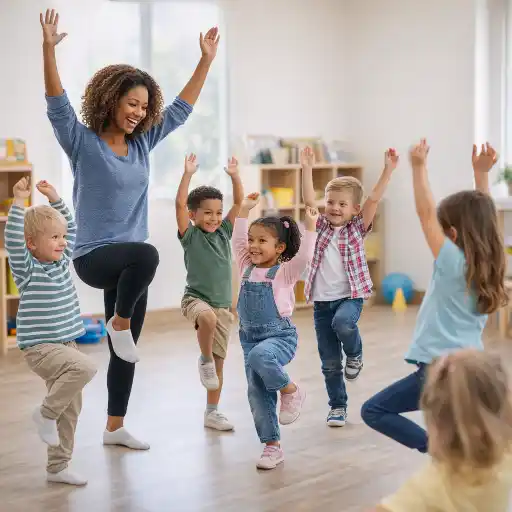
Neutral does not have to mean bland. Children can move like a breeze, create a pathway with their bodies, or cooperate to keep a soft ball rolling. The focus is on imagination, connection, and what children can do—not on a holiday narrative or a “correct” performance. This aligns with anti-bias guidance to be thoughtful about which traditions are centered and to respect families’ varied beliefs and practices.
Movement also supports more than physical development. Play can invite children to communicate, problem-solve, practice coordination, and connect with peers. A flexible group activity makes room for different temperaments and abilities, while sending a clear message: there are many valuable ways to participate. In busy classrooms, these experiences can be a welcoming anchor during seasonal periods when decorations and schedules may otherwise feel different.
How can providers make movement inclusive from the start?
Start by planning options before the activity begins rather than waiting for a child to struggle. Explain the play space, demonstrate the basic idea, and use concise directions. Then make participation flexible: children can stand, sit, move in place, observe before joining, or take a helpful role. The goal is meaningful engagement, not identical movements.
- Offer movement choices: step, roll, stretch, sway, reach, or travel through the space.
- Pair spoken directions with picture cards, gestures, or a simple demonstration.
- Use clear boundaries, open pathways, and uncluttered areas that allow mobility aids and varied movement styles.
- Use soft, lightweight, easy-to-grip materials; adjust distance, pace, and target size as needed.
- Invite children to help lead, choose the next prompt, keep a rhythm, or signal a pause.
Ask families about useful accommodations and consult a child’s individualized support information when applicable. Avoid treating adaptation as a special favor: flexible options benefit the whole group. Praise curiosity, cooperation, and effort rather than comparing speed, strength, or skill. This approach helps #inclusion become part of the activity’s design, not an add-on.
Which holiday-neutral movement games can you try?
These activities use familiar materials and open-ended prompts, so they can work across seasons and classroom themes. Adjust the duration and complexity to match the children’s ages, interests, and energy.
- Weather movers: Invite children to show a gentle breeze, steady rain, drifting cloud, or warm sunshine through any movement they choose. Offer seated and still-body options, too. ChildCareEd’s Kids Weather Activities Buy Now $0.99 resource includes weather movement and observation ideas that combine science vocabulary with active play.
- Pass the movement: One child offers a simple gesture—such as a shoulder roll or hand wave—and the group copies or adapts it. Pass the leadership around, with an adult ready to model.
- Pathway explorers: Make a route with floor markers or tape. Children can travel beside, over, or around it by walking, rolling, stepping, or moving their arms.
- Cooperative scarf waves: In a circle, children lift, lower, or ripple scarves together to a steady beat. Children can hold a scarf, direct the group, or create a visual cue.
- 🤸 Freeze in a shape: Move to music or a drumbeat, then pause and make a comfortable shape. Use a visual stop cue as well as sound, and let children choose whether to freeze or simply slow down.
Emphasize shared discovery over winners and eliminations. If a child prefers to watch first, invite them to choose the next cue or describe what they notice. That is still participation.
How can you balance active play with calm and safety?
Inclusive movement is not about keeping children at a high level of activity all day. A thoughtful schedule alternates active, creative, and quieter experiences, allowing children to move, recover, and re-engage. Short movement invitations can fit into transitions or be offered as a planned group experience. Observe children’s cues: some may seek more movement, while others benefit from lower sound, extra space, or a pause.
Before starting, check the floor, materials, and route for hazards; remove obstacles and establish a clear stop signal. Keep group sizes manageable, supervise actively, and avoid crowded or slippery movement areas. If an activity takes place outdoors, follow program procedures for weather, clothing, hydration, and outdoor supervision. When outdoor conditions are unsuitable, bring the idea inside in a safe, scaled-down form. State requirements vary - check your state licensing agency.
Use the Balancing Active Play in Child Care Buy Now $16.00 course as a deeper professional-learning resource. It addresses structured and unstructured activities, sedentary time, and the use of available materials to support physical, social, and cognitive development—useful considerations when planning movement that is both engaging and balanced.
What common pitfalls should you avoid?
Good intentions matter, but activity design matters too. A game can appear neutral while still creating barriers if it depends on fast running, precise jumping, loud music, or a single way of following directions. Review the activity from a child’s point of view: Can each child access the space, understand the invitation, and contribute in a way that feels comfortable?
- Avoid holiday-coded props or language when the goal is a shared, neutral classroom experience. Seasonal changes in weather or light can be explored without linking them to a specific celebration.
- Avoid requiring every child to move alike. Provide different ways to respond and celebrate individual expression.
- Avoid elimination and public comparisons. Children who are “out” may lose the chance to move and connect; cooperative play keeps the group involved.
- Avoid relying on only one cue. Combine words, visuals, gestures, and modeling so children have more than one way to understand.
- Avoid assuming a child who watches is disengaged. Offer an observation or leadership role, then leave the invitation open.
After the game, reflect briefly with staff: Who joined in? Which adaptations helped? Did the pace and sensory level work for the group? One small adjustment can make the next experience more accessible and enjoyable. Treat those observations as practical planning information, not a judgment of a child or educator.
How can directors make inclusive movement a classroom routine?
Directors can help staff make holiday-neutral movement an ordinary, dependable part of classroom life rather than a one-time seasonal activity. Build short movement opportunities into lesson plans and transitions, keep a small kit of flexible materials accessible, and invite educators to share adaptations that work. Materials might include scarves, soft balls, picture prompts, floor markers, and a visual stop cue. A consistent routine also helps children know what to expect.
Consider collecting family input about movement preferences, accessibility needs, and languages children hear at home. This is not a request for families to represent or teach a tradition; it is a way to learn what supports children’s participation. Staff can also review the classroom environment for clear pathways and quieter options, then plan activities that allow children to lead, observe, or move in different ways.
Use brief team reflection to sustain the practice: note which activities supported cooperation, where waiting occurred, and whether any child needed a different entry point. ChildCareEd’s Balancing Active Play in Child Care Buy Now $16.00 offers a more complete learning experience on balancing activity types and selecting materials to support development. Pair that professional learning with the practical Kids Weather Activities Buy Now $0.99 resource for adaptable weather-based movement and observation ideas.
Conclusion: How can holiday-neutral movement support belonging?
Holiday-neutral movement activities give children a shared way to play without making a particular cultural or religious tradition the price of entry. Choose open-ended prompts, flexible movement options, and cooperative games; use more than one kind of cue; and plan for different sensory, communication, and mobility needs. Keep safety and a balanced daily rhythm in view, while valuing observation and alternative roles as genuine forms of participation.
The practical goal is simple: each child should have a meaningful way to join the group and feel that their contribution counts. Start with one adaptable activity—perhaps moving like the day’s weather—and notice what helps children connect. For further planning support, explore ChildCareEd’s Balancing Active Play in Child Care Buy Now $16.00 course and its Kids Weather Activities Buy Now $0.99 resource.
- Bienvenido! Welcoming All Families
- Birth to Five CDA Credential with Portfolio Review
- CDA Bridge Bundle: Preschool
- CDA Bridge Bundle: Family Child Care
- Art from the Heart for Preschoolers: Open Ended Art Projects that Build Self-Esteem
- CDA Bridge Bundle: Infant/Toddler
- Sensitive Periods in Montessori: Guiding Natural Learning
- Creating Environments that Nurture Growth and Community
- Texas Director Credential
- Wellness in Action: Teaching Healthy Habits to Children
- How Neurodivergent Kids Shine During the Holidays
- 💛🧩 ¿Cómo puedo hacer que mi enseñanza sea inclusiva para los niños con autismo?
- ¿Cómo hacer actividades navideñas inclusivas para todas las familias?
- Rethinking School Family Events: Inclusive Ideas for Every Family
- Canciones, juegos y preguntas de círculo para niños
- How Can You Celebrate Black Culture and Music Effectively in Your Program?
- How can we teach community and country to young children in simple, respectful ways?
- What are age-appropriate Fourth of July activities for daycares?
- How can child care programs host inclusive family celebrations that welcome every family?
- How can I introduce the Festival of Lights to young children in respectful, developmentally appropriate ways?
- Labor Day Crafts for School-Age Kids That Go Beyond Coloring Pages
- Rosh Hashanah Sensory Bin Ideas: Apples, Honey, Shofars, and Sweet New Year Play
- How Can Child Care Providers Create Inclusive Father’s Day Activities for Diverse Family Structures?
- How Can Writing and Art Activities Help Children Name What They Appreciate?
- How Can Child Care Providers Teach Holiday Vocabulary with Context and Care?
- How Can Holiday Word Games Strengthen Visual Scanning and Spelling?
- How Can Child Care Providers Respect Families Who Decline Handmade Classroom Gifts?
- What Should You Ask Families Before a Classroom Winter Celebration?
- How Can Holiday-Neutral Movement Activities Create a More Inclusive Classroom?
