Becoming a child care director is a big and exciting step. This short guide helps early educators and directors in Washington understand what to study, what training to finish, and what paperwork to plan for. Read each section for clear, practical steps you can use at work. Remember: state requirements vary - check your state licensing agency.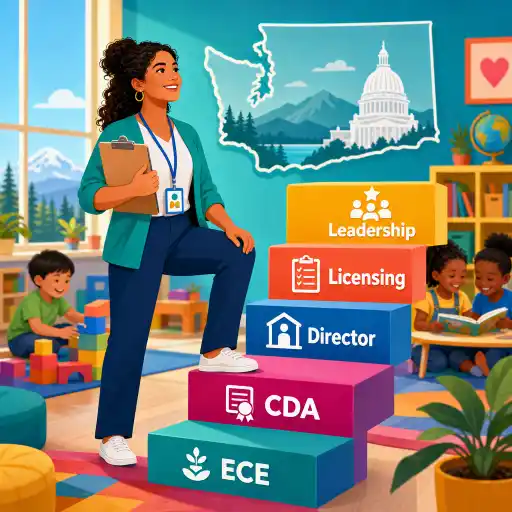
Why this matters:
1. Strong leadership keeps children safe and helps teachers do their best. 2. Knowing rules, training, and recordkeeping lowers stress during licensing visits. 3. Clear steps help you build a fair, stable program families trust.
What education and experience do I need to be a director in Washington?
2. Typical expectations (ask DCYF for exact rules):
- 🟣 At least an associate degree or set number of college credits in early childhood or related topics.
- 🟣 Two years of experience working with children in a licensed setting is common.
- 🟣 Completion of a state-approved director or administrator training.
- 🟣 Passing background checks and meeting health & safety rules.
3. Helpful programs: community colleges in Washington offer clear ECE pathways and stackable certificates that help you move from classroom teacher to #director. See local program info like the ECE programs at Columbia Basin College and other community colleges. Use these courses to build the college credits you need for a leadership role.
What specific trainings and courses should I and my #staff complete?
2. Director-focused trainings: Consider a director administration course such as the 45-Hour Director-Administration online class. This course covers licensing, staffing, budgets, and leadership and is a common choice for new directors—see 45 Hours Director-Administration ONLINE  Buy Now
 $399.00$275.00.
3. CPR and First Aid: Many licensors accept Red Cross courses and blended options. Choose an instructor-led or blended course that includes a skills check. Learn more at the American Red Cross training pages: Red Cross Training Services.
4. MERIT and STARS: If you want training to appear in Washington's MERIT system, pick courses that show DCYF/STARS/MERIT approval. ChildCareEd and some trainers note MERIT acceptance on the course page—see tips at How can Washington child care professionals begin their career with confidence through ChildCareEd?.
How do licensing, ratios, and background checks shape my role as director?
2. Key director responsibilities tied to licensing:
- 🛡️ Ensure all staff have clear background checks and clearance cards. Washington often uses fingerprint checks and shared clearance systems.
- 📊 Maintain correct child-to-staff ratios and post your room capacities.
- 📁 Keep complete staff files: training certificates, health forms, TB checks if required, and background paperwork.
3. Practical tools to stay ready: create a licensing binder with your license, inspection reports, staff files, drill logs, and a training tracker. ChildCareEd's licensing guide and training checklists are practical resources: What do Washington child care licensing requirements mean for early childhood educators? and the Washington training checklist at What should a Washington child care training checklist for new staff include?.
How can I prepare my program, support my team, and avoid common mistakes?
1. Build a simple plan with clear dates and tasks. Use a 30-60-90 day onboarding plan for new hires. The ChildCareEd Washington onboarding checklist gives a step-by-step plan you can adapt: Washington training checklist.
2. Practical daily systems to lead well:
- 🔹 Keep a one-page training tracker showing name, course, date, hours, and expiry.
- 🔹 Use a buddy system and short weekly check-ins for new staff.
- 🔹 Buy or assign MERIT-ready courses so staff hours upload easily.
- 🔹 Use group admin tools or subscriptions to assign and track staff training — see Group Admin Program.
3. Common mistakes and how to avoid them:
- ❌ Taking courses the state won’t accept. ✅ Check MERIT/DCYF notes before you buy.
- ❌ Losing certificates. ✅ Scan and save files in two places (paper + digital).
- ❌ Waiting until the last minute for renewals. ✅ Set calendar reminders at 90/60/30 days.
4. Small leadership habits that help every day: prioritize clear communication with families, keep budgets simple, and protect staff time for #training and planning. For deadlines, hours, and next steps in Washington, see What are Washington child care deadlines, hours, and next steps?.
Conclusion
1. Steps to get started:
- 🔎 Review Washington director rules (start with ChildCareEd’s director guide and RCW 43.216).
- 📚 Enroll in required courses (director administration, health & safety, CPR) — see ChildCareEd Washington course list.
- 🗂️ Build a licensing binder and one-page training tracker for your #staff.
2. Quick FAQ:
- Q: Does the CDA help me become a director? A: Yes. CDA is often accepted toward certificates, but directors usually need more college credits—see CDA and Washington credentials.
- Q: Where do I get MERIT credit? A: Choose courses marked for MERIT or report certificates to MERIT as explained on course pages and in Washington guidance.
- Q: Who enforces licensing rules? A: DCYF enforces Washington rules. For law and obligations, see RCW 43.216.
You are doing important work. Start with one small step: choose a single director or leadership course, make a one-page training tracker, and set reminders for renewals. Use trusted local training and the ChildCareEd Washington pages to guide your path. state requirements vary - check your state licensing agency.
Key words: leading, learning, and caring for children are stronger when you plan. #director #Washington #training #licensing #staff
1. The Washington Department of Children, Youth, and Families (DCYF) sets licensing law and rules. The legal framework is part of RCW 43.216 — this law covers licensing, background checks, licensing steps, and Early Achievers quality systems. Read an overview of the law at RCW 43.216.1. Washington usually asks for college credits and work with children. A common path is an associate degree plus specific credits in early childhood or a related field. See a helpful step-by-step guide at How Can I Become an ECE Director in Washington State?.1. Start with the training topics Washington cares about most. Common topics include health & safety, medication administration, safe sleep (infants), mandated reporter training, and pediatric CPR/First Aid. ChildCareEd lists many Washington course options here: Childcare Courses in Washington.
- Creating Community
- Early Childhood Education Online Courses
- Early Childhood Education in Washington
- ChildCareEd: Empowering Early Childhood Educators with Quality Training
- Support Services from ChildCareEd for our Learners
- CDA Certification en Español: Recursos y Consejos para Educadores Bilingües
- Lista para Guardería en Casa en Texas: Cómo Iniciar una Guardería en el Hogar
- Cómo Ser Maestra de Preescolar en Illinois
- Cómo Ser Maestra de Preescolar en Maryland
- What is the best online STARS training for Washington child care providers?
- What Should DC Early Childhood Teachers Know About Pay Equity Right Now?
- What do Washington child care licensing requirements mean for early childhood educators?
- Can Washington early childhood educators grow with ChildCareEd’s self-paced courses?
- How can I become a teacher in Washington and build confidence in my early childhood classroom?
- How do I become a child care director in DC?
- How Can Early Educators Become a Child Care Director in Washington?
- Cómo simplificar la capacitación para sus empleados de daycare
- Should Washington Child Care Centers Rethink Parking Lots, Barriers, and Building-Side Safety?
- How to Become a Childcare Worker in Washington: Requirements and Steps
- Early Childhood Administration Certificate Online: Will It Qualify You to Be a Director?
