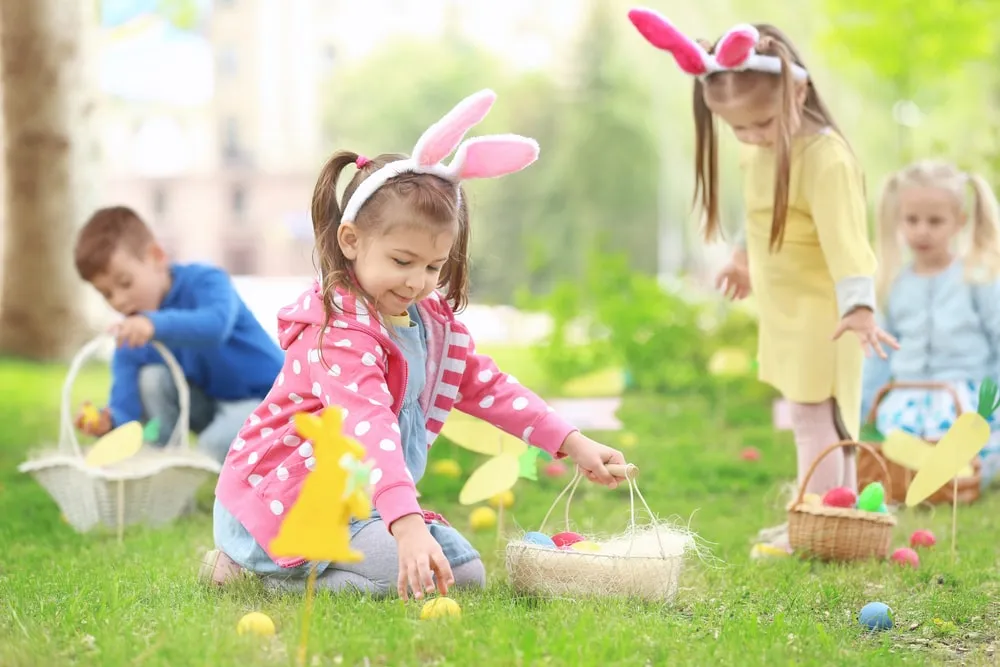
 Easter can be a joyful time in early childhood programs. When done well, it blends play, learning, and community in simple ways. This article helps child care providers and directors plan safe, meaningful celebrations that respect families and support development. You’ll find ideas for every age, easy ways to connect Easter to your curriculum, and tips for staying inclusive.
Why should we celebrate Easter?
Celebrations can be valuable because they help children learn through familiar, fun experiences. Holiday themes can support:
Social skills: Children practice sharing, taking turns, and working together. See How Holiday Traditions Support Cognitive, Social, and Emotional Growth.
Language and thinking: Stories, songs, and talking about spring symbols (eggs, bunnies, flowers) builds vocabulary and reasoning. ChildCareEd offers lessons and tips for using holiday themes to teach language and problem solving: Nurturing Children: Celebrating Easter and Spring.
Motor and sensory skills: Hunts, movement games, and sensory bins support both gross and fine motor development as shown in activity guides like Hoppin’ Into Easter.
A strong celebration also helps connect home and school. When you keep activities developmentally appropriate and respectful, children can feel belonging while they learn. #Children #Growth
What activities work for different age groups?
Good Easter activities are simple, hands-on, and match children's ages. Below are ideas and links to ready-made resources.
Infants (0–18 months)
-
Spring sensory basket: soft grass (fabric), large plastic eggs, fabric chicks (no small parts).
-
Tummy-time discovery: colorful egg-shaped soft toys + gentle spring songs.
-
Language moments: “soft,” “smooth,” “egg,” “bunny” (one or two words at a time).
Toddlers (18–36 months)
-
Egg sensory bin: grass, pom-poms, scoops, and large eggs for filling and dumping.
-
Match the eggs: color-match plastic egg halves (great fine motor + color words).
-
Bunny hop path: tape shapes on the floor and hop from one to the next.
Preschool (3–5 years)
-
Picture/number egg hunt: eggs with simple clues (numbers, shapes, letters).
-
Egg decorating: stickers, dot markers, or non-toxic paint (avoid messy dye if needed).
-
Gross motor games: bunny hop races, obstacle courses, “follow the bunny” movement.
School-age
-
Scavenger hunt with reading clues: short riddles or sight-word cards.
-
STEM egg challenge: design an “egg carrier” or build an egg stand from recycled materials.
-
Team games: cooperative hunts and group challenges that reward teamwork (not speed).
🐰 Want more Easter activity ideas? See ChildCareEd’s Easter Classroom Activities Buy Now $0.00
🥚 Need more movement games? Try ChildCareEd’s gross-motor article: Hoppin’ Into Easter
How do I tie Easter into the curriculum and learning goals?
Use Easter as a “teaching lens.” Keep it intentional by planning around 2–3 clear goals.
Pick 2–3 learning goals (examples):
-
📚 Literacy: spring vocabulary, stories, songs, sequencing (“first/next/last”)
-
🔢 Math: counting eggs, sorting by color, patterns, size ordering
-
💛 Social-emotional: turn-taking, flexible thinking, using words for excitement or frustration
Match activities to goals:
-
Egg hunt → counting, following directions, teamwork
-
Sensory bin → describing words, fine motor practice
-
Craft → listening, steps in order, creativity and self-expression
Simple schedule example:
-
Circle time story + song (10 min)
-
Small-group craft or sensory center (20–30 min)
-
Outdoor movement game or hunt (15–20 min)
-
Snack + quick reflection (10 min)
Easy assessment ideas:
-
quick teacher notes
-
photo documentation (if allowed)
-
a simple checklist (counting, turn-taking, vocabulary used)
Image idea: visual schedule cards for “story, centers, outside, snack”
How do we celebrate safely, respectfully, and inclusively — and what common mistakes should we avoid?
Safety, respect, and inclusion are essential. Follow these steps to reduce problems and support all families.
Communicate with families (before the event)
-
📣 Send a short note explaining what you plan to do.
-
Offer opt-out or alternative choices for families who prefer non-holiday activities.
-
Keep language respectful and clear.
Plan inclusive options
-
🌼 Offer a spring theme option (nature, growth, animals, weather) that feels neutral and welcoming.
-
Use “some families celebrate” language.
Health and safety essentials
-
⚠️ Avoid small candy and choking hazards for young children.
-
Use large eggs and non-food prizes (stickers, stamps, puzzle pieces, book coupons).
-
Supervise outdoor hunts with clear boundaries and age-based zones.
-
Review allergies and program food policies ahead of time.
Common mistakes (and simple fixes)
-
❌ Rushing setup → ✅ Prep materials ahead and offer easy, independent steps.
-
❌ One activity for everyone → ✅ Offer 2–3 options (quiet + active + hands-on).
-
❌ Too much candy focus → ✅ Use learning prompts and non-food items.
-
❌ No alternative for children who struggle → ✅ Have a calm choice ready (sensory bin, book corner, helper job).
FAQ
Q: Can we include religious stories?
A: Only if your program’s mission supports it and families consent. Many programs choose spring, kindness, or nature themes to stay inclusive.
Q: How should we handle candy?
A: Avoid candy for infants and toddlers. For older children, follow allergy rules and offer non-food options when possible.Q: What if a child is upset during an egg hunt? — A: Have quiet alternative activities and staff support for children who need help with transitions.
Q: Where to find more activity ideas?
A: Easter Classroom Activities Buy Now $0.00 and Easter Coloring Pages Buy Now $0.00
Conclusion 🐰
Easter can be a gentle, meaningful theme for learning when you plan with purpose. Choose developmentally appropriate activities, connect them to clear learning goals, communicate with families early, and follow safety and inclusion steps. Small celebrations—done consistently and calmly—often work better than one big event. #Easter #Activities #Curriculum
Helpful resources include ChildCareEd’s Easter Classroom Activities Buy Now $0.00, Nurturing Children and Hoppin’ Into Easter!
- 45-Hour School Age Curriculum
- Balancing Physically Active Play in Child Care
- Birth to Five CDA Credential with Portfolio Review
- Pediatric RSV First Aid & CPR/AED
- 45 Hour School Age Methods and Materials
- Early Childhood Education
- 45-Hour Infant and Toddler Curriculum
- Creating Environments that Nurture Growth and Community
- Wellness in Action: Teaching Healthy Habits to Children
- Rooted in History: Early Childhood
- Nurturing Children: Celebrating Easter and Spring in Childcare
- CDA Certification en Español: Recursos y Consejos para Educadores Bilingües
- Hoppin’ Into Easter: 10 Outdoor Easter Gross Motor Activities
- 😫🧸 ¿Qué hacer cuando un bebé no quiere dormir la siesta en el aula?
- Easter in the Classroom: Learning-Focused Activities for Infants to School-Age
- Menos Estrés a la Hora de Comer: Rutinas Simples Que Sí Funcionan
- Celebrate Holy Thursday with These Kids Activities
- ¿Cuáles son las mejores actividades del Día de la Tierra para niños en casa o en el aula?
- Actividades de Fiesta para Niños de Preescolar y Primaria
- Proporciones de Cuidado Infantil y Tamaños de Grupo por Edad en Maryland (Guía Rápida para Centros y Hogares)
- Proporciones de Cuidado Infantil y Tamaños de Grupo por Edad en Wisconsin (Guía Rápida para Centros y Hogares)
- Proporciones de Cuidado Infantil y Tamaños de Grupo por Edad en Nueva Jersey (Guía Rápida para Centros y Hogares)
- Retraso del Habla en la Guardería: Cómo Pueden Ayudar los Proveedores
- What age-appropriate learning activities should we use for infants, toddlers & preschoolers in New York?
- After-School Activities for Kids: Calm, Creative, and Active Ideas for Every Energy Level
- Mixed-Age Daycare Schedule: How to Plan a Day for Different Age Groups
- Proporciones para guarderías en casa bajo el Título 22: Cómo la mezcla de edades cambia su capacidad en California
- What School-Age Activities Create Engaging, Inclusive, and Well-Managed Programs?
- How Can Easter Mazes Build Fine-Motor Skills Without Losing Sight of Learning?
