Food is basic. When families do not have enough, child care providers can help. This article gives clear steps for centers and family child care homes in #Minnesota. It is for directors and providers who want practical ideas to support #families, feed children, and connect families to help. We also include links to useful tools like ChildCareEd resources and Minnesota health pages.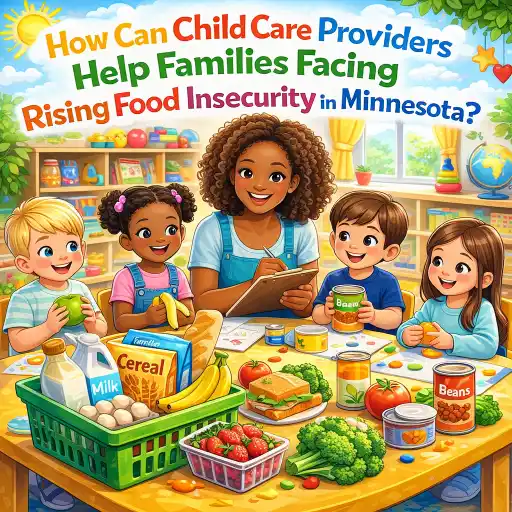
Why this matters:
1) Hungry children have trouble learning, staying healthy, and playing.
2) Families feel stress and shame when food runs out. Your program can make a big difference by offering food help, sharing information, and protecting dignity. For statewide help and program lists, see Food Help for Families - MN Dept. of Health.
Note: state requirements vary - check your state licensing agency.
Why providers matter:
- Providers see children every day and can spot needs early.
- Programs can connect families to SNAP, WIC, food shelves, and school meal information.
- Child care sites are trusted places to share resources without shame.
Use your role to listen, to share local help, and to protect families’ privacy.
How can child care programs quickly connect families to food and nutrition help?
- 🟢 Build a short resource list (1 page):
- Include phone numbers and hours for local food shelves, WIC, the Minnesota Food Helpline (1-888-711-1151), and the local food bank. Use regional directories to start.
- 📞 Make warm referrals:
- Call with the family (if they agree) to set up appointments.
- Offer to help fill forms or provide contact names at the food shelf.
- 🍎 Share short, practical info with families:
- Send 1–2 line texts or printed notes about free meals, farmers market vouchers, or SNAP sign-up help.
- Use ChildCareEd tips like How Do Educators Help Families Access the Services They Need? for gentle conversation starters.
- 🔗 Connect to state and local programs:
- Help families apply for SNAP at MN Benefits or by calling local human services. For emergency food, call the Minnesota Food Helpline (1-888-711-1151).
- Share info about WIC and formula help from the Minnesota Department of HHealthth Food Help for Families.
- 📚 Use trusted training and templates:
- Train staff using ChildCareEd’s family support articles, like How can child care programs engage families in nutrition and health education?.
Small steps and clear contacts help families feel supported. Keep information short and private.
What on-site nutrition actions and programs can reduce hunger right now?
- 🍽️ Review CACFP options:
- Check if your program qualifies for the Child and Adult Care Food Program (CACFP). CACFP helps pay for meals and snacks. Start with ChildCareEd’s guides: Does Your Program Qualify for CACFP? and the CACFP Food Menu Buy Now $0.00.
- 🧾 Plan safe, flexible food options:
- Serve healthy snacks that meet choking and allergy rules.
- Keep a small, safe emergency snack box for children who arrive hungry.
- For practical, low-cost ideas and sample menus that meet safety and nutrition standards, see healthy, cost-effective snack options for child care programs.
- 🍼 Support infant feeding needs:
- Share formula and WIC resources from the Minnesota Department of Health: Food Help for Families. Follow safe storage and preparation rules.
- 📋 Use clear recordkeeping:
- Track meals served, food counts, and any family referrals. Good records support CACFP claims and help you plan food restocks.
- ChildCareEd offers templates and training for menus and documentation.
- 🤝 Partner with local food programs:
- Invite a food shelf, school meals staff, or SNAP outreach worker for a short info session for families. Use local contacts from community directories.
These steps help programs feed children today and build systems for tomorrow.
How can programs work with families respectfully and avoid common mistakes?
Work in ways that protect dignity and build trust. Use these numbered tips and watch for common pitfalls.
- 🤝 Build trust first:
- Start with strengths: say what the child does well before sharing concerns.
- Offer help, don’t assume needs. Use the model from ChildCareEd: How Do Educators Help Families Access the Services They Need?.
- 🔒 Keep privacy and choice:
- Ask permission before calling agencies or sharing family info.
- Offer multiple options (phone, text, printed handout, ut) sfamilies canes choose what feels safe.
- 🌱 Use trauma-informed care:
- Be calm, predictable, and patient. ChildCareEd resources on trauma-informed care help staff respond with empathy (see Trauma-Informed Care Tips).
- ⚠️ Common mistakes and how to avoid them:
- ❌ Mistake: Pressuring a family to accept help. Fix: Offer choices and time to decide.
- ❌ Mistake: Sharing a long list of links. Fix: Give one clear next step (call, form, or visit).
- ❌ Mistake: Forgetting to update allergy or feeding plans. Fix: Check forms before offering shared foods.
- 📈 Track small wins:
- Count simple outcomes: number of families connected to SNAP/WIC, meals served, or emergency snacks given.
- Use data to adjust outreach and show funders your impact.
Conclusion: What can I do tomorrow?
Start with one small step. Here is a short checklist you can use right away:
- 📝 Make a 1-page local food resource list (names, phones, hours).
- 📞 Offer one warm referral this week to a family who might need it.
- 🍎 Check if your program can join CACFP — see ChildCareEd CACFP guides.
- 🤝 Plan one partnership with a food shelf or SNAP outreach worker.
- 🔁 Train staff on one family-support script using ChildCareEd templates.
Remember, your role matters. Small actions reduce hunger and protect families’ dignity.
FAQ
- Q: Can child care centers give food to families to take home?
A: Yes, with permission and safe storage. Check licensing rules and allergy plans. State rules differ, so state requirements vary - check your state licensing agency. - Q: How do we find SNAP or WIC help?
A: Use MN Benefits for SNAP and call the Minnesota Food Helpline at 1-888-711-1151 for WIC and local pantry info. Also see MDH’s Food Help for Families. - Q: What if staff feel uncomfortable talking about money?
A: Use simple, nonjudgmental phrases. Offer help and specific next steps. ChildCareEd’s family connection tips are designed for this: How Do Educators Help Families Access the Services They Need?. - Q: Does CACFP cover all food costs?
A: No. CACFP helps with reimbursement,s but may not cover every cost. Start with ChildCareEd’s CACFP resources: CACFP rules and benefits.
- 45 Hour Child Growth and Development
- CDA Family Child Care Credential
- Bienvenido! Welcoming All Families
- CDA Family Child Care Credential with Portfolio Review
- CDA Bridge Bundle: Family Child Care
- Family Child Care Health Essentials
- CDA Bridge Bundle: Family Child Care without Portfolio Review
- Texas Director Credential
- CDA Certification en Español: Recursos y Consejos para Educadores Bilingües
- Cómo Abrir Una Quardería En Casa Sin Dinero?
- 10 Ejemplos de Cómo la Cultura Influye en el Desarrollo Infantil
- Capacitación en Salud y Seguridad Preventiva en Línea para Proveedores de Cuidado Infantil
- Cómo Empezar una Guardería en Casa: Requisitos y Pasos
- Regulaciones de Licenciamiento de Cuidado Infantil en California para Centros y Hogares de Cuidado Infantil Familiar
- Proporciones de Cuidado Infantil y Tamaños de Grupo por Edad en Maryland (Guía Rápida para Centros y Hogares)
- Proporciones de Cuidado Infantil y Tamaños de Grupo por Edad en Virginia (Guía Rápida para Centros y Hogares)
- Lista para Guardería en Casa en Texas: Cómo Iniciar una Guardería en el Hogar
- Cómo Trabajar en el Cuidado Infantil en Carolina del Norte: Requisitos y Pasos
- Cómo Trabajar en el Cuidado Infantil en California: Requisitos y Pasos
- Cómo Trabajar en el Cuidado Infantil en Wisconsin: Requisitos y Pasos
- Capacitación CDA gratuita en Illinois
- Celebrando la amistad en el cuidado infantil durante el Día de los Mejores Amigos
- Diversión fresca de verano: actividades del Día Nacional del Helado para niños
- How Can Child Care Providers Help Families Facing Rising Food Insecurity in Minnesota?
- Cómo simplificar la capacitación para sus empleados de daycare
- How can Minnesota child care programs support children and families facing housing instability?
- How Can Michigan Providers Support Families Facing Housing Insecurity?
- Reglas y regulaciones de guarderías en Minnesota 2026: Requisitos actuales y próximos cambios
