When a child is away, classmates may wonder where their friend is—and a small, thoughtful message can keep that connection warm. Create a classroom mailbox for notes, drawings, and dictated messages that also invite children to practice friendship and early communication. For a deeper foundation in the words, gestures, and interactions that support young children’s communication, explore ChildCareEd’s Language Development in Early Childhood  Buy Now $16.00; the course offers practical ways to nurture language growth in everyday care.
A ready-to-use option is the We Miss You Classroom Friendship Mail Kit; check ChildCareEd for its current resource listing. To build your own mailbox routine, the ideas below offer a flexible starting point.
Providers seeking additional professional learning may also explore Language and Literacy Foundations in Pre-K Buy Now $16.00, Building Vocabulary Buy Now $16.00, and Supporting Social Learning: Creating Classrooms that Care Buy Now $24.00.
Why does a mailbox for an absent friend matter?
An absence can be a natural opening to help children notice and care about one another. A class mailbox gives them a concrete way to say, “We’re thinking of you,” while practicing how communication carries meaning. The activity also supports a sense of community: the absent child remains part of the group, and classmates see that caring relationships can continue even when someone is not in the room.
Writing does not have to mean conventional spelling or independent sentences. A young child can draw a picture, make marks, choose a symbol, dictate a message, or sign their name with support. Each contribution communicates an idea and offers adults a chance to model words such as “miss,” “friend,” “hope,” and “together.” As children talk about what to include, they practice listening, turn-taking, empathy, and expressive language.
Keep the goal connection—not a polished card or a guaranteed response. Children may show care in different ways, and some may prefer to watch before participating. A gentle invitation preserves choice and makes this small routine emotionally meaningful rather than another assignment.
How can you set up a simple classroom mail station?
Choose a visible, accessible location, such as a low shelf or writing-center table. A decorated box, basket, or reused clean carton can serve as the mailbox; label it with a clear picture and words such as “Mail for Our Friend.” Keep the setup modest so children can use it without waiting for an elaborate adult-led project.
- Gather paper or cards, envelopes, crayons, washable markers, stickers, and a few name or picture cards.
- Offer a mailbox slot or open basket children can reach safely.
- Show one example: draw a picture, dictate a short message, or add a greeting and the friend’s name.
- Explain the routine: make a message, place it in the box, and have an adult check it before delivery.
- Make participation optional; children can contribute individually, with a partner, or by watching and sharing an idea aloud.
For inspiration, educators can combine a writing area with pretend postal play, a classroom approach also suggested in preschool post office lesson-planning ideas. Recycled envelopes or junk mail can add authentic materials, but first remove personal information and check that items are clean and appropriate for children.
What messages and materials work for different children?
Make the activity flexible enough for different ages, languages, abilities, and comfort levels. A toddler may make a scribble or place a sticker; a preschooler may draw a scene, copy a friend’s name, or dictate a sentence. Adults can write the child’s words underneath without correcting the child’s marks. This values the message and demonstrates that spoken language can be represented in writing.
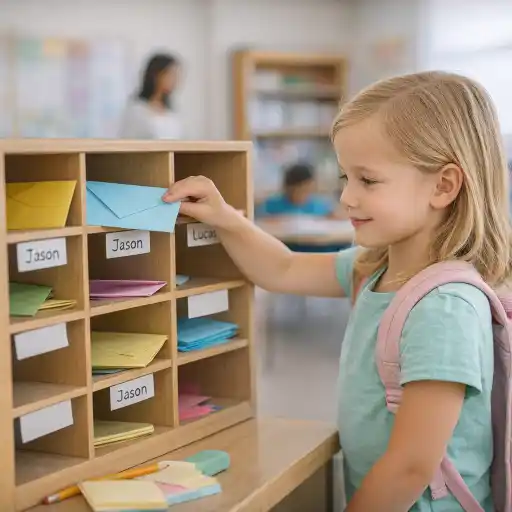
Use open prompts that leave room for children’s ideas: “What would you like your friend to know?” or “What do you hope they can do when they come back?” Avoid leading children toward a specific emotion or asking them to disclose personal details about the absent child. If children are unsure, offer choices such as “Would you like to draw a game you play together or send a friendly hello?”
- Provide large paper, thick crayons, stickers, stamps, or adaptive tools when helpful.
- Accept home-language messages, gestures, symbols, communication boards, or adult-scribed words.
- Use familiar names and photos only according to program and family privacy practices.
- For children who prefer not to make a card, invite them to help sort, decorate the box, or simply offer a kind idea.
These choices help children build #language and #literacy through meaningful expression while honoring individual ways of communicating.
How do you make delivery respectful and inclusive?
Before starting, consider privacy, family preferences, and the reason for the child’s absence. Keep the message general and kind; do not invite classmates to speculate about illness, family circumstances, or other personal information. If appropriate, check with the family about whether the child would welcome a card and how it might be shared. A classroom mailbox can be a pretend-play routine, with messages kept in the room until the child returns, rather than mail sent to a home address.
When the child returns, offer the letters without pressure. They may want to read them with an educator, share them with the group, or put them away. Do not expect the child to respond, explain the absence, or perform gratitude. A warm welcome and choice are enough. This practice reflects friendship supports such as noticing absent classmates and moving their photos to a caring visual, described in early childhood friendship supports.
Be attentive to children who are absent for a long time or whose situation makes a “we miss you” message complicated. Consult the family and follow your program’s communication policies. State requirements vary - check your state licensing agency, as well as your program’s rules on family communication, photographs, and personal information.
How can educators extend the mailbox into language and friendship learning?
Keep the activity child-led, then build learning into the conversation around it. Ask children what their drawing shows, repeat their words, and gently extend their ideas: “You drew the playground. You hope you can swing together.” This models richer language without turning the note into a quiz. Introduce useful vocabulary—greeting, message, envelope, deliver, friend—and use the words naturally while children create and play.
A pretend post office can extend the project into dramatic play. Children can sort envelopes by color, deliver notes to classroom mailboxes, make pretend stamps, or take turns as mail carrier. These roles create authentic reasons to talk, listen, negotiate, and use print. Adapt the play to your group’s interests and supervise small materials. The preschool post office theme offers related center ideas, while ChildCareEd’s article on boosting language through play describes how purposeful prompts can invite children to explain, predict, and tell stories.
Notice participation rather than judging the finished product. A brief note can capture whether a child dictated a message, used a friend’s name, or joined a peer’s conversation. These observations can guide future invitations and help you celebrate small steps in #friendship, #communication, and classroom belonging.
Conclusion: What makes a classroom mailbox meaningful?
A classroom mailbox for an absent friend works best when it is simple, optional, inclusive, and guided by respect for family privacy. Give children varied ways to communicate—drawing, marks, dictation, home-language words, or symbols—and let their ideas lead. Deliver messages thoughtfully, and allow the returning child to decide how to receive them.
Most of all, remember the central goal: helping a child who is away remain connected to the classroom community. A few minutes with paper and a mailbox can create real opportunities to practice empathy, expressive language, early writing, and caring relationships. Use the routine as an invitation, not an obligation, and celebrate every authentic way children show they are thinking of a friend.
- Bienvenido! Welcoming All Families
- 1,2,3, Eyes on Me: Classroom Safety
- From Tantrums to Triumphs: Equipping Preschoolers with Self-Regulation Skills
- The Subtle Teacher: Nonverbal Communication in the Classroom
- Children at the Wheel: Emergent Curriculum
- Pediatric RSV First Aid & CPR/AED
- Classroom Arrangement: The Second Teacher
- Classroom Setup for Child Care
- Creating Environments that Nurture Growth and Community
- Texas Director Credential
- CDA Certification en Español: Recursos y Consejos para Educadores Bilingües
- 💛🧩 ¿Cómo puedo hacer que mi enseñanza sea inclusiva para los niños con autismo?
- 👶 ¿Cuáles son las proporciones y grupos requeridos en Dakota del Norte? 🏫
- Cómo Abrir Una Quardería En Casa Sin Dinero?
- Recursos en Español sobre el Sueño Seguro del Bebé
- 10 Ejemplos de Cómo la Cultura Influye en el Desarrollo Infantil
- Cómo Iniciar el Proceso de Obtención de la Licencia de Cuidado Infantil
- Proporciones de Cuidado Infantil y Tamaños de Grupo por Edad en Maryland (Guía Rápida para Centros y Hogares)
- Proporciones de Cuidado Infantil y Tamaños de Grupo por Edad en Nueva Jersey (Guía Rápida para Centros y Hogares)
- Proporciones de Cuidado Infantil y Tamaños de Grupo por Edad en Virginia (Guía Rápida para Centros y Hogares)
- Lista para Abrir una Guardería en Casa en Dakota del Norte: Cómo Empezar
- Lista para Guardería en Casa en Illinois: Cómo Iniciar una Guardería en el Hogar
- Cómo Trabajar en el Cuidado Infantil en Carolina del Norte: Requisitos y Pasos
- Celebrando la amistad en el cuidado infantil durante el Día de los Mejores Amigos
- Canciones, juegos y preguntas de círculo para niños
- Cómo simplificar la capacitación para sus empleados de daycare
- When a Favorite Teacher Is Absent, How Can Child Care Providers Support Children Through the Change?
- How Can Child Care Providers Support Early Writing Without Using Worksheets?
- How Can a Pretend Delivery Route Help Children Compare Different Ways to Reach Every Stop?
- How Can a Classroom Mailbox Help an Absent Friend Feel Remembered?
