Sign in to download Create a free account
This resource is free. Sign in and you'll come straight back here to download it.
Description
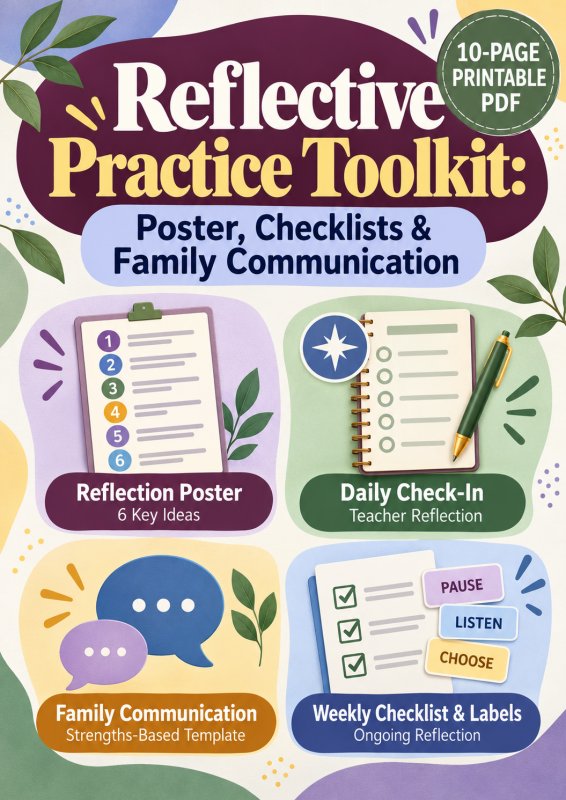
Reflective Practice Toolkit: Poster, Checklists & Family Communication
Encourage thoughtful teaching, strengthen family relationships, and develop more respectful communication through meaningful self-reflection!
This practical 10-page Reflective Practice Toolkit helps early childhood educators examine personal perspectives, recognize assumptions, and approach family interactions with greater curiosity, courage, and humility.
Featuring a classroom reflection poster, guided daily and weekly reflection tools, and a family communication template, this resource supports professional growth, active listening, and positive partnerships with families.
What's Included?
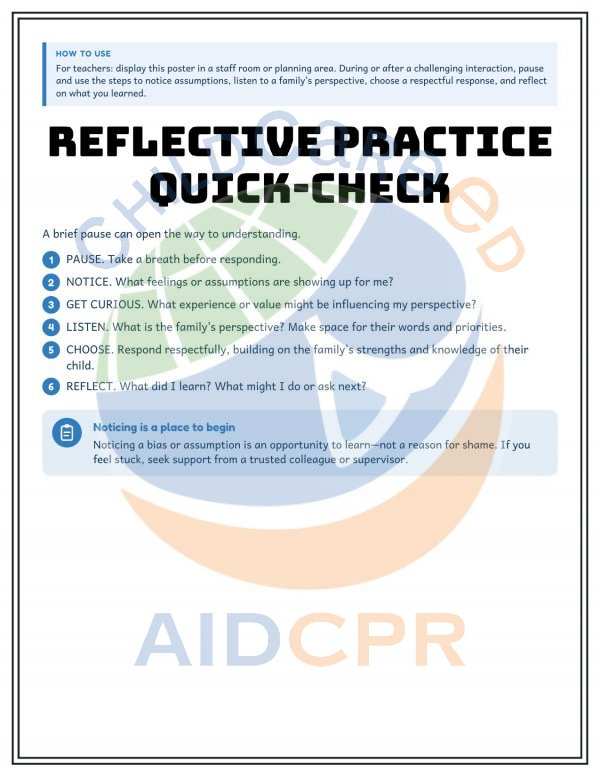
1. Reflective Practice Quick-Check Poster (1 Page)
A staff-room reference poster featuring six steps: Pause, Notice, Get Curious, Listen, Choose, and Reflect. Encourages educators to recognize assumptions, consider family perspectives, and respond thoughtfully during challenging interactions.
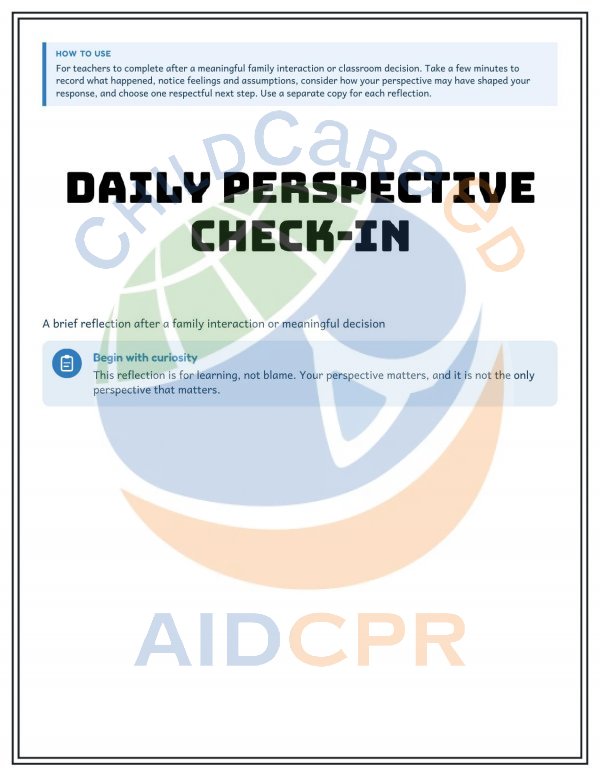
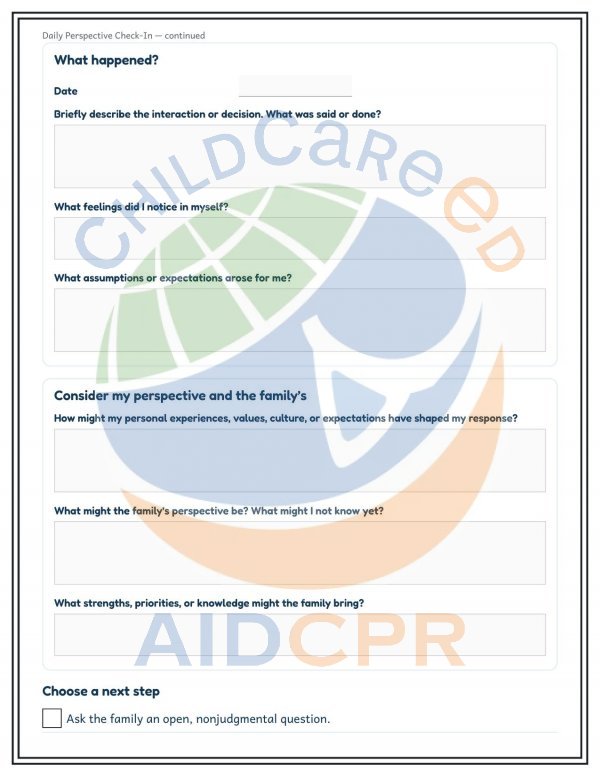
2. Daily Perspective Check-In (3 Pages)
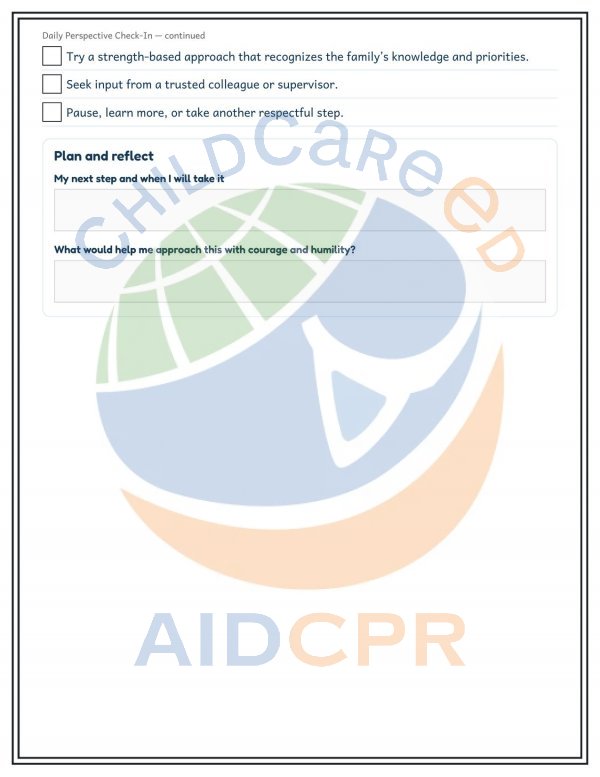
A reusable reflection form for examining meaningful family interactions or classroom decisions. Includes guided questions about personal feelings, assumptions, cultural perspectives, family strengths, and respectful next steps.
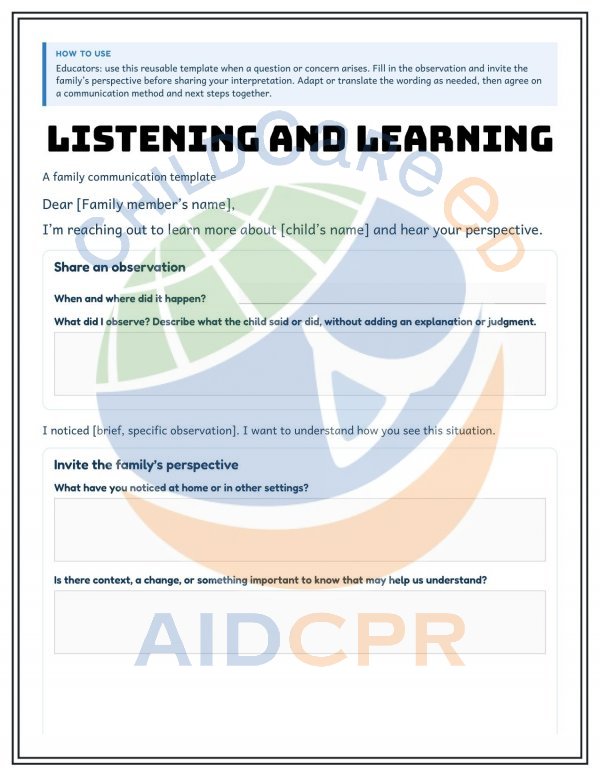
3. Listening and Learning: Family Communication Template (2 Pages)
A structured family communication template that helps educators share objective observations and invite families' perspectives before drawing conclusions. Includes prompts for understanding family experiences, identifying shared next steps, and arranging follow-up communication.
4. Weekly Reflection Checklist and Label Sheet (4 Pages)
A professional reflection resource featuring:
Six weekly self-reflection checkpoints.
Guided questions about assumptions, different perspectives, strengths, and professional growth.
Space for private reflection notes and next steps.
Six printable reflection labels for organizing a personal journal or planning page.
Perfect For
Early childhood teacher professional development.
Reflective teaching and self-evaluation.
Building positive relationships with families.
Culturally responsive communication.
Teacher mentoring and coaching.
Staff meetings and professional learning.
Improving listening and communication skills.
Developing thoughtful responses to challenging situations.
