Sign in to download Create a free account
This resource is free. Sign in and you'll come straight back here to download it.
Description
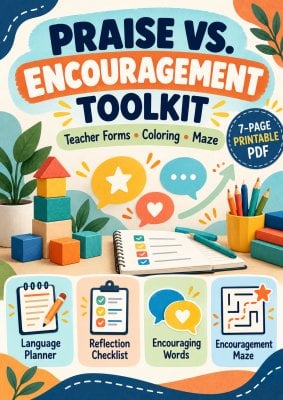
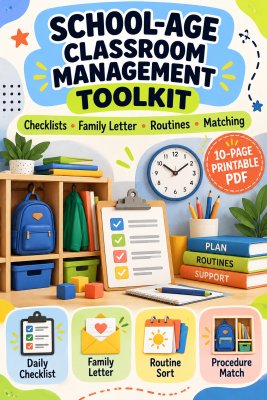
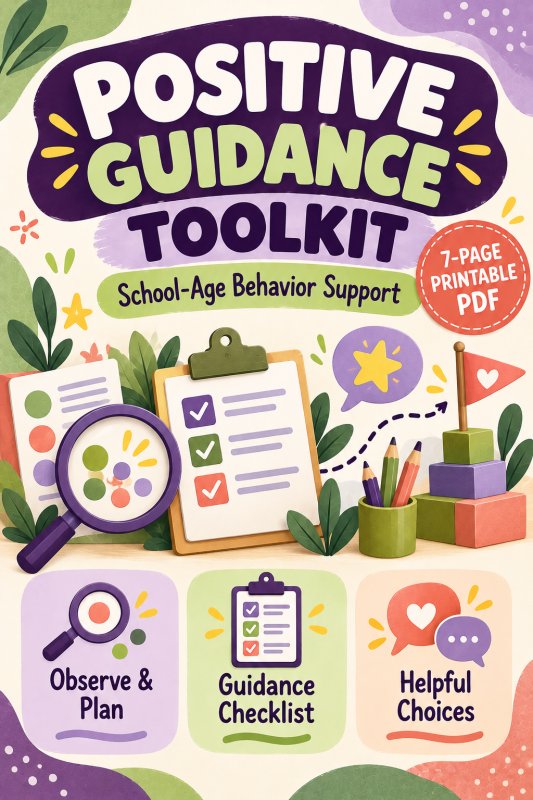
Encourage positive classroom behavior, strengthen communication, and support children's individual needs with this 7-page Positive Guidance Toolkit!
Designed for school-age childcare providers, elementary educators, and after-school program staff, this printable resource combines practical behavior observation forms, positive guidance strategies, and a child-friendly matching activity to promote respectful interactions, self-regulation, and problem-solving.
What's Included:
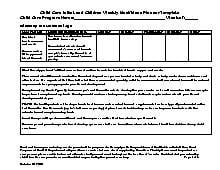
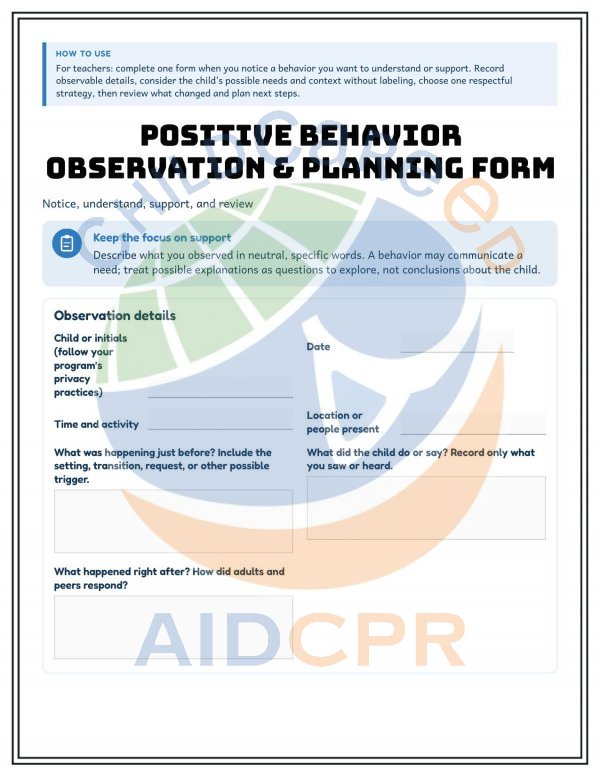
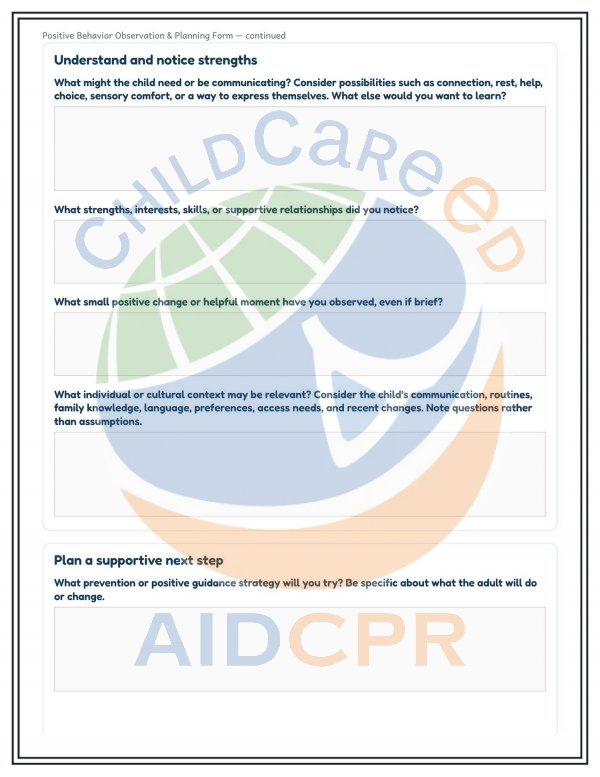
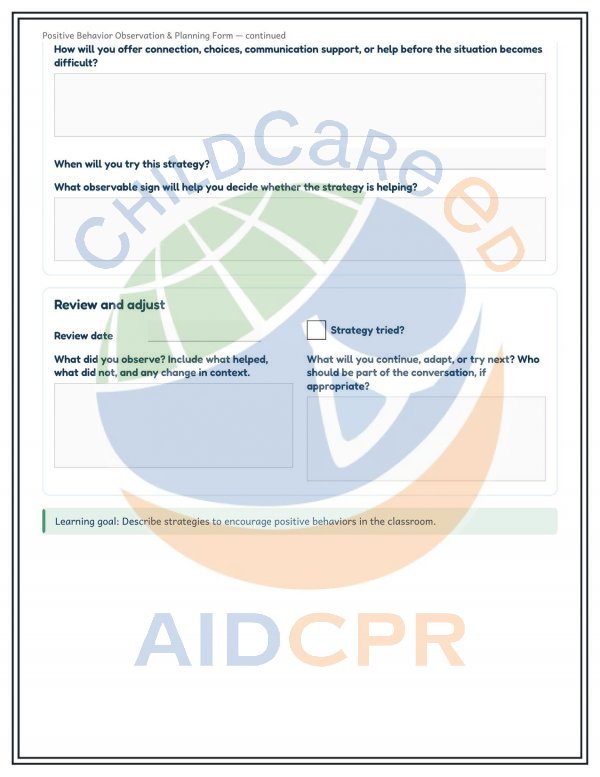
Positive Behavior Observation & Planning Form (3 pages): A reusable teacher form for documenting specific behaviors, identifying possible triggers and individual needs, recognizing children's strengths, planning supportive strategies, and reviewing progress. Encourages objective observations and strengths-based approaches rather than assumptions or labels.
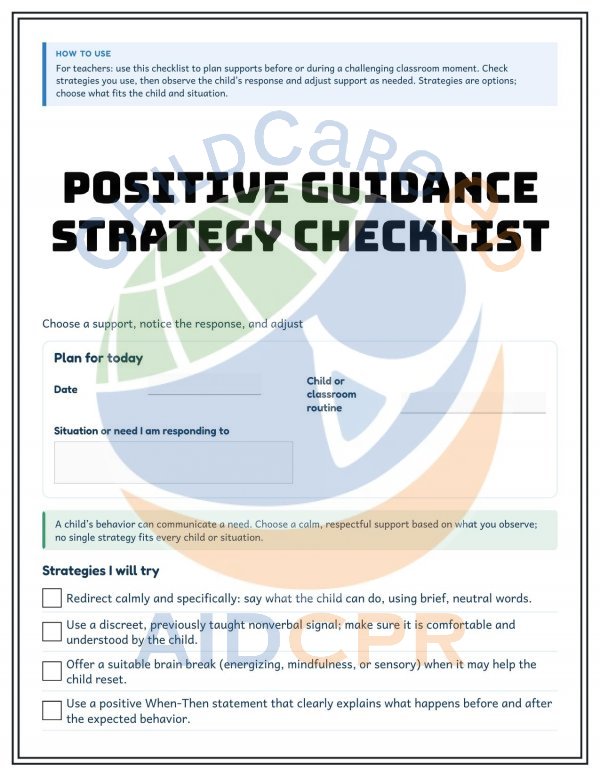
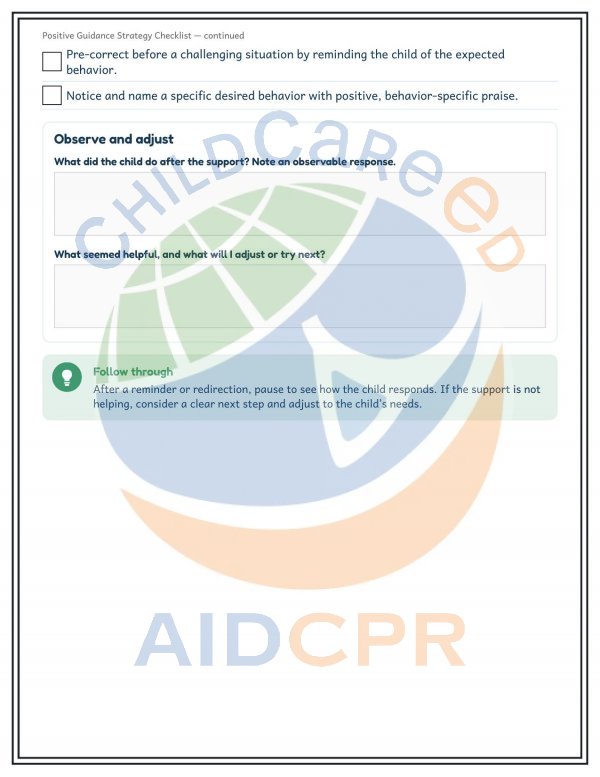
Positive Guidance Strategy Checklist (2 pages): A quick-reference teacher checklist featuring six supportive approaches, including calm redirection, nonverbal signals, brain breaks, positive When-Then statements, pre-correction, and behavior-specific praise. Includes space to document children's responses and plan adjustments.
What Could I Do Next? Connecting Lines (2 pages): An interactive matching and optional coloring activity where children connect four common classroom situations to helpful responses, such as asking for a turn, requesting assistance, expressing feelings, and taking a movement break.
Perfect For:
School-age childcare and after-school programs
Elementary classrooms
Positive behavior guidance and classroom management
Behavior observation and documentation
Social-emotional learning activities
Supporting self-regulation and communication
Individualized classroom support planning
Small-group matching and problem-solving activities
Teacher professional development and reflection
Why Educators Will Love It:
Understanding children's behavior begins with observation, patience, and responsive support.
This toolkit helps educators recognize possible needs behind behaviors, select appropriate positive guidance techniques, and reflect on which strategies are most effective.
The included children's matching activity also encourages children to recognize their needs and explore safe, constructive ways to communicate and ask for support.
With reusable planning forms and practical strategies, teachers can build a more supportive classroom environment that encourages positive behaviors and meaningful participation.
Important: These materials support informal classroom observations and positive guidance. They do not replace individualized behavior support plans, required assessments, or program safety procedures.
Related Training(s)
Other items you may like