Sign in to download Create a free account
This resource is free. Sign in and you'll come straight back here to download it.
Description
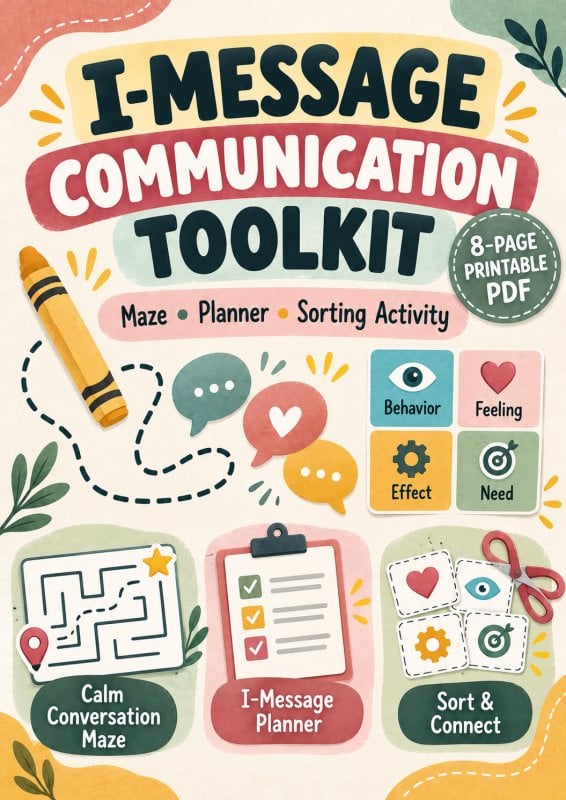
Help school-age children express their feelings, communicate respectfully, and navigate everyday disagreements with this 8-page I-Message Communication Toolkit!
Designed for elementary teachers, school-age childcare providers, and after-school educators, this printable resource combines practical teaching tools with engaging activities that introduce children to using I-messages to communicate feelings, describe situations, and express their needs without blaming others.
What's Included:
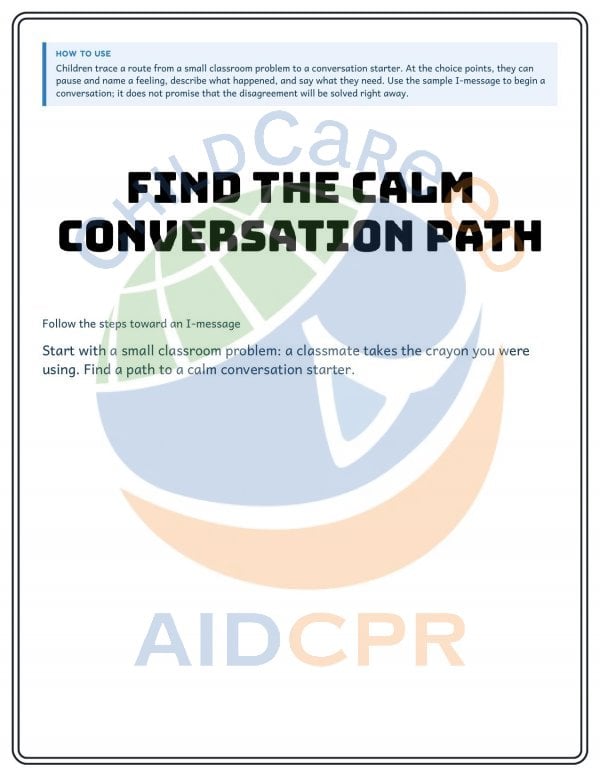
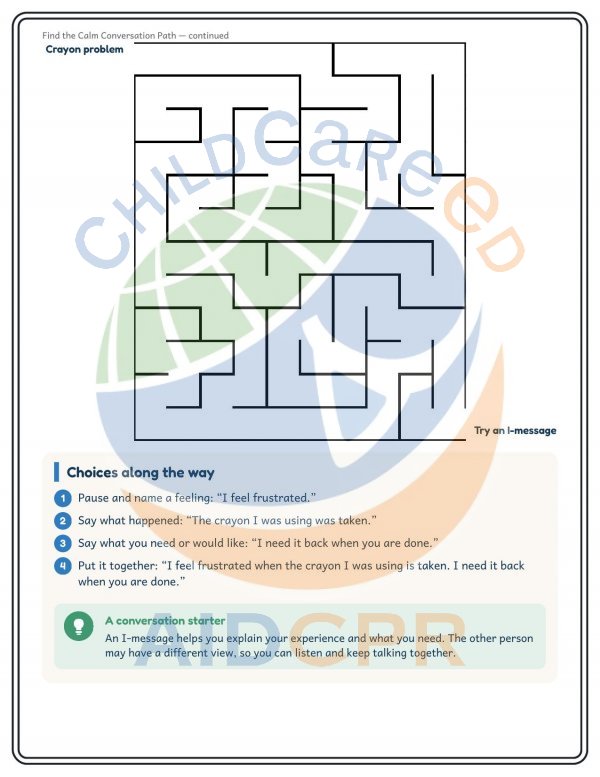
Find the Calm Conversation Path (2 pages): An engaging maze activity that guides children through a familiar classroom disagreement involving a crayon. Children explore four steps for expressing their feelings, explaining what happened, identifying their needs, and beginning a respectful conversation.
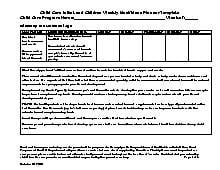
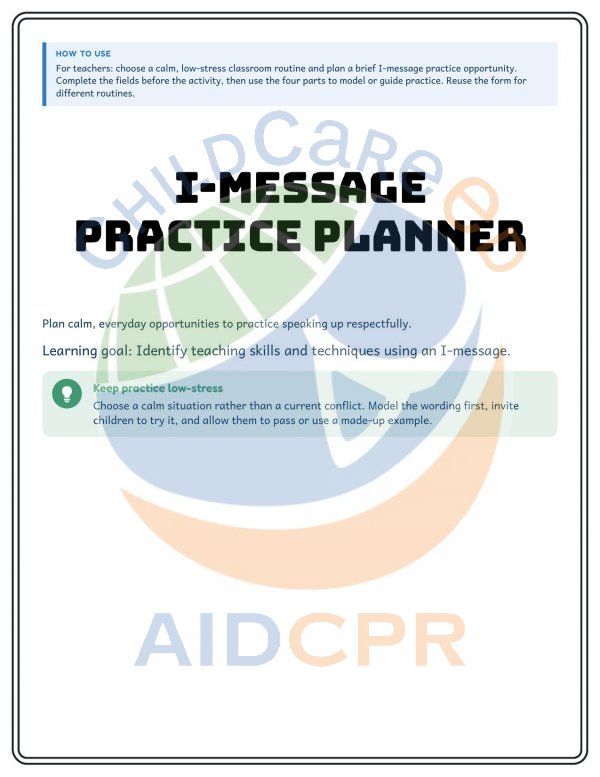
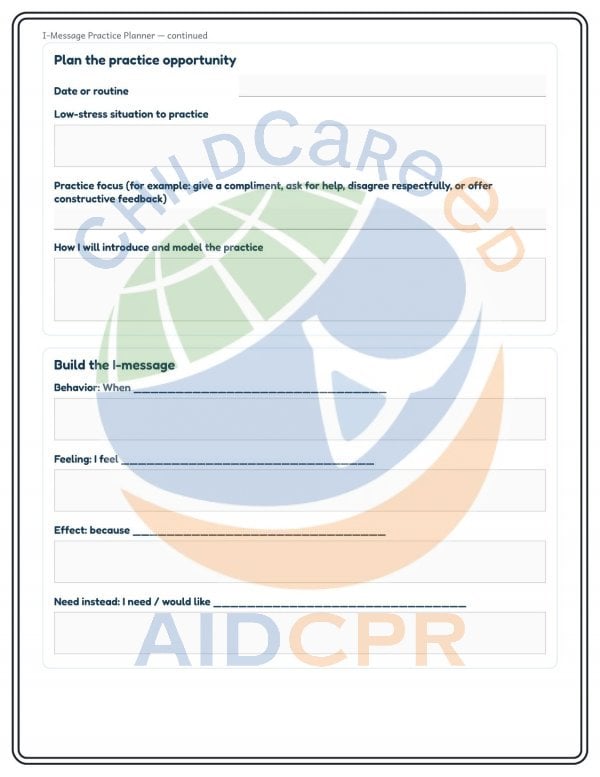
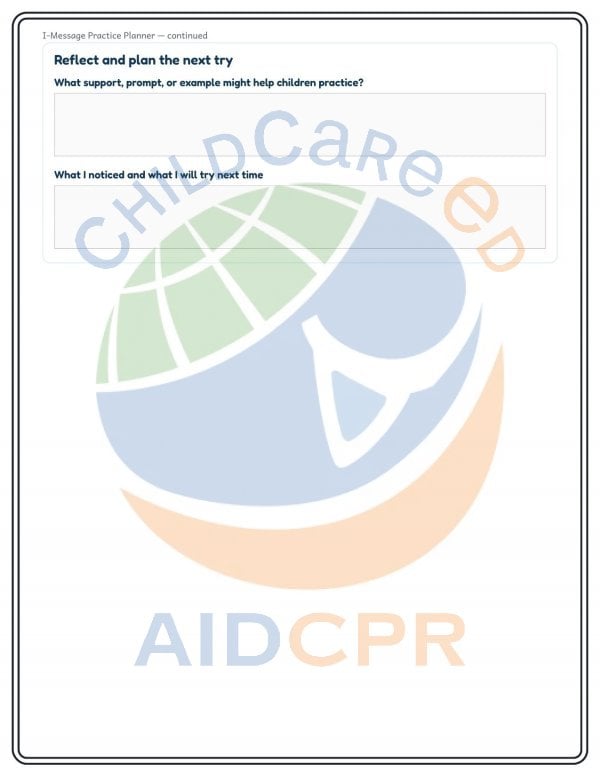
I-Message Practice Planner (3 pages): A reusable teacher planning form for introducing and modeling I-messages during calm, everyday classroom situations. Includes prompts for identifying behaviors, feelings, effects, and needs, along with space for planning, observations, and reflection.
Build an I-Message: Cut, Sort, and Connect (3 pages): An interactive activity featuring eight sentence cards that children sort into four categories: Behavior, Feeling, Effect, and Need. Children then practice arranging complete I-messages and matching each component to its purpose.
Perfect For:
School-age and elementary classrooms
After-school childcare programs
Social-emotional learning activities
Conflict resolution and problem-solving
Positive behavior guidance
Teaching respectful communication
Expressing feelings and personal needs
Classroom discussions and small-group activities
Teacher planning and professional development
Why Educators Will Love It:
Teaching children how to communicate their feelings and needs is an important part of building positive relationships and promoting healthy classroom interactions.
This toolkit introduces a practical four-part I-message structure that encourages children to describe what happened, identify how they feel, explain the effect, and communicate what they need.
Through hands-on sorting, guided practice, and a classroom-themed maze, children can develop communication skills while learning to approach disagreements with greater understanding and respect.
Related Training(s)

Other items you may like