Latest Blog & News in English

Nevada Supervision Rules: Active Supervision Tips for Busy Rooms
03/23/2026In Nevada, programs need to follow both staff-to-child ratios and maximum group sizes. Both rules matter. If one rule is met but the other is not, the room may still be out of compliance. Some daytime center examples include: 1 adult for 4 infants under 9 months 1 adult for 6 children ages 9 to... Nevada Supervision Rules: Active Supervision Tips for Busy Rooms

Complete Your 120 Hour CDA Training Online From Anywhere in Illinois
03/20/2026The CDA, or Child Development Associate, is a national credential for early childhood educators. It shows that you understand child development, health and safety, family partnerships, and professional teaching practices. If you work in early care and education, you can complete your 120-hour... Complete Your 120 Hour CDA Training Online From Anywhere in Illinois

Wisconsin Annual Training Hours for Child Care Providers
04/16/2026If you run or work in a child care program in Wisconsin, you probably ask: how many hours of training do I need each year? This short guide answers that question in plain language and gives easy steps to plan, track, and finish your hours. This article will help directors and #providers plan for saf... Wisconsin Annual Training Hours for Child Care Providers

Virginia Annual Training Hours for Child Care Providers
04/16/2026Keeping up with training helps you protect children, lead your team, and meet licensing rules. This short guide answers the big question about yearly hours for child care staff in #Virginia, and shows practical steps to plan, track, and choose trainings. It also explains why this matters for child #... Virginia Annual Training Hours for Child Care Providers

Illinois Licensing Standards for Child Care: A Guide for Day Care Centers and Day Care Homes
04/16/2026Running a licensed child care program in #Illinois can feel big, but clear rules help keep children safe and families at ease. This short guide helps center directors and in-home providers understand the main standards and what to do next. It focuses on the rules about space, staff, safety, training... Illinois Licensing Standards for Child Care: A Guide for Day Care Centers and Day Care Homes

When Should Parents Worry About Speech Delay?
04/16/2026As a child care provider, you see children every day. You notice when a child uses more gestures than words, gets frustrated, or seems quieter than peers. Knowing when to raise a concern helps families get help early. This article explains clear signs to watch for, what you can do in the #classroom,... When Should Parents Worry About Speech Delay?
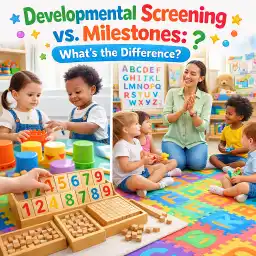
Developmental Screening vs. Milestones: What’s the Difference?
04/16/2026As a fellow early childhood professional, you know watching a child grow matters. This article explains the difference between tracking developmental milestones and using formal developmental screening. You’ll get simple steps you can use in your program, ideas for talking with families, and h... Developmental Screening vs. Milestones: What’s the Difference?

How to Apply for Daycare Licensing in California
04/15/2026Starting the licensing process can feel big, but you can do it step by step. Getting a license shows families you follow state rules and keep children safe. This short guide helps directors and providers learn what to do, what to gather, and how to stay ready. It explains the basics of #California l... How to Apply for Daycare Licensing in California

Gross Motor Activities That Build Balance, Coordination, and Strength
04/15/2026Young children get stronger, steadier, and more coordinated when they move. This article gives child care providers simple, safe activities that build #balance #coordination #strength #grossmotor #play. Use these ideas in your classroom, on the playground, or in small groups. What simple activiti... Gross Motor Activities That Build Balance, Coordination, and Strength

What Questions Are on the Infant and Toddler CDA Exam?
04/15/2026The Infant and Toddler #CDA #exam checks what you know about caring for babies and young toddlers. This article helps child care providers and directors learn: what topics appear, the kinds of questions you will see, how to practice, and what happens on test day. Use trusted guides like ChildCareEd'... What Questions Are on the Infant and Toddler CDA Exam?
