Latest Blog & News in English

Can Children Tell What Your Printable Is Asking Them to Do?
10/21/2026A printable can look polished to adults and still leave a child wondering what to do first. Use a quick usability review to make instructions clearer, reduce avoidable barriers, and help children show what they know; the Supporting Skill Development: Children with Special Needs course offers a deepe... Can Children Tell What Your Printable Is Asking Them to Do?

What Does a Classroom Resource Really Cost Per Use?
10/21/2026A resource’s price tag tells only part of its story: staff time, durability, storage, and how often children can use it all shape its real value. Use a simple cost-per-use calculation to make purchasing and replacement decisions more transparent, and explore Child Care Administration for broad... What Does a Classroom Resource Really Cost Per Use?

How Can You Trial One Classroom Supply Before Buying Twenty?
10/21/2026Before committing a classroom budget to twenty units, try one in the environment where it will actually be used. A simple trial can reveal whether a supply is safe, durable, accessible, and genuinely useful for children—while preventing costly guesswork. For a stronger foundation in purchasing... How Can You Trial One Classroom Supply Before Buying Twenty?

Which Classroom Visual Is Current—and How Can You Keep Outdated Printables From Returning?
10/21/2026A familiar classroom visual can quietly become a source of confusion when old copies resurface after routines, policies, or learning goals have changed. Build a simple version-and-replacement system—and strengthen your materials decisions with Child Care Administration, a course that develops ... Which Classroom Visual Is Current—and How Can You Keep Outdated Printables From Returning?

How Can Two Teachers Compare One Observation and Choose a Shared Goal?
10/21/2026When two educators witness the same classroom moment, their different interpretations can reveal more—not less—about what a child may need and what the team can try next. The Observations And Goal Setting in Childcare course helps providers connect observations with practical goals, stre... How Can Two Teachers Compare One Observation and Choose a Shared Goal?

How Can Children Have a Voice When a Classroom Toy Must Retire?
10/21/2026When a beloved classroom toy becomes unsafe or can no longer be repaired, removing it can feel surprisingly emotional for children—and for the adults who have watched it anchor countless play stories. A thoughtful goodbye protects children while honoring their attachment, and Creating Environm... How Can Children Have a Voice When a Classroom Toy Must Retire?

How Can Children and Families Help Proofread Classroom Labels?
10/21/2026Classroom labels are more than signs on shelves: they shape how children navigate a room and whether families see their language and knowledge reflected in it. Invite children and caregivers to review labels together, and use the Bridging Cultures: Family Communication & Collaboration course to ... How Can Children and Families Help Proofread Classroom Labels?

Before Posting a Funny Child Quote, What Should Child Care Providers Consider?
10/21/2026A child’s hilarious one-liner can brighten a staff meeting or make a family smile—but once shared, it may travel farther and last longer than anyone intended. Use a quick dignity-and-permission check before sharing, and strengthen your everyday professional judgment with The Ethical Code... Before Posting a Funny Child Quote, What Should Child Care Providers Consider?

A Borrowed Classroom Book Went Missing: How Can You Keep Family Lending Welcoming?
10/21/2026A missing book can feel discouraging, but it does not have to end a family lending program—or make a caregiver feel blamed. Build a calm, consistent follow-up routine with practical literacy and partnership strategies, and explore Supporting Families and Caregivers in Language and Literacy to ... A Borrowed Classroom Book Went Missing: How Can You Keep Family Lending Welcoming?
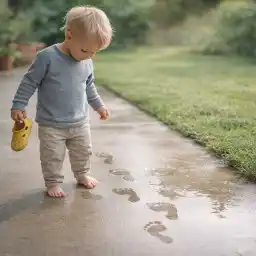
How Can Wet Footprints That Disappear Spark Toddler Science?
10/21/2026A wet footprint appears, changes, and vanishes—and toddlers are often captivated by every part of that small mystery. With a little preparation, child care providers can turn those fleeting marks into a safe, joyful investigation of observation, movement, language, and change. For practical su... How Can Wet Footprints That Disappear Spark Toddler Science?
