A safe classroom is more than a room without obvious hazards: it is an environment where thoughtful setup, consistent supervision, and practiced procedures work together to protect children. The 1,2,3, Eyes on Me: Classroom Safety  Buy Now
 $32.00$24.00 course offers focused learning on indoor and outdoor safety and supervision strategies; explore it to strengthen everyday classroom practice while you read on for a practical evaluation framework.
Why does a systematic classroom safety review matter?
Children learn by moving, testing materials, building relationships, and exploring. That curiosity is a strength, but it also means safety cannot depend on a single glance or an annual inspection. A routine evaluation helps staff notice changing conditions—such as a loose screw, a blocked sightline, a spill, or a new choking risk—before they lead to injury. Safety is therefore an ongoing practice, not a one-time checklist.
A strong review also supports children’s well-being and learning. When room arrangements make supervision possible and routines are predictable, educators can respond calmly, engage in play, and help children explore with appropriate independence. National guidance describes safety as a program-wide system involving staff training, environmental maintenance, hygiene, supervision, and emergency procedures.
Providers and directors can use a written checklist to make inspections consistent across shifts and classrooms. The California Childcare Health Program’s health and safety checklist is one example of a structured tool that connects program checks with established standards. Use findings to guide timely corrections, staff conversations, and follow-up—not to assign blame. A strengths-based safety culture makes it easier for staff to report concerns early.
Which physical hazards should providers inspect indoors and outdoors?
Begin at children’s level and move through every area they use: learning centers, bathrooms, eating spaces, sleep areas, entrances, and the playground. Look for hazards that are easy to overlook during a busy day: unstable furniture, sharp or broken materials, cords, blocked exits, slippery floors, small objects, and supplies children could reach. Secure shelves and other heavy furniture against tipping, keep restricted items inaccessible, and remove damaged equipment until it can be repaired or replaced.
Check that materials are clean, in good repair, and appropriate for the ages and abilities of the children using them. For infants and toddlers, consider mouthing, climbing, and access to small parts. For sleep spaces, follow current safe-sleep procedures and keep each sleep surface clear of prohibited items. Maintain separation between toileting or diapering tasks and food preparation or children’s activities, as applicable to the space and rules.
- Indoors: look for spills, trip hazards, damaged flooring, loose parts, accessible outlets, and unsafe storage.
- Outdoors: inspect gates and fences, surfacing, equipment stability, sharp edges, standing water, debris, and visibility across play zones.
- Environmental health: watch for moisture or mold, pests, poor ventilation, and possible exposure to harmful chemicals or lead; consult qualified professionals and relevant public guidance when concerns arise.
- 🚸 Record each concern, identify who will address it, and confirm that the correction was completed.
The Virtual Lab School daily safety checklist provides examples of room, restroom, and outdoor items to inspect. Use it as a prompt, adapting it to your facility, children, and licensing rules.
How can room layout and supervision work together?
Even a hazard-free room may be unsafe if adults cannot see or hear children. Arrange shelves, furniture, and centers to maintain clear sightlines, preserve usable pathways, and allow staff to move quickly between children. Pay particular attention to corners, bathrooms, lofts, enclosed play areas, and any space obscured by tall furnishings. A small layout adjustment can make a meaningful difference in what staff can monitor.
Evaluate supervision as a shared, active practice. Staff should know their assigned zones and coordinate during transitions, toileting, meals, outdoor play, and other higher-risk routines. Active supervision involves positioning strategically, scanning, listening, counting children, anticipating likely risks, and engaging with children. Ratios and group-size limits must be followed as required; they are not a substitute for attentive supervision.
- Can every child be seen and heard from staff positions?
- Do staff know who is responsible for each area during transitions and outdoor play?
- Are headcounts completed when children move between spaces?
- Are staff free from avoidable distractions while supervising?
- Do staff adjust proximity for infants, water play, climbing, meals, and individual support needs?
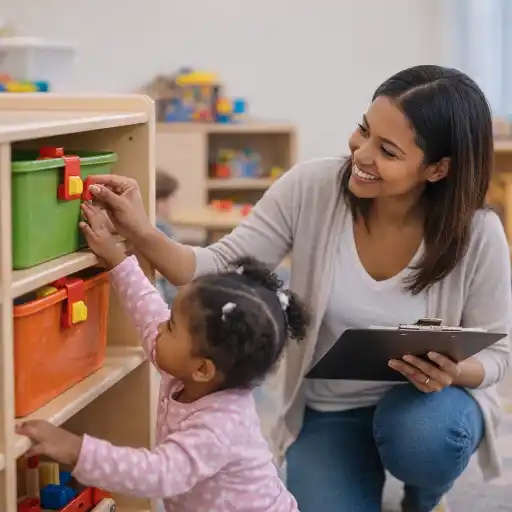
Are health, hygiene, and emergency safeguards ready for daily use?
Classroom safety includes the practices that reduce illness and help adults respond when a child needs care. Check that handwashing, toileting, diapering, cleaning, food handling, and medication procedures are written, understood, and followed. Keep cleaning products and other hazardous materials secured, labeled, and used according to their directions. Ensure allergy and child-specific health plans are accessible to the staff who need them while protecting the child’s privacy.
Verify that first-aid supplies are stocked, accessible to adults, and checked on a schedule. Confirm that emergency contacts, attendance records, authorized pickup information, and communication procedures are current. Staff should know how to respond to fire, evacuation, shelter-in-place, medical emergencies, and other foreseeable events. Practice plans regularly, review who carries records and supplies, and consider the needs of children who may need additional assistance.
Federal and state requirements cover areas such as sanitation, safe sleep, medication, building safety, and emergency planning. The federal overview at Childcare.gov summarizes several health and safety categories.
How should directors turn inspection findings into lasting improvements?
A checklist is useful only when findings lead to action. Assign responsibility for each correction, set a reasonable completion date, and document when the issue is resolved. If a hazard cannot be fixed immediately, restrict access or remove the item until it is safe. Track recurring concerns—such as repeated spills, obstructed sightlines, or storage problems—to identify whether the underlying cause is a layout, supply, training, or maintenance issue.
Use a practical rhythm: a brief daily scan before children arrive, checks during the day as conditions change, and more comprehensive scheduled reviews. Invite staff to contribute because they often notice risks in routines that a director may not observe. Review incident and near-miss reports for patterns, then revisit relevant procedures with the team.
Common pitfalls include treating a completed form as proof that a room is safe, relying on a high shelf instead of secure storage, assuming cameras replace direct supervision, and overlooking outdoor areas or transitions. Keep the system manageable: use clear records, specific follow-up, and nonpunitive reporting. For additional focused learning, providers may explore Effective Supervision in Child Care Buy Now $25.00, Building and Physical Premises Safety Buy Now $10.00, Stay Alert! Steps for Emergency Prep Buy Now $25.00, and Safeguarding Young Lives: A Comprehensive Guide to Child Care Safety Buy Now $24.00. Check course details and confirm whether training meets your local requirements.
Conclusion: What should providers look for when evaluating classroom safety?
Evaluate the whole system: physical hazards and maintenance, developmentally appropriate materials, room visibility, active supervision, hygiene and health routines, emergency readiness, and a documented process for correcting problems. A reliable review is regular, shared by the team, and responsive to children’s changing needs—not limited to the moments before an inspection.
Start with a walk-through at children’s eye level, record the highest-priority risks, assign follow-up, and confirm corrections. Then support staff with practice, clear procedures, and constructive feedback. These steady habits help create a safer #classroom, strengthen #supervision, and make #hazards easier to spot before they become incidents. Protecting children is continuous work, and every thoughtful improvement matters.
- CDA Home Visitor Subject Area 3 Part 3 Birth to 5
- CDA Home Visitor Subject Area 2 Part 3 Birth to 5
- Basic Health & Safety and Breastfeeding Awareness
- 1,2,3, Eyes on Me: Classroom Safety
- Pediatric RSV First Aid & CPR/AED
- Health and Nutrition
- Emergent Learning & Development
- 45-Hour Infant and Toddler Curriculum
- Texas Director Credential
- Everyday Safety: Creating Healthy Environments
- Daycare Near Me: A Parent's Necessity
- How to Choose the Right Childcare Provider: What Parents Need to Know
- Recursos en Español sobre el Sueño Seguro del Bebé
- Capacitación en Salud y Seguridad Preventiva en Línea para Proveedores de Cuidado Infantil
- Regulaciones de Licenciamiento de Cuidado Infantil en California para Centros y Hogares de Cuidado Infantil Familiar
- Proporciones de Cuidado Infantil y Tamaños de Grupo por Edad en Maryland (Guía Rápida para Centros y Hogares)
- Proporciones de Cuidado Infantil y Tamaños de Grupo por Edad en Virginia (Guía Rápida para Centros y Hogares)
- Lista para Guardería en Casa en Illinois: Cómo Iniciar una Guardería en el Hogar
- Retraso del Habla en la Guardería: Cómo Pueden Ayudar los Proveedores
- What Is the Difference Between Babysitting, Child Care at Home, and a Licensed Home Daycare?
- What Makes a Great Home Daycare? 10 Things Parents Notice First
- How Can Early Childhood Teachers Set Goals They Actually Use?
- How Can Montessori Educators Balance Outdoor Independence with Active Supervision?
- How Can Child Care Leaders Set Boundaries Between Mentoring and Evaluating a New Teacher?
- When Do Too Many Materials Make a Learning Center Harder to Use?
- How Can Directors Define Their Role Before Joining a Classroom Activity?
- AI Toys in Child Care: What Should Providers Check Before Accepting One?
- What Should Child Care Providers Look for When Evaluating Classroom Safety?
