Curious how a post‑war Italian philosophy reshaped early childhood practice worldwide and how it can strengthen your classroom? The Reggio Emilia approach offers a research‑informed, child‑centered way to design environments, document learning, and build emergent curriculum that honors each child as a capable thinker. If you want a practical first step, consider Children at the Wheel: Emergent Curriculum Buy Now $25.00 for a concise, implementation‑focused introduction; you may also find Emergent Learning & Development  Buy Now $24.00 helpful to link theory to day‑to‑day lesson planning.
What is the Reggio Emilia approach and where did it originate?
The Reggio Emilia approach began in the Italian city of Reggio Emilia after World War II, led by Loris Malaguzzi and parents who insisted young children deserved dignified, community‑centered education. At its core, Reggio sees the child as strong, curious, and resourceful: learning is social, constructed, and often emerges from children’s questions and interests. Programs emphasize long‑term projects, multiple symbolic "languages" (drawing, clay, movement, dramatic play, etc.), and the role of the environment as a pedagogue.
Key historical features include municipally supported infant/toddler centers and preschools, close family‑school partnerships, and a culture of teacher collaboration and reflective practice. Internationally, many programs call themselves Reggio‑inspired rather than Reggio schools: only the municipal programs in Italy are the original model. For directors and providers this matters because authentic adaptation requires study and reflection rather than checklist imitation. #Reggio #children #environment #curriculum #documentation
How does Reggio view the child, the teacher, and the learning environment?
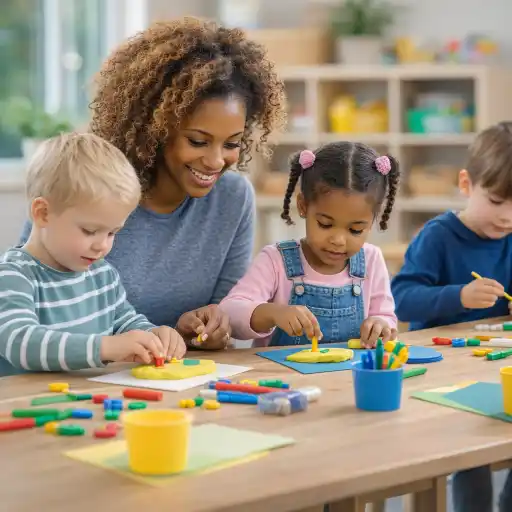
Reggio reframes roles: the child is protagonist and researcher, teachers act as partners, co‑researchers, and the environment is the "third teacher." This image changes curricular choices, adult interactions, and physical design. Teachers listen carefully, observe deeply, and plan provocations—carefully arranged materials or questions that invite investigation—rather than delivering scripted lessons.
Environment in Reggio is aesthetic, flexible, and intentionally arranged: natural light, uncluttered walls that hold documentation, accessible materials, and atelier spaces (studios) for expressive media. Partnership with families makes their knowledge integral to curriculum decisions. The teacher’s job becomes documenting children’s theories, scaffolding inquiry, and using documentation to design next steps. Practical implication: classroom design, schedules, and staffing must support observation time, collaborative planning, and display of learning. #environment #children
How do documentation and emergent curriculum work in practice?
Documentation is central: teachers collect notes, audio, photos, transcripts, and children’s artifacts to make learning visible and to create interpretive displays that invite further inquiry. Documentation is not an administrative afterthought; it is teacher research that helps teams reflect, test hypotheses about children’s thinking, and design subsequent provocations. Educators learning to document often progress from habitually taking photos to creating interpretive panels and revisiting children’s theories with the group—an approach described as "pedagogical documentation."
Emergent curriculum grows from observation and documentation: a teacher notices a child’s question or pattern of play, documents it, shares interpretations with colleagues and families, and designs experiences that probe the inquiry. This cycle—observe, document, reflect, plan, enact, re‑document—keeps learning authentic and sustained. For practical training on these processes, consider materials like Children at the Wheel: Emergent Curriculum Buy Now $25.00 and Emergent Learning & Development Buy Now $24.00, which connect Reggio ideas to classroom practice and planning. As part of project‑based learning Buy Now $16.00, documentation becomes the evidence that guides deeper inquiry.
How can directors implement Reggio‑inspired practices in licensed programs?
Directors must translate philosophy into operational decisions while respecting licensing and program constraints. Practical steps include:
- Build staff capacity: schedule regular reflective planning time and training in documentation methods; courses such as Emergent Learning & Development Buy Now $24.00 help staff map developmental objectives onto emergent projects.
- Reconfigure the environment: create atelier/creative spaces, use neutral backdrops to highlight children’s work, and make materials accessible. Small, low‑cost changes (shelves, baskets, transparent containers) often have big returns.
- Protect time for sustained play and inquiry: emergent curriculum requires longer uninterrupted blocks; consider scheduling tweaks rather than more adult‑led activities.
- Engage families as partners: share documentation, invite suggestions, and co‑design parts of projects.
- Map to regulations: state requirements vary - check your state licensing agency, and align documentation and staff training with required staff hours and qualification rules.
Training and program credentials support buy‑in: for example, the broader training in child development such as the 45‑Hour Child Growth and Development Buy Now $399.00 course can underpin administrative decisions and staff supervision while Reggio‑inspired courses offer classroom strategies.
What common mistakes should providers avoid and how can success be measured?
Common mistakes and how to avoid them:
- 🎨 Mistaking aesthetics for philosophy: Reggio is not just a look—without documentation and reflective practice, a pretty room is only skin deep. Invest in teacher habits of observation and documentation.
- Overloading staff: expecting instant, high‑quality documentation without time or training sets teachers up to fail. Start small—one project, one classroom—and scale with coaching.
- Misaligning assessment goals: using documentation for accountability only undermines trust. Use it primarily for teacher research and formative planning, and share summative data separately.
- Ignoring licensing constraints: some emergent practices require staffing or ratio changes—plan within regulatory limits and document how you meet compliance.
Measuring success: look for stronger child engagement, sustained investigations, richer child talk, and clearer links between documentation and planned next steps. Use mixed measures: samples of documentation panels, teacher reflection logs, family feedback, and simple child‑level observation tools tied to developmental goals. Courses like Project‑Based Learning for Children Buy Now $16.00 and Classroom Tools for Emergent Literacy Buy Now $16.00 can help programs track how projects support language and cognitive outcomes.
FAQ: What do practitioners ask most often?
Q: Can Reggio ideas work in small, regulated centers? A: Yes—adaptation is the norm. Focus on teacher inquiry and simple documentation techniques before expensive renovations. Q: Do teachers need special certification? A: No formal Reggio certification exists; focused professional learning and coaching are more important than a single credential. Q: How long are projects? A: Projects vary—some last days, others months—guided by children’s curiosity and learning signs. Q: How do I start with limited budget? A: Start with repurposed loose parts, a camera, a wall for documentation, and weekly team reflection time. Q: Who pays for materials? A: Many programs partner with families or local businesses (REMIDA‑style donations) to source natural materials. Q: How to involve families? A: Share documentation panels, invite family workshops, and solicit home‑based observations.
Conclusion: Why adopt Reggio‑inspired practice now?
Reggio Emilia offers a coherent alternative to top‑down curricula: it strengthens educator observation skills, centers children’s agency, and makes learning visible through documentation. For directors and providers, the approach aligns with emergent, standards‑based practices when carefully adapted and resourced. If you want practical ways to begin, explore courses such as Children at the Wheel: Emergent Curriculum Buy Now $25.00, Emergent Learning & Development Buy Now $24.00, and Project‑Based Learning for Children Buy Now $16.00 to turn ideas into classroom routines and documented learning.
Why it matters: programs that learn to document and design emergent experiences build deeper relationships with children and families, produce richer evidence of learning, and foster dispositions—curiosity, collaboration, persistence—that matter for school and life.
- 45 Hour Preschool Methods and Materials
- Children at the Wheel: Emergent Curriculum
- CDA Bridge Bundle: Preschool
- CDA Bridge Bundle: Family Child Care
- CDA Bridge Bundle: Family Child Care without Portfolio Review
- CDA Bridge Bundle: Infant/Toddler without Portfolio Review
- CDA Bridge Bundle: Preschool without Portfolio Review
- Texas Director Credential
- The Essential Guide to Preschool Curriculum
- Montessori vs. Reggio Emilia: A Comparison
- CDA Certification en Español: Recursos y Consejos para Educadores Bilingües
- Process Art or Product Art: Which Should Early Childhood Programs Choose?
- Recursos en Español sobre el Sueño Seguro del Bebé
- Que es Título 22 en California?
- ¿Cómo solicito la licencia para una guardería en California?
- Regulaciones de Licenciamiento de Cuidado Infantil en California para Centros y Hogares de Cuidado Infantil Familiar
- Normas de Licenciamiento de Cuidado Infantil en Virginia para Centros Diurnos Infantiles y Hogares Diurnos Familiares
- Proporciones de Cuidado Infantil y Tamaños de Grupo por Edad en Maryland (Guía Rápida para Centros y Hogares)
- Proporciones de Cuidado Infantil y Tamaños de Grupo por Edad en Nueva Jersey (Guía Rápida para Centros y Hogares)
- Proporciones de Cuidado Infantil y Tamaños de Grupo por Edad en Virginia (Guía Rápida para Centros y Hogares)
- Cómo Trabajar en el Cuidado Infantil en California: Requisitos y Pasos
- Capacitación Previa al Servicio para Proveedores de Cuidado Infantil en Nevada
- Celebrando la amistad en el cuidado infantil durante el Día de los Mejores Amigos
- Cómo simplificar la capacitación para sus empleados de daycare
- Preschool Curriculum Types: Play-Based, Montessori, Reggio, and More
- What Is the Reggio Emilia Approach and How Can Child Care Programs Use It?
- What Is the Waldorf Approach and How Can Child Care Providers Use It?
- Types of Curriculum in Early Childhood Education: Which Approach Fits Your Classroom Best?
