Being a child care director means you lead a team, keep children safe, and follow rules. A director credential is a certificate or license that shows you learned how to do that job. It can come from a state, a college, or a trusted training program. A director credential helps you prove your skills when you apply for jobs, ask for money, or try to improve your program.
Why it matters:
1) Children do better when programs are led by trained directors. Research shows strong leadership improves program quality and staff support, which helps children learn and grow (leadership research).
2) A credential often helps with licensing, funding, and family trust. Parents and regulators look for trained leaders.
Important words: #director #credential #training #licensing #leadership
What exactly is a director credential?
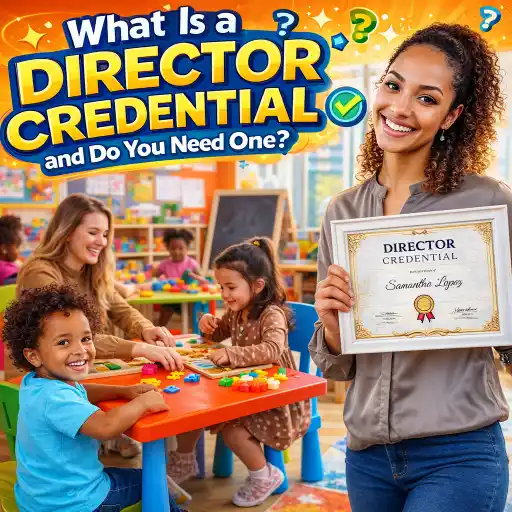
A director credential is a formal document that says you finished training for running a child care program. It can be:
- 📘 A state-required license or permit. Some states set rules for who can be a director and require certain education or certificates. See Illinois rules as an example: Section 407.
- 🎓 A college certificate or degree. Colleges and community programs offer director certificates that teach business, staff supervision, and child development (see West Valley College).
- 💻 A training course from a professional provider. Online options teach administrative skills and safety. For example, online director certification and other director trainings are offered by ChildCareEd.
What a credential covers (typical topics):
- Health and safety rules
- Staff hiring, supervision, and professional development
- Program policies, record keeping, and licensing paperwork
- Curriculum, family communication, and community partnerships
Many programs require you to pass tests, submit documents (like CPR cards or transcripts), and show experience. ChildCareEd has specific state courses like the Texas Director Credential  Buy Now
 $256.00$216.00 and other state-focused trainings.
What types of director credentials are there and how do they differ?
There are several kinds of credentials. Here are common types and what makes them different:
- 🎯 National or private credentials: These are made by groups that train many directors across states. Example: the National Administrator’s Credential or similar programs. These often use a set number of training hours like 45 hours and may be accepted in many places.
- 🏛 State director credentials: States often have specific rules. Some states require a certain number of college credits, a director permit, or a state-approved course. For example, Texas and Illinois have rules and courses for directors (Texas Director Credential Buy Now
$256.00$216.00, Illinois Section 407). - 📚 College certificates and degrees: Community colleges and universities offer short certificates or degrees for administrators. These teach business, leadership, and child development skills. Programs like the Early Childhood Program Director certificate or university director credentials are examples.
- 💡 Fast-track or online courses: These are helpful if you need training quickly or while working. Many providers (including ChildCareEd fast-track) have flexible online options.
How they differ:
- Length: from short 16–40 hour courses to multi-week or semester-long certificate programs.
- Focus: some emphasize management and business; others stress child development and curriculum.
- Recognition: state-issued credentials are required by some licensing agencies; national credentials may help with jobs and quality improvement.
Tip: Check if the credential gives continuing education units (CEUs) or college credit. ChildCareEd lists many options like 32-hour or 45-hour director courses (45-Hour Director-Administration Buy Now $399.00$275.00).
Do I need a director credential where I work?
Short answer: Maybe. Rules differ depending on where you are and the type of program you run. Here are steps to find out:
- 🔎 Check state licensing rules. Many states publish director qualifications in their regulations. For example, Illinois lists detailed requirements for directors in Section 407. Oklahoma and Oregon also have licensing pages that explain when director qualifications are required (Oklahoma licensing, Oregon statutes).
- 📋 Ask your licensing representative or local Child Care Resource & Referral agency. They can tell you exactly what credentials or education meet state rules. Remember: state requirements vary - check your state licensing agency.
- 🧾 Look at job postings and funders. Some funders, grants, or school contracts require a director with a particular credential or degree (research shows programs with trained directors often get better results and funding support; see professional development research).
Examples:
- Some states require an associate degree or specific credit hours in early childhood education to be a director. See North Carolina’s admin requirements DCDEE WORKS.
- Other states allow directors with less formal education if they complete a state-approved director credential or have years of experience.
If your state does not require a credential, you may still want one. A credential helps with program quality, staff retention, and parent trust. Research shows that trained directors lead to better program outcomes and happier staff (leadership evaluation).
How do I get a director credential and use it well on the job?
Getting a credential usually follows these steps:
- 📌 Figure out what you need: Check state licensing, funder rules, or employer expectations. Use state pages or local resource agencies to find exact rules (UT credential guide).
- 📝 Choose a training path: Options include online courses, college certificates, or state director trainings. Example options: Texas Director Credential Buy Now
$256.00$216.00, 45-Hour Director-Administration Buy Now $399.00$275.00, or a college certificate (West Valley). - ✅ Complete paperwork: Many programs require an application, proof of education, CPR/First Aid, and background checks. For example, Texas credentials ask for transcripts, CPR, ID, and work verification (Texas Director Credential details).
- 🧠 Finish training and assessment: You may need to pass quizzes or a final test (many courses require a passing score of 80%). Online programs often email your certificate when you finish.
- 📂 Keep records and renew: Save certificates and upload them where your state asks. Many credentials need renewal every 2–5 years and continuing education.
How to use your credential on the job:
- 🗂 Use it to meet licensing rules and to show families you are qualified.
- 📢 Share it in job postings, brochures, and enrollment conversations.
- 🤝 Use training to lead staff meetings, improve policies, and plan professional development. Director training often covers staff evaluation, safety, and business planning (see essential directors certification).
Common mistakes and how to avoid them:
- ⚠️ Skipping state checks — always confirm state rules first. State requirements vary - check your state licensing agency.
- ⚠️ Assuming all credentials are equal — some programs give college credit and some do not. Ask if the credential is state-approved or gives CEUs.
- ⚠️ Not saving documents — keep copies of all certificates, CPR cards, and background checks in one place.
Conclusion and FAQs
Summary: A director credential proves you learned how to run a child care program. You may need one depending on state laws, funding, or employer rules. Even if not required, a credential helps your program's quality and your #career.
FAQ (short):
- Q: How long do director courses take? A: From a few days (fast-track) to several weeks or semester-long programs. Check the course description (e.g., 32-hour or 45-hour options at ChildCareEd).
- Q: Will a credential give me a raise? A: Sometimes. It can improve job opportunities and pay, depending on employer and state.
- Q: Can online training count? A: Yes, many states accept online director training if approved. Verify with your licensing agency.
- Q: What if I don’t meet education rules? A: Some states allow waivers or require on-the-job training and a state-approved credential. Ask your licensing office.
Next steps: 1) Check your state rules. 2) Pick a trusted program (state-approved or college-based). 3) Complete training, keep records, and use what you learn to support staff and children. Remember, trained leaders improve program quality and help teams thrive (leadership study).
- 45 Hour Child Growth and Development
- 45 Hour School Age Methods and Materials
- CDA Bridge Bundle: Family Child Care without Portfolio Review
- CDA Bridge Bundle: Infant/Toddler without Portfolio Review
- Texas Director Credential Renewal
- Texas Director Credential
- 45 hour Growth and Development Birth-age 12 ONLINE
- Elevate Your Career: From CDA Credential to Child Care Center Director in North Dakota with ChildCareEd
- Celebrate New Beginnings with ChildCareEd: Renew Your Credentials This Passover
- Why Superheroes Wear Blazers: The Power of Qualified Daycare Directors
- Guiding the Future: Directors and Administrators Are the Heart of ECE in Pennsylvania
- Capacitación Previa al Servicio para Proveedores de Cuidado Infantil en Dakota del Norte
- How to Become a Child Care Director in Texas
- Can I Become a Daycare Director Without a Degree?
- How to Become a Daycare Director Without a Degree
- How do I become a child care director in Oklahoma — training, experience, and next steps?
- How do I become a child care director in Texas?
- How to Get a Child Care Administration Certificate
- How to Become a Childcare Director in Texas
- Center Director Certification: Which Credential Does Your State Require?
- What Certifications Do I Need to Open a Daycare? License, Training, and Credentials Explained
- What Certifications Do I Need to Open a Child Care Center? Owner vs. Director Requirements Explained
- Early Childhood Administration Certificate Online: Will It Qualify You to Be a Director?
- Childcare Director Certification: Does Completing a Course Make You a Licensed Director?
- How Do You Become a Daycare Director? Requirements and Career Path
