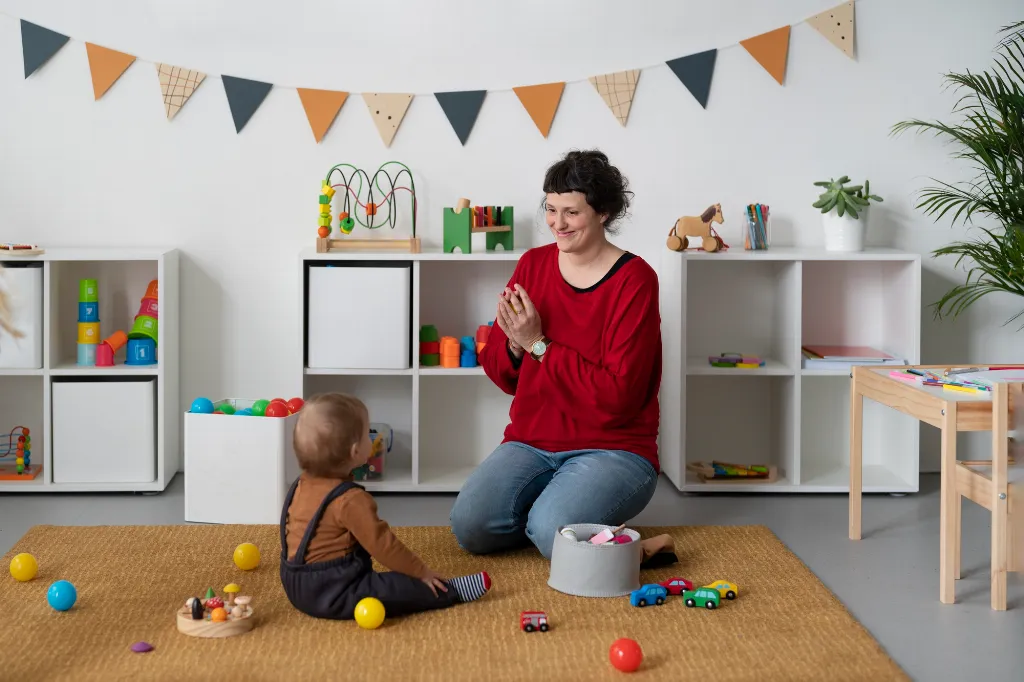
 Running a #home daycare in #Oregon means knowing the rules for how many children one adult can care for. This article helps providers and directors understand the basics, where to look for Oregon rules, and easy steps to stay safe and legal. State requirements vary - check your state licensing agency.
What are Oregon's official ratios and group sizes — and do they apply to home daycares?
Oregon’s official ratios and group sizes depend on the type of child care program. Certified child care centers follow one set of rules, while home daycares follow different family child care rules.
-
For most certified child care centers, Oregon requires:
- 6 weeks to 24 months: 1 staff member for every 4 children, maximum group size 8
- 24 months to 36 months: 1 staff member for every 5 children, maximum group size 10
- 36 months to school-age: 1 staff member for every 10 children, maximum group size 20
- School-age children: 1 staff member for every 15 children, maximum group size 30
Centers must follow both the staff-to-child ratio and the maximum group size at the same time. In mixed-age groups, centers generally follow the ratio and group size for the youngest child in the group, unless they qualify to use Oregon’s mixed-age ratio table.
These center rules do not automatically apply to home daycares. Oregon home daycares are usually licensed as registered family child care homes or certified family child care homes. These programs have their own rules about capacity, ages of children, supervision, and caregiver requirements.
For example, a registered family child care home may care for up to 10 children at one time, including the provider’s own children and other children the provider is responsible for. Of those 10 children, no more than 6 may be preschool-age or younger, and no more than 2 may be under 24 months.
For more information, review:
Because licensing rules can change, always confirm your program’s exact ratio, group size, and capacity requirements with the Oregon Department of Early Learning and Care or your licensing specialist.
How should I staff and plan for mixed ages and infants in a home daycare?
1. Start with the youngest child: In mixed-age groups, the youngest child’s ratio usually decides how many adults you need. That keeps everyone safe.
2. Simple daily actions:
- 🕘 Count children at transitions (arrival, playground, nap).
- 👥 Assign who watches which area (zone plan) so no one is left alone at a busy spot.
- 📋 Post a visible roster with ages and which adults count in the ratio.
3. Infants need more hands. Plan for:
- 🍼 Feeding help (one adult can’t safely feed many infants at once).
- 🧴 Diapering and safe sleep checks (follow safe sleep rules found in national standards like Caring for Our Children).
- 🔁 A floater or substitute for breaks and bathroom trips.
4. Use ChildCareEd tips for home programs to set up schedules and staffing: In-Home Daycare Guide. Keep a simple chart so staff and substitutes know who counts in the ratio. For a concrete, step-by-step example of opening an in-home daycare in another state, see our how to open an in-home daycare in Indiana guide.
How do I document ratios and prepare for licensing visits in Oregon?
1. Inspectors look for proof. Keep these four items tidy and ready:
- 📁 Daily attendance with arrival and departure times and ages.
- 📜 Staff files: training certificates, background checks, and qualification documents.
- 🕒 Visible room rosters and posted ratio charts for each age group.
- 📝 Logs for naps, medications, incidents, and drills.
2. Practical binder setup:
- 🔹 Child folder — enrollment, emergency contacts, health, and immunizations.
- 🔹 Staff folder — training, CPR/first aid, background registry enrollment.
- 🔹 Program binder — policies, drill logs, daily schedules, posted ratios.
3. Use ChildCareEd resources about licensing and recordkeeping: Licensing Requirements and What Child Care Policies Does Every Program Need?.
4. Tip: Keep scanned backups of records. If unsure about a rule or waiver, call your licensing specialist — state requirements vary - check your state licensing agency.
What common mistakes should I avoid and how can I build simple systems that keep children safe?
1. Common mistakes and quick fixes:
- ❌ Ratios drop during transitions. ✅ Fix: assign a floater and count at each doorway.
- ❌ Mixing rooms without restaffing. ✅ Fix: don’t combine groups unless you staff to the youngest child’s ratio.
- ❌ Counting volunteers or family who aren’t cleared. ✅ Fix: only count adults who have passed background checks and meet training rules.
- ❌ Records scattered or missing. ✅ Fix: keep a three-folder system (child, staff, program) and a daily checklist.
2. Build simple systems:
- 📝 Post a one-page ratio chart for each room.
- 🕑 Do a 2-minute safety huddle before children arrive — who watches which zone?
- 📲 Keep a phone list and emergency plan by the exit.
- 📚 Train staff yearly and log certificates in one folder.
3. Why it helps: Systems reduce mistakes, help during inspections, and keep children safer. For more on training and policies, see ChildCareEd policies and the in-home licensing guide: In-Home Daycare.
FAQ (quick)
- Q: Can I use center ratios in my home? A: Not always. Home (registered vs certified) rules can be different. Check your licensing office or OAR 414-350.
- Q: Can a volunteer count in ratio? A: Only if they meet background and training rules for your program and state.
- Q: Do ratios change at nap? A: Ratios still apply. Always make sure enough adults are present for safe supervision during naps.
- Q: Who enforces the rules? A: Oregon’s licensing staff and the Department of Early Learning and Care; see ORS chapter 329A for legal duties: ORS 329A.
Conclusion
1. Remember these top actions:
- 📌 Contact licensing for exact home rules (registered vs certified).
- 📌 Post your ratios, roster, and staff files for inspections.
- 📌 Make a floater plan and count children at transitions.
You do important work. Small systems — a posted roster, a floater plan, and clear counting routines — make your days calmer and safer for children and staff. For step-by-step help, check ChildCareEd’s in-home guides and the Oregon center ratios for context: In-Home Daycare and Oregon Ratios Guide. #ratios #infants #staffing #Oregon #home
- Positive Attention: Interactions and Supervision of Infants and Toddlers: For Workforce Solutions
- CDA Family Child Care Credential
- CDA Family Child Care Credential with Portfolio Review
- CDA Family Child Care Renewal
- Texas Primary Caregiver Qualification
- Family Child Care Health Essentials
- Potty Training Made Simple
- Positive Attention: Interactions & Supervision for Infants & Toddlers
- Texas Director Credential
- 24 Hour Family Child Care Pre-Service Training ONLINE
- Que es Título 22 en California?
- Proporciones de Cuidado Infantil y Tamaños de Grupo por Edad en Maryland (Guía Rápida para Centros y Hogares)
- Lista para Abrir una Guardería en Casa en Dakota del Norte: Cómo Empezar
- Lista para Abrir una Guardería en Casa en Georgia: Cómo Empezar
- Lista para Guardería en Casa en Texas: Cómo Iniciar una Guardería en el Hogar
- Cómo Trabajar en el Cuidado Infantil en California: Requisitos y Pasos
- Cómo Trabajar en el Cuidado Infantil en Virginia: Requisitos y Pasos
- Oregon Daycare Center Standards: What Providers Need to Know
- California Child Care Ratios and Group Sizes by Age: Daycare Center Guide
- Oregon Child Care Ratios and Group Sizes by Age: Daycare Center Guide
- Alaska Child Care Ratios and Group Sizes by Age: Home Daycare Guide
- Arizona Child Care Ratios and Group Sizes by Age: Home Daycare Guide
- Idaho Child Care Ratios and Group Sizes by Age: Home Daycare Guide
- Hawaii Child Care Ratios and Group Sizes by Age: Home Daycare Guide
- Nevada Child Care Ratios and Group Sizes by Age: Home Daycare Guide
- California Child Care Ratios and Group Sizes by Age: Home Daycare Guide
- New Mexico Child Care Ratios and Group Sizes by Age: Home Daycare Guide
- Oregon Child Care Ratios and Group Sizes by Age: Home Daycare Guide
- Washington Child Care Ratios and Group Sizes by Age: Home Daycare Guide
- Title 22 Home Daycare Ratios: How Age Mix Changes Your California Capacity
