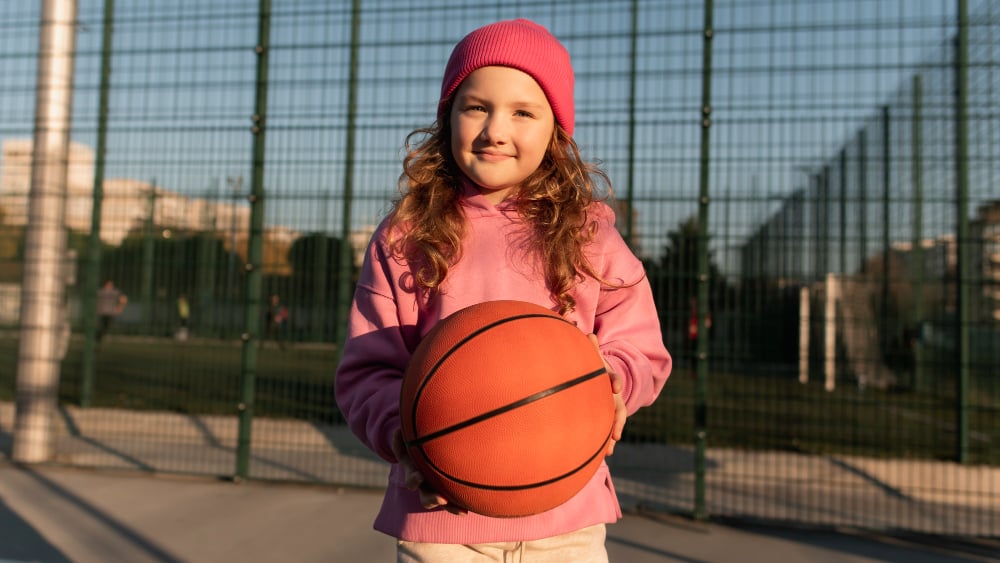
 What is “March Madness,” and why do kids enjoy it?
“March Madness” is a popular college basketball tournament that happens in March. Adults may watch games and fill out brackets (a chart that shows who might win). Kids often like the excitement because it feels like a fun sports season with lots of cheering.
In child care or at home, you can use this theme in a simple way:
-
Movement games (like dribbling and throwing)
-
Teamwork and turn-taking
-
Counting and charting
-
Fun crafts and pretend play
You don’t have to focus on real teams at all. You can create your own “class teams” using colors or animals. #MarchMadness #KidsActivities
How can March-themed sports activities help children learn?
Sports play is not only about winning. It builds skills children use every day.
Gross motor skills (big body moves)
-
Running, jumping, balancing
-
Throwing, kicking, catching
-
Coordination and body control
Fine motor skills (small hand moves)
-
Gripping a marker to draw a bracket
-
Cutting and gluing crafts
-
Pinching and stacking small items
Social-emotional skills
-
Waiting for a turn
-
Handling big feelings (happy, frustrated, excited)
-
Encouraging friends (“You can do it!”)
These activities can help children feel confident, active, and included. #GrossMotor #FineMotor
What simple supplies do I need?
You can do most activities with easy, low-cost items:
-
Soft balls (foam or yarn balls work great)
-
Painter’s tape (for lines on the floor)
-
Paper, crayons, markers
-
Paper plates or cups
-
Sticky notes
-
A basket, laundry bin, or box for “hoops”
-
Stickers (stars, balls, smiley faces)
Safety tip: For children under age 3, avoid small items that could be a choking hazard.
How do I make March Madness activities inclusive for all kids?
Not every child likes sports, and that’s okay. You can keep the theme focused on fun movement and playful learning.
Try these inclusive ideas:
-
Let kids choose: throw, roll, or drop the ball
-
Use “team colors” instead of real teams
-
Celebrate effort, not winning
-
Add calm choices (like coloring or charting)
You can say: “We are doing a March movement theme!” This helps everyone feel comfortable. #InclusiveClassroom
What activities work best for infants (birth–12 months)?
Infants learn through safe sensory play and simple movement. Keep activities short, gentle, and supervised.
1) Tummy Time “Ball Roll”
-
Roll a soft ball slowly from left to right.
-
Let baby track it with their eyes and reach for it.
2) Basket Reach
-
Place a wide basket near baby.
-
Put a soft ball inside.
-
Encourage baby to reach, grab, and explore.
3) Color Cheer Scarves
-
Use safe scarves or ribbons (supervised).
-
Wave them slowly while saying, “Go, go, go!”
If you want more age-appropriate ideas for the youngest children, this course is very helpful:
https://www.childcareed.com/courses-playful-learning-infant-toddler-activities.html Buy Now $25.00
What activities are great for toddlers (1–2 years)?
Toddlers love to move, repeat actions, and feel successful. Keep directions simple and give lots of cheering.
1) “Dribble” Like a Toddler (Bounce or Pat)
-
Use a soft ball.
-
Toddlers can bounce it or simply pat it on the floor.
-
Count together: “1, 2, 3!”
2) Roll-to-the-Hoop
-
Put a laundry basket on its side.
-
Toddlers roll the ball toward the opening.
-
Celebrate every try!
3) Tape-Line Walk
-
Make a straight tape line on the floor.
-
Toddlers walk, stomp, or tiptoe along the line.
Easy learning talk
-
“Big ball, small ball”
-
“In, out”
-
“Fast, slow”
What March Madness activities work well for preschoolers (3–5 years)?
Preschoolers can follow simple rules and enjoy friendly competition when it stays positive.
1) Cup Stack “Tournament”
-
Set up 6–10 paper cups in a triangle (like bowling pins).
-
Kids throw or roll a soft ball to knock them down.
-
Reset and try again.
2) Mini Obstacle Course
Create a path like:
-
Jump 3 times
-
Crawl under a table
-
Walk the tape line
-
Toss a ball into a bin
This builds strength and listening skills.
3) Class Bracket (Simple Version)
Instead of teams, use class favorites, like:
-
Fruit: apples vs. bananas
-
Animals: cats vs. dogs
-
Colors: green vs. blue
Make a chart and vote with stickers. This helps with counting and graphing.
What activities are fun for school-age kids (6–8 years)?
Older kids like challenges, teamwork, and planning.
1) Paper Basketball “Flick Shot”
-
Crumple paper into small balls.
-
Use a bin as the hoop.
-
Kids flick the ball using fingers (great fine motor work).
Add simple math:
-
1 point from close
-
2 points from far
2) Create-Your-Own Team Logo
-
Kids design a team name and logo.
-
They explain what it means.
This builds creativity, writing, and confidence.
3) Sportsmanship Challenge
Give each child a “good teammate” goal, like:
-
“I will cheer for a friend.”
-
“I will take turns.”
-
“I will try again.”
Then celebrate when you see it happen.
How can I connect March Madness to learning (without worksheets)?
You can add learning in playful ways:
Math
-
Count baskets made
-
Compare “more” and “less”
-
Make a simple bar graph with stickers
Language
-
New words: bounce, roll, aim, score, team
-
Story time: kids tell a “game recap” in their own words
Science
-
Test: Which ball rolls faster on carpet vs. tile?
-
Try ramps and talk about “fast” and “slow”
What if the weather is bad and we’re inside?
March weather can be rainy or chilly, so indoor movement helps kids get energy out.
Try:
-
Tape “courts” on the floor for safe zones
-
Soft balls only (foam/yarn) inside
-
“Freeze cheer” dance breaks between turns
For more ideas when you need indoor play plans, this training is a great match:
https://www.childcareed.com/courses-engaging-indoor-activities-for-inclement-weather-1621.html
Where can I find ready-to-use March Madness ideas from ChildCareEd?
If you want a quick list of themed activities, use this ChildCareEd resource:
https://www.childcareed.com/r-00773-march-madness-activities.html Buy Now $0.00
And for a deeper look at using sports themes in child care, read this related ChildCareEd article:
https://www.childcareed.com/a/embracing-march-madness-a-child-care-provider-s-guide-to-sports-engagement.html
How can I keep these activities safe and well-managed?
A little planning prevents big problems.
Try these simple safety rules:
-
Use soft balls indoors
-
Set clear boundaries with tape lines
-
Keep “throw zones” away from faces
-
Remind kids: “We throw toward the hoop, not toward people”
-
Offer turn-taking tools (like a timer or a “next” card)
For mixed ages:
-
Give younger kids closer hoops
-
Give older kids farther hoops
-
Celebrate everyone’s effort
Want more easy activity ideas all year long?
Follow ChildCareEd for quick activity tips, training reminders, and classroom ideas.
👉 Follow us on Instagram: https://instagram.com/childcareed
Tap “Follow” so you don’t miss new themes, printables, and helpful videos! #ChildCareProviders #PlayBasedLearning
