Thinking about opening a #daycare in #DC? This short guide helps new child care owners take the first steps. It explains simple, numbered actions for licensing, staff #training, budgeting, and safety. Why it matters: good planning keeps children safe, mak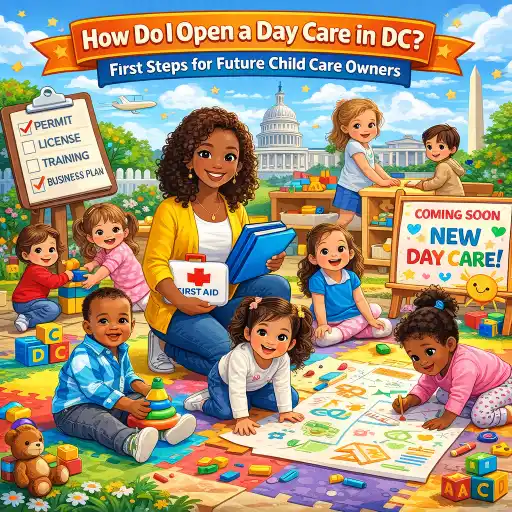 es families trust your program, and helps you avoid delays that cost money. State requirements vary - check your state licensing agency.
1) What are the very first steps I should take to open in Washington, D.C.?
- 🔎 Research rules and licensing: contact OSSE and read local guides. For a clear local checklist, see How do I start a daycare in Washington, D.C. as a new provider? as part of your reading.
- 📍 Pick your business type: center or family child care (home). Each has different space, ratio, and paperwork rules; see general planning in How to Start a Daycare.
- 🧾 Check zoning and safety: get local zoning OK, fire and health checks, and a Use & Occupancy (if needed).
- 🧯 Build health and safety basics: cleaning, medication, safe sleep, emergency drills, and a parent handbook.
- 💡 Make a simple 90-day budget: list fixed costs, payroll, and three income scenarios (full, partial, low).
- 📣 Tell families and recruit staff: clear ads with hours, rates, and safety steps help you enroll faster.
Why it matters: starting with the right steps saves time and builds trust with families. For more local tips and templates, review the ChildCareEd DC pages and budget templates at the ChildCareEd DC starter post. #licensing #providers
2) What training and paperwork will my staff need, and how do I deliver it?
- 📘 Know required topics: preservice items often include health & safety, SIDS/safe sleep, medication administration, and mandated reporting. See DC preservice lists as part of ChildCareEd's DC guide.
- 🧾 Enroll in DC-approved courses: use providers with DC approval. ChildCareEd lists many DC courses and bundles at Childcare Courses in District of Columbia - DC.
- 😊 Combine online and hands-on practice: 1-hour modules plus a skills check or mentor visit helps staff learn faster. Reading about a day in the life of early childhood educators in Washington, D.C. can also help owners connect training plans with educators’ daily responsibilities.
- 📁 Keep records tidy: scan certificates, keep one paper file per person, and one shared digital folder. Track course name, hours, date, and expiration on a simple spreadsheet.
- 🔁 Track renewals: set calendar alerts for CPR/First Aid and other expirations so certificates never lapse.
Tip: offer short paid time for required courses—this keeps staff motivated. For course options and DC bundles, see ChildCareEd DC courses. state requirements vary - check your state licensing agency.
3) How do I manage money, find funding, and support staff pay in DC?
- 📊 Build 3 budgets: best case, medium, and low enrollment. Include rent, utilities, food, supplies, and payroll.
- 💰 Look for funding: search ChildCareEd's grants list and local DC grants. See grant help and ideas as part of ChildCareEd grants post and local news about subsidy changes like the OSSE waitlist at DC subsidy waitlist coverage.
- 🧾 Enroll in CACFP if you serve meals — reimbursements help the budget.
- 🔎 Phase purchases: buy furniture and equipment in stages and accept safe donations when allowed.
- 🤝 Support staff retention: offer small raises after certificates, paid study time, or reduced tuition for staff children.
Quick wins: apply for one small grant this month, enroll in CACFP, and make a 90-day cash plan. See funding and voucher examples at ChildCareEd grants. #funding #daycare
4) How do I stay compliant, avoid common mistakes, and prepare for inspections?
Compliance is mostly records, routines, and practice. Use this simple checklist:
- 📁 Keep a licensing binder with: license copy, staff files, background checks, certificates, drill logs, and current policies.
- 👀 Run weekly quick audits: ratios, medicine logs, posted evacuation maps, and clean equipment checks.
- 🛡️ Practice emergency drills and log date/time and notes.
- ⚠️ Common mistakes and fixes:
- 🔸 Taking non-approved courses — always confirm DC approval first.
- 🔸 Losing certificates — scan and save copies in two places right away.
- 🔸 Waiting to tell families about changes — communicate early and in writing.
- 💬 Keep families informed with a clear handbook and daily notes to prevent misunderstandings during visits.
Run a mock inspection each month and fix any small items quickly. For inspection-ready tips and checklists, see ChildCareEd's DC checklist. State requirements vary - check your state licensing agency. #training #licensing
Conclusion: What can I do this week?
- 🔎 Call OSSE or bookmark the ChildCareEd DC starter post and read the DC checklist.
- 📘 Enroll new staff in one DC-approved preservice bundle at ChildCareEd DC courses.
- 💰 Make a 90-day budget and apply to one small grant from the ChildCareEd grants list.
- 📁 Start a staff file and a digital backup folder for certificates and background checks.
FAQ (quick): 1) Q: Can online courses count in DC? A: Yes if DC-approved; check course pages on ChildCareEd. 2) Q: How soon must new hires finish preservice? A: Often 30–90 days—confirm with OSSE. 3) Q: Where to find grants? A: Start at ChildCareEd grants and local DC lists.
Start with 1 clear plan and 1 contact at OSSE. Try this 6-step starter list: Follow a short 5-step plan to get staff ready and documented. Money planning keeps your doors open. Use this 5-step money plan:
- 45 Hour Child Growth and Development
- Teachers, Assemble! Building Up Staff in Child Care
- Basic Health & Safety and Breastfeeding Awareness
- Injury Prevention: Their Safety Is In Your Hands
- Pediatric RSV First Aid & CPR/AED
- Texas Director Credential Renewal
- Texas Director Credential
- 45 hour Growth and Development Birth-age 12 ONLINE
- Capacitación en Salud y Seguridad Preventiva en Línea para Proveedores de Cuidado Infantil
- Cómo Empezar una Guardería en Casa: Requisitos y Pasos
- ¿Cómo solicito la licencia para una guardería en California?
- Regulaciones de Cuidado Infantil en Maryland para Centros y Hogares de Cuidado Infantil Familiar
- Lista para Abrir una Guardería en Casa en Dakota del Norte: Cómo Empezar
- Lista para Guardería en Casa en Illinois: Cómo Iniciar una Guardería en el Hogar
- Lista para Guardería en Casa en California: Cómo Iniciar una Guardería en el Hogar
- Lista para Guardería en Casa en Texas: Cómo Iniciar una Guardería en el Hogar
- Cómo Trabajar en el Cuidado Infantil en California: Requisitos y Pasos
- Capacitación Previa al Servicio para Proveedores de Cuidado Infantil en Dakota del Norte
- What Should DC Early Childhood Teachers Know About Pay Equity Right Now?
- The American Dream of Child Care Ownership
- Meet Hwaida Hassanein: Child Care Owner, Founder, and Business Guide
- Daycare Licensing Help: What New Owners Need to Know
- How do I start a daycare in Washington, D.C. as a new provider?
- So You Want to Open a Child Care Center? Welcome to the Beautiful Chaos
- How can DC child care centers market smarter and fill open spots easily?
- How do I become an early childhood teacher in DC?
- How do I open a day care in DC: first steps for future child care owners?
- Cómo simplificar la capacitación para sus empleados de daycare
