A toddler’s development unfolds through the ongoing interplay of genes and everyday experiences, with each child bringing their own interests, responses, and pace of learning. Use the All About My Toddler: Family Information Form Buy Now $1.49 to learn about familiar routines, communication, and preferences, then draw on family insights to plan responsive care. For a deeper understanding of how genetics, environmental influences, and brain development relate to early growth, explore ChildCareEd’s CDA Infants/Toddlers: Brain Development and Gene Expression  Buy Now $16.00. Read on for ways to use this knowledge thoughtfully while supporting each toddler through warm interactions and meaningful daily experiences.
Why should providers think beyond “nature versus nurture”?
When a toddler learns a new word quickly, seeks movement, or needs extra time with transitions, it can be tempting to ask whether the child is “born that way” or shaped by their surroundings. Developmental science points to a more useful view: biology and experience work together. Genes contribute to individual differences, while relationships, health, learning opportunities, and broader circumstances shape how a child’s abilities emerge.
The National Academies’ discussion of early development describes gene activity as inseparable from the environments in which it occurs. This does not mean that a caregiver can control a child’s genetic makeup or guarantee a particular outcome. It means that everyday care matters: children’s developing systems respond to the quality and consistency of experiences around them.
For providers, this perspective reduces blame and supports thoughtful action. A child’s behavior is not a verdict on their family, temperament, or future. Instead, use what you observe to ask what might help this child feel secure, participate, and explore. Responsive practice recognizes both individual differences and the meaningful role of supportive care.
How do genes and environments influence each other?
Genes can influence tendencies such as activity level, attention, or sensitivity, but these are not simple predictions of a toddler’s future. Children also shape their own experiences: a highly curious child may seek more chances to explore, while adults may respond differently to children with different cues. Researchers call some of these links gene–environment correlations. They are one reason it can be difficult to separate “the child” from “the environment” in development.
Research is careful about claims that particular experiences switch specific traits on or off. A large study of cognitive development from ages two to four found environmental measures and genetic measures associated with development, but did not find consistent evidence for gene–environment interactions in that sample. This is a reminder that findings are complex and should not be turned into simple prescriptions.
Epigenetics studies how factors such as experiences and exposures can influence gene activity without changing the DNA sequence. This area is developing, and findings do not allow educators to infer a child’s biology from classroom behavior. In practice, focus on what you can responsibly support: predictable care, play, language-rich interactions, health, and meaningful partnerships with families.
Why do relationships and ordinary routines matter so much?
Toddlers learn through repeated experiences with people and materials. A caregiver who notices a child’s gesture, answers a vocalization, or helps name frustration creates opportunities for communication, trust, and learning within ordinary moments. ZERO TO THREE describes relationships as central to infant and toddler development, while NAEYC emphasizes the importance of relationships and family partnerships in developmentally appropriate practice.
Routines such as meals, dressing, handwashing, and transitions can offer security as well as chances to practice skills. A familiar sequence may help a toddler anticipate what comes next; a pause during dressing gives them a chance to try a movement or communicate a preference. These interactions need not become formal lessons. The goal is to stay attentive and let the child participate at a developmentally appropriate pace.
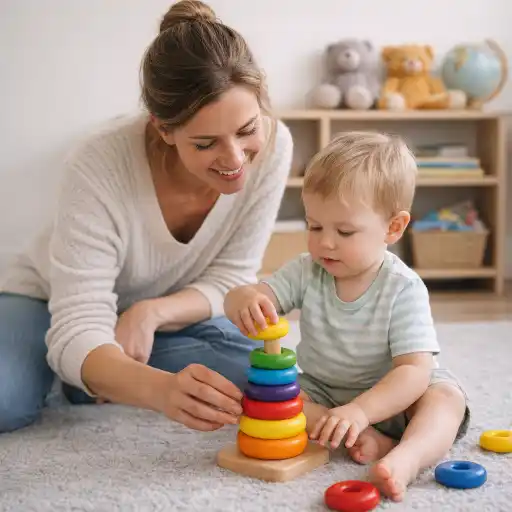
- Notice the child’s cues—looking, pointing, moving away, reaching, or vocalizing—and respond in a warm, clear way.
- Use simple narration: “You put the block on top. Now it’s tall.” Then allow time for the child to answer through words, movement, or play.
- Offer manageable choices, such as choosing between two books or deciding which safe play material to explore.
- 🌱 Treat caregiving routines as relationship moments, not just tasks to finish.
What can providers do to support different developmental pathways?
Development does not unfold at the same pace or in the same pattern for every toddler. One child may communicate with gestures before using many words; another may spend more time observing before joining play. Providers can create inclusive environments while avoiding assumptions about what an individual child can or cannot do.
Build a classroom with varied, open-ended materials and opportunities for movement, conversation, sensory exploration, and quiet observation. Observe children across different parts of the day, since a skill may appear during play but not during a group activity. Use brief, objective notes that describe what happened rather than labeling a child—for example, “looked toward the caregiver and pointed to the cup” is more useful than “is not communicative.”
Partner with families to understand children’s interests, languages, routines, and strengths. Families know their children across contexts, and respectful two-way communication can help staff make care more consistent. If you have a persistent developmental concern, share specific observations with the family and follow your program’s referral and screening procedures. Developmental monitoring is supportive, not diagnostic; families can consult a pediatric health professional or early intervention services when appropriate.
What common misunderstandings should teams avoid?
One common pitfall is treating genes as destiny. A family history or a child’s early behavior does not determine a fixed outcome, and educators should not make genetic explanations for a child’s learning or behavior. Another is assuming that enrichment means constant adult-directed instruction. Toddlers also need time for child-led play, rest, repetition, and relationships.
Teams may also overinterpret a single observation. A toddler who is quiet in one activity may be tired, adjusting to a new setting, processing language, or simply more interested in watching. Look for patterns across time and context, and seek the family’s perspective before drawing conclusions. Avoid comparing children as if a milestone were a competition; use developmental information to inform support rather than rank children.
- Instead of: “She is shy, so she will not join.” Try: Offer a low-pressure way to participate and observe what helps her feel comfortable.
- Instead of: “He is behind because he does not practice at home.” Try: Discuss what you notice without blame and ask the family what they see.
- Instead of: treating a milestone list as a diagnosis, try: documenting patterns and following established screening and referral processes.
State requirements vary - check your state licensing agency for applicable expectations concerning developmental screening, documentation, and referral procedures.
Conclusion: What is the practical takeaway about genes and experience?
Toddler development reflects both biological individuality and lived experience. Genes contribute to differences, while relationships, routines, health, play, and the surrounding environment help shape how development unfolds. Neither factor should be treated as a single explanation for a child’s abilities or challenges.
Providers do not need to determine a child’s genetic influences to make a positive difference. They can observe carefully, respond warmly, offer varied opportunities to explore, and partner respectfully with families. These everyday choices do not guarantee particular outcomes, but they provide a supportive context for each toddler’s ongoing growth. The essential answer is that genes and experiences interact over time—and responsive care is one meaningful part of that developmental environment.
Five relevant ChildCareEd courses
- CDA Infants/Toddlers: Brain Development and Gene Expression Buy Now $16.00
- Brain Building Buy Now $16.00
- CDA Infants/Toddlers: Stages of Development Buy Now $24.00
- Early Learning with Infants and Toddlers Buy Now $24.00
- Positive Attention: Infants and Toddlers Buy Now $24.00
References
- Adult/Child/Infant CPR AED and Adult First Aid Blended
- 45 Hour Child Growth and Development
- Children at the Wheel: Emergent Curriculum
- 45 Hour Infant and Toddler Methods and Materials
- CDA Infant/Toddler Credential with Portfolio Review
- CDA Bridge Bundle: Infant/Toddler without Portfolio Review
- CDA Bridge Bundle: Infant/Toddler
- Texas Director Credential
- CDA Infants/Toddlers: Brain Development and Gene Expression
- CDA Certification en Español: Recursos y Consejos para Educadores Bilingües
- 😫🧸 ¿Qué hacer cuando un bebé no quiere dormir la siesta en el aula?
- ⏰📘 ¿Cuáles son los requisitos de capacitación anual en el cuidado infantil en Dakota del Norte?
- Actividades de Primeros Auxilios Para Niños
- Recursos en Español sobre el Sueño Seguro del Bebé
- ¡Obtén Tu Certificación de Cuidado Infantil de 90 Horas En Línea!
- Cómo usar tu certificación de 90 horas en Maryland para completar tu CDA
- 45 horas para infantes y niños pequeños: cómo certificarse en línea
- ¿Cuáles son los pasos, requisitos y opciones en línea para la certificación de 90 horas en cuidado de Infantes/Toddlers en Maryland?
- Capacitación en Salud y Seguridad Preventiva en Línea para Proveedores de Cuidado Infantil
- Lista para Guardería en Casa en Illinois: Cómo Iniciar una Guardería en el Hogar
- Lista para Guardería en Casa en Texas: Cómo Iniciar una Guardería en el Hogar
- Cómo Trabajar en el Cuidado Infantil en California: Requisitos y Pasos
- Cómo Ser Maestra de Preescolar en Dakota del Norte
- Cómo Ser Maestra de Preescolar en Maryland
- Capacitación Previa al Servicio para Proveedores de Cuidado Infantil en Dakota del Norte
- Cómo simplificar la capacitación para sus empleados de daycare
- How Can Child Care Providers Support Healthy Brain Development in Young Children?
- ¿Todos los niños deben participar en el tiempo de círculo?
- How Do Genes and Everyday Experiences Shape Toddler Development?
