A classroom weather desk can turn a quick look out the window into a lively routine for science, language, math, and imaginative play. Build it with a few accessible materials and clear learning goals, and children can practice noticing, describing, and sharing what they observe. For help turning those moments into developmentally appropriate experiences, explore Lesson Planning for Preschoolers  Buy Now $24.00; the course helps educators plan purposeful preschool learning and strengthen their lesson-planning practice.
Why does a weather desk matter for preschool learning?
Weather is immediate and familiar: children feel the breeze, notice clouds, and decide whether they need a jacket. A reporter desk gives those everyday experiences a place in the classroom, making children’s ideas visible and inviting them to return to a question over time. Rather than teaching complicated meteorology, focus on the foundations of inquiry: observe, describe, compare, predict, and revisit.
The routine can support several areas of development at once. Children use new words such as cloudy, drizzle, chilly, and windy; count or graph the week’s sunny days; take turns with a microphone; and listen to classmates’ reports. Dramatic play also gives children a natural reason to negotiate roles, practice conversation, and represent ideas. As the Eastern Connecticut State University early childhood center notes, pretend play supports development across areas such as language, social interaction, emotional well-being, and early academic skills.
Keep the tone curious and welcoming. There is no “wrong” kind of weather to report, and a child’s imaginative forecast can sit alongside the day’s real observation. This balance helps #preschoolers see science as something they do, not just information an adult gives them.
How can you set up a simple, inviting weather desk?
Choose a low-traffic spot where children can reach the materials independently while remaining within staff supervision. A small table, a few picture cues, and a simple sign such as “Weather Desk” are enough to establish the center. A desk can be a permanent choice area or a temporary feature during a weather inquiry.
- Set out a pretend microphone, a clipboard, chunky pencils or crayons, and blank paper for drawing or dictated reports.
- Display picture cards for sunny, cloudy, rainy, windy, and other locally relevant conditions.
- Add a daily chart or observation sheet so children can match a symbol to what they see.
- Include dress-up items or clothing pictures to connect observations with everyday choices.
- Offer a simple “on air” sign, a cardboard camera, or a classroom-made backdrop if children enjoy staging a broadcast.
Use durable, age-appropriate materials and avoid small parts that pose a choking risk. Invite children to help decide where materials belong and how to return them, building ownership of the center. You can also incorporate the Fall Weather Look, Say, Choose observation chart Buy Now $0.00 as a visual prompt for noticing conditions, describing them, and considering suitable clothing. Adapt visuals and tools for different communication, sensory, and motor needs so everyone has a way to participate.
What can preschool meteorologists do during the daily report?
Keep the broadcast brief and predictable—two or three minutes is plenty to begin. Invite a child to look outdoors with an adult or observe safely from a window, then choose a symbol and share one or two details. A predictable sequence helps children understand what to do without turning the activity into a scripted performance.
Try a simple reporter prompt: “I notice ____. The sky looks ____. It feels ____. I think we might need ____.” Children can answer with speech, gestures, picture choices, drawing, or adult-supported dictation. A child who prefers to watch before speaking is still participating; offer another opportunity later without pressure.
- Rotate roles: reporter, chart helper, photographer, or weather-word finder.
- Ask open questions such as “What do you notice?” and “What changed since yesterday?”
- Record the class observation with a symbol, tally mark, drawing, or dictated sentence.
- Compare the forecast with later observations: “Did the clouds stay?” “Did the wind change?”
For fall, children might notice leaves moving in the breeze, cooler mornings, or rain on the playground. Invite them to describe evidence rather than memorize a forecast. The What Is the Weather Today? activity Buy Now $1.50 offers a related observation-and-recording idea. Celebrate each child’s contribution—an accurate description, a thoughtful question, or a fresh drawing all add value to the shared report.
How can the weather desk connect science, language, and math?
A well-planned weather center is more than a pretend newsroom. It can connect hands-on inquiry with vocabulary, early numeracy, literacy, and social learning. Start with children’s actual observations, then extend the play with one or two simple materials. For example, place a ribbon or windsock where children can safely watch its movement, or keep a class chart that shows the weather symbol for each day.
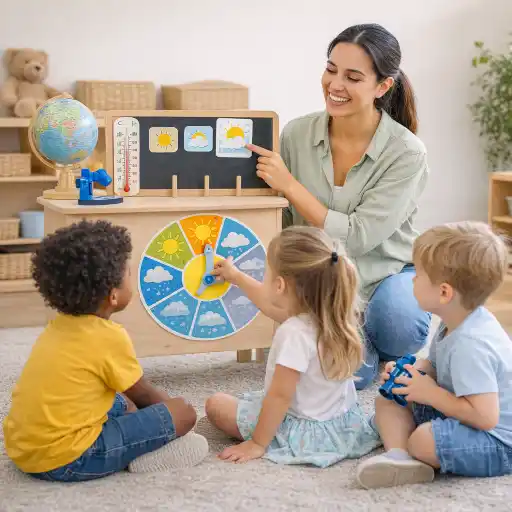
- Science: Compare how ribbons move on calm and breezy days. Ask children what they can see that makes them think it is windy.
- Math: Count the week’s weather symbols and compare which type appeared most often.
- Language and literacy: Make a shared word bank, dictate a class forecast, or revisit a weather-themed book.
- Creative expression: Draw the sky or move like a gentle breeze, falling rain, or drifting cloud.
- Social development: Practice turn-taking, listening to another reporter, and agreeing on how the group will record an observation.
Build a few intentional connections rather than packing every subject into one session. A weather chart can lead to a discussion about patterns, but preschoolers do not need to master technical terms or produce precise data. Their drawings, gestures, and spoken explanations are meaningful forms of recording. With thoughtful lesson planning for preschoolers, you can identify a learning goal, choose materials that support it, and stay flexible as children’s questions guide the next step. Consider the Basic Science in Early Childhood course Buy Now $25.00 for further professional learning about planning inquiry and investigation.
How do you keep the activity inclusive, safe, and engaging?
Children can explore weather without being required to go outdoors. If outdoor observation is appropriate, follow your program’s supervision procedures and assess conditions before leaving the classroom. Make an indoor alternative available, such as looking through a window, examining a photo, or using the desk’s picture cards. State requirements vary—check your state licensing agency.
Make participation flexible. Some children may want to speak into the microphone; others may choose a symbol, point to a picture, draw, or help place a marker on the chart. Use large, easy-to-grasp materials where helpful and keep the center uncluttered. A supportive adult can model language without taking over the children’s play.
Common pitfalls are easy to prevent:
- 🧭 Keep the forecast playful and evidence-based; avoid presenting a child’s guess as a guaranteed prediction.
- Do not label rain, wind, or clouds as “bad” weather; each condition offers different things to notice.
- Do not overcorrect children’s wording. Echo their idea and gently add a useful word or question.
- Check classroom tools for safe size and condition, and maintain active supervision during play.
- Do not let the chart replace current weather and safety checks for outdoor plans.
Rotate materials when interest shifts, not simply because a weekly schedule says to. A center children revisit with fresh questions is doing useful work. For additional ideas on balancing play and learning, see the ChildCareEd The Best Promotion is Play course Buy Now $24.00.
Conclusion: What are the essentials of a preschool weather desk?
A classroom weather desk makes everyday observation tangible. Provide accessible props and picture cues, establish a short reporter routine, and invite children to describe what they see in their own ways. A simple chart or journal can help the group compare observations, while dramatic play creates a meaningful reason to communicate, take turns, and revisit new vocabulary.
Keep the goals developmentally appropriate: nurture curiosity, not perfect forecasts. Connect the desk to science, math, language, and creative play in small, intentional ways; adapt participation to children’s needs; and check safety before any outdoor exploration. For a ready-made fall-themed dramatic-play option, explore the Fall Weather Reporter Dramatic Play and Recording Kit on ChildCareEd. Pairing practical materials with reflective planning can help your preschool meteorologists turn the changing sky into a shared classroom story.
Five relevant ChildCareEd courses
- Moving About the Classroom: Effective Transitions for Everyday
- What Makes Me Special: An Overview of Autism and ADHD
- From Tantrums to Triumphs: Equipping Preschoolers with Self-Regulation Skills
- The ABCs of Behavior: Turning Challenges into Learning Opportunities
- From Tantrums to Triumphs: Equipping Preschoolers with Self-Regulation Skills
- Pediatric RSV First Aid & CPR/AED
- CDA Bridge Bundle: Family Child Care without Portfolio Review
- CDA Bridge Bundle: Infant/Toddler without Portfolio Review
- CDA Bridge Bundle: Preschool without Portfolio Review
- Engaging Indoor Activities for Inclement Weather
- 💛🧩 ¿Cómo puedo hacer que mi enseñanza sea inclusiva para los niños con autismo?
- 👶 ¿Cuáles son las proporciones y grupos requeridos en Dakota del Norte? 🏫
- Cómo Abrir Una Quardería En Casa Sin Dinero?
- Recursos en Español sobre el Sueño Seguro del Bebé
- 10 Ejemplos de Cómo la Cultura Influye en el Desarrollo Infantil
- Cómo Iniciar el Proceso de Obtención de la Licencia de Cuidado Infantil
- ¿Cómo solicito la licencia para una guardería en California?
- Proporciones de Cuidado Infantil y Tamaños de Grupo por Edad en Maryland (Guía Rápida para Centros y Hogares)
- Proporciones de Cuidado Infantil y Tamaños de Grupo por Edad en Nueva Jersey (Guía Rápida para Centros y Hogares)
- Proporciones de Cuidado Infantil y Tamaños de Grupo por Edad en Virginia (Guía Rápida para Centros y Hogares)
- Lista para Guardería en Casa en Illinois: Cómo Iniciar una Guardería en el Hogar
- Lista para Guardería en Casa en California: Cómo Iniciar una Guardería en el Hogar
- Cómo Ser Maestra de Preescolar en Dakota del Norte
- Cómo Ser Maestra de Preescolar en Illinois
- Capacitación Previa al Servicio para Proveedores de Cuidado Infantil en Dakota del Norte
- Celebrando la amistad en el cuidado infantil durante el Día de los Mejores Amigos
- Canciones, juegos y preguntas de círculo para niños
- Cómo simplificar la capacitación para sus empleados de daycare
- Cómo Planificar Actividades al Aire Libre Seguras Durante el Calor y la Mala Calidad del Aire
- How Can You Start a Classroom Weather Desk for Preschool Meteorologists?
