Early childhood programs that teach both behavior and emotion skills create classrooms where children feel safe, seen, and capable. This article gives practical, research-informed steps you can use tomorrow to reduce challenging moments while strengthening each child’s #confidence and #emotional growth. Why it matters: children who learn self-regulation and social skills are more engaged learners, staff experience less burnout, and families partner more effectively with consistent approaches. For program leaders: state requirements vary - check your state licensing agency.
How can proactive structure prevent problems and build confidence?
Prevention is the highest-leverage strategy. A proactive classroom reduces slips into problem behavior and gives children clear opportunities to succeed. Follow these concrete steps (use 1–2 this week and add more):
- 🔹 Use a visual schedule at child height and practice it daily — predictability reduces anxiety and supports #children in knowing what comes next (Proactive Behavior Guidance).
- 😊 Design routines that balance active play and calm times so children can regulate energy and feelings; short movement breaks prevent melt-downs (Positive Guidance Strategies).
- 🔢 Limit crowding: set clear capacity for centers and rotate materials to reduce conflict and give children repeated chances to succeed (Pyramid Model resources).
- 📚 Teach 3–5 simple, positively worded rules with photos (e.g., "Hands are for helping") and practice them through role-play and scripted stories (CSEFEL).
- ✔️ Use data to guide changes: collect quick ABC notes (Antecedent-Behavior-Consequence) to spot patterns and adjust the environment.
These prevention steps follow the Pyramid Model and classroom research and help build predictable chances for success — a key ingredient of #confidence.
How do we teach emotional skills during everyday routines?
Social-emotional learning (SEL) thrives when woven into daily moments rather than isolated lessons. Use these practical strategies to teach emotion skills in natural contexts (How to Support SEL):
- 📖 Read emotion-focused books and discuss characters' feelings; follow up with a short role-play to rehearse responses.
- 🧘 Build a calm corner with visuals and simple tools (breathing, counting, a feelings chart). Practice the tools when children are calm so they can use them when upset (Emotions in Motion).
- 🎯 Teach a small set of replacement skills: ask for a turn, use words for feelings, or request help. Practice in small groups and during transitions.
- 🤝 Use brief, specific praise for social steps ("You asked for a turn — great!"), reinforcing effort-based growth rather than fixed traits.
- 🔁 Embed SEL across routines: morning check-ins, transitions, mealtimes, and clean-up offer dozens of teachable moments every day (ChildCareEd free resources).
These steps give children language and practice to manage big feelings and support better #behavior and peer relationships.
What in-the-moment responses keep dignity while teaching regulation?
When emotions are high, short, calm, and respectful adult responses protect relationships and teach regulation. Use a compact script and a few consistent moves drawn from proven positive guidance approaches (Positive Guidance):
- 🧘 Stay calm and approach: get to the child’s level and breathe with them.
- 📣 Name the feeling: say one brief label ("You look frustrated"). Labeling supports emotional learning.
- ⛔ State the limit: one short sentence ("Hands are for helping — hitting hurts").
- 🔁 Teach one replacement: offer a concrete choice ("You can take deep breaths or use the calm card. Which do you want?").
- 📝 If behavior is frequent or safety-related, document ABC patterns and follow your center’s behavior support process; state requirements vary - check your state licensing agency.
These steps reduce shame, keep the relationship intact, and explicitly teach the skill you want. For practical guidance on forming warm, responsive adult–child connections that support regulation and confidence, see building positive relationships with children. For children with persistent needs, consider team-based Positive Behavior Support using CSEFEL and Pyramid Model tools (NCPMI, CSEFEL).
How can praise and a growth mindset boost confidence without creating dependence?
Praise is powerful when it targets effort, strategy, and specific behaviors rather than fixed traits. Follow these evidence-based tips to grow resilience and #confidence (Effective Praise; Growth Mindset):
- 🎯 Be specific: say what the child did ("You kept trying to zip your coat — you didn’t give up!").
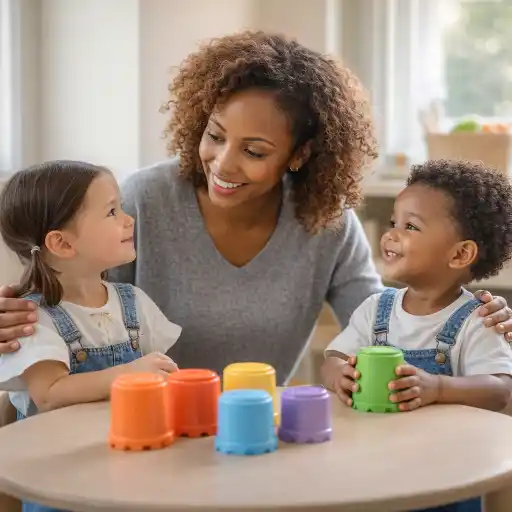
- 👏 Praise effort and strategy, not ability: this promotes a growth mindset and persistence.
- ⏱️ Give praise in the moment and link it to the skill you want repeated.
- ❌ Avoid comparing children; focus on individual progress and next steps.
- 📊 Track and rotate who you praise so every child receives sincere, motivating feedback.
Well-placed praise raises self-efficacy and supports positive #behavior. Use classroom routines to teach children to notice their own progress, which deepens internal motivation.
How do we partner with families and teams to ensure consistent support?
Consistency across home and program is essential. Strong partnerships reduce mixed messages and make interventions more effective. Use a brief, strengths-based family routine and team steps drawn from public health and early care guidance (CDC on Family Engagement; ChildCareEd):
- 🤝 Start with strengths: open family conversations with what the child does well.
- 📋 Share one objective observation (time, place, behavior) — keep notes factual and brief.
- 🧾 Offer one small strategy to try for a week (picture schedule, a calm tool, or a 2-minute warning).
- 🔁 Meet briefly to review progress and adjust; include teachers, director, and any specialists when needed (use CSEFEL tools for team planning: CSEFEL resources).
- ⚠️ Common mistakes to avoid: 1) too many simultaneous changes, 2) blaming language, 3) inconsistent staff responses. Address these with short staff huddles and written agreements.
Simple team coordination makes powerful, lasting differences for children and families. For intensive needs, use Functional Behavior Assessment and Individualized PBS resources from the Pyramid Model (NCPMI).
Conclusion
Encouraging good #behavior while building #confidence and emotional skills is practical, incremental, and profoundly rewarding. Use prevention through structure, teachable daily routines for SEL, respectful in-the-moment responses, effort-focused praise, and strong family-team partnerships. Keep changes small, measure what you try, and celebrate progress. For further tools, ChildCareEd offers free resources and courses that align with the strategies here (Brighter Futures: Social Emotional Development; Opportunity for Growth course  Buy Now $16.00). You are not alone in this work — steady, strengths-based steps help children manage #emotions, strengthen relationships, and thrive at school and beyond.
Selected resources: What Positive Guidance Strategies Help Preschool Teachers, Proactive Behavior Guidance, How to Support SEL, CSEFEL, NCPMI, CDC family engagement.
- Conduct Disorders in Early Childhood
- CDA Home Visitor Subject Area 3 Part 3 Birth to 5
- CDA Home Visitor Subject Area 2 Part 3 Birth to 5
- From Tantrums to Triumphs: Equipping Preschoolers with Self-Regulation Skills
- The ABCs of Behavior: Turning Challenges into Learning Opportunities
- Developing Program Tranquility
- Creating Engaging and Meaningful Learning Experiences
- CDA: A Closer Look at Assessments
- CDA: Special Needs: Understanding the Whole Child
- Bye Bye Winter: The Role of Outdoor Play in Early Childhood Development
- Building Social Foundations
- Preparing Your Child for a New School Year: Social Skills and Independence
- Exploring the Cognitive Benefits of Movement in Early Childhood Classrooms
- Frosty Fun: Trauma-Informed Play for Resilient Young Learners
- New Year, Fewer Tantrums: Tips for Building Strong Parent-Educator Partnerships in 2025
- How motor skills shape child development and creative ways educators can foster them.
- CDA Certification en Español: Recursos y Consejos para Educadores Bilingües
- Ready, Set, Kindergarten!
- How can we encourage good behavior in the classroom?
- How can we encourage good behavior while building children's confidence and emotional skills?
- What Cultural Differences Can Be Mistaken for Behavior Problems in Child Care?
- How Do You Explain Ego to a Child Without Making It Sound Like a Bad Thing?
- Why Is Outdoor Play Essential for Healthy Child Development?
- What Should a 4-Year-Old Know Before Pre-K?
- How Can Child Care Providers Teach Conflict Resolution to Preschoolers?
