Introduction
This short guide helps child care providers and directors learn simple, strong ideas to manage a preschool #classroom. You will learn how to help #preschoolers, guide #behavior, build clear #routines, and partner with #families. The ideas come from teacher-tested resources at ChildCareEd and related tools on the same site.
Why it matters:
1) Children do better when they feel safe and know the plan for the day. 2) Teachers feel less stressed when routines work. A calm classroom helps learning and play. For research-based tips on routines and schedules see the CSEFEL brief on routines.
How do I set clear routines and expectations that preschoolers will follow?
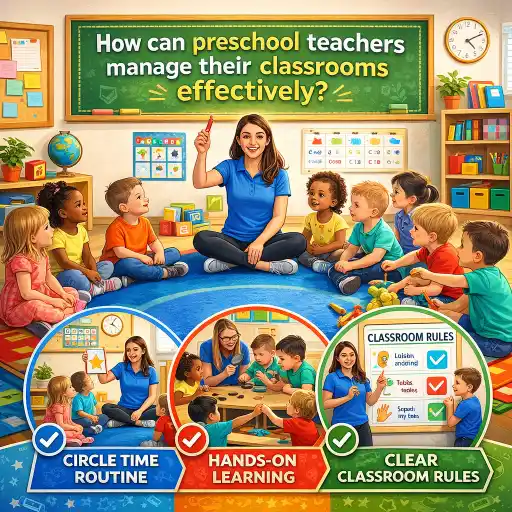
Clear routines help kids know what to do. Try these easy steps teachers can use right away:
- 😊 Make a simple visual schedule with pictures for each part of the day. Post it low so kids can see it. See examples at ChildCareEd.
- 📋 Teach 3 or fewer simple rules, like “Use kind words” or “Walk inside.” Repeat them every morning.
- 🎵 Use a song, bell, or countdown to signal transitions. Give a 5-minute and 1-minute warning before changes.
- 🏅 Practice routines as a group: line-up, handwashing, clean-up. Role-play these so children can rehearse the steps.
- 🔁 Make responsibilities visible: job charts or helper roles give children pride and calm the room.
Tips for success:
- Use pictures and short words. Preschoolers think in pictures.
- Be consistent. When adults use the same phrases and steps, children learn faster.
- Track small wins. Celebrate helpers and routines that work.
How can classroom layout and learning centers reduce behavior problems?
The room itself helps children make good choices. Organize spaces to lower fights and keep kids engaged. Use these ideas:
- 🧩 Create clear learning centers: reading, blocks, art, sensory, and dramatic play. Label bins with pictures so children know where things go.
- 📐 Arrange furniture for easy supervision. Place active centers away from quiet areas.
- 🔁 Limit how many children use a center at once to avoid crowding. Use a timer, song, or helper chart to rotate groups.
- 🌿 Make a cozy calm corner with soft items, books, and sensory tools for kids to self-regulate. ChildCareEd offers free visuals and printables you can use: ChildCareEd free resources.
- 🔍 Observe and tweak. Watch where conflicts happen and move materials or furniture to prevent problems.
Why this works: Centers let children choose hands-on play. When play fits their energy, they stay focused and behave better. For more on room design see Effective Classroom Management Strategies.
What positive guidance steps should I use when behavior is hard?
Use calm, respectful steps to teach better choices. Follow these steps instead of punishment:
- 🔎 Look for the cause. Ask: what happened right before the behavior? This ABC idea (Antecedent-Behavior-Consequence) helps you see triggers.
- 🗣️ Stay calm and brief. Use a soft voice and short directions so children can hear and follow.
- 🔁 Redirect with a choice: "You can build with the blocks or help me here." Choices help kids feel in control.
- 🛠️ Teach the skill after the moment is calm: practice sharing, asking, or waiting with role-play and praise.
- 📄 Use logical, related consequences: fix the mess or help a friend, not long time-outs or public shame.
Common mistakes to avoid:
- 😵 Expecting fast fixes. Behavior change takes days and weeks, not minutes.
- ⚖️ Being inconsistent. If staff change the rules, children get confused.
- ❌ Shaming in front of others. That harms trust and makes behavior worse.
For step-by-step positive guidance training, ChildCareEd has courses like Staying Positive: Guidance for Preschoolers  Buy Now $24.00 and Classroom Management is Collaboration! Buy Now $16.00.
How do I partner with families and specialists to support behavior?
When home and school use the same steps, children learn faster. Try this plan:
- 📞 Communicate daily with a short positive note and one small concern. Use apps, notes, or quick pick-up chats.
- 🤝 Ask families what works at home. Share one simple strategy to try both places for a week.
- 📝 Collect simple data: when, where, and what happened. This helps spot patterns and decide if more help is needed.
- 👩⚕️ Consult specialists early if behavior is intense or keeps the child from learning. Use mental health consultants, special educators, or local early intervention services.
- 🔁 Make a short plan everyone can use and review progress weekly. Remember: state requirements vary - check your state licensing agency.
Resources to share with families include the CDC classroom tips for ADHD and the Pyramid Model resources at NCPMI. These help families and staff use the same positive steps.
Conclusion
Effective preschool classroom management is about clear routines, helpful spaces, positive guidance, and strong family partnership. Try small changes: pick one routine, one center tweak, and one communication step this week. Track progress, celebrate small wins, and ask for help when needed. For practical courses and printable tools, visit ChildCareEd. You are not alone — these steps can make your classroom calmer and your day easier.
FAQ
- Q: How many rules should I teach? A: 3 or fewer, simple and positive.
- Q: When should I ask for specialist help? A: If behavior is intense, lasts a long time, or keeps the child from learning.
- Q: Do visual schedules really help? A: Yes. They make the day predictable and reduce anxiety (CSEFEL).
- Q: What if families disagree with my steps? A: Listen, show data, and try one small shared strategy each week.
- Lesson Planning for Preschoolers
- CDA Preschool Credential with Portfolio Review
- 45 Hour Preschool Methods and Materials
- From Tantrums to Triumphs: Equipping Preschoolers with Self-Regulation Skills
- CDA Bridge Bundle: Family Child Care without Portfolio Review
- CDA Bridge Bundle: Infant/Toddler without Portfolio Review
- CDA Bridge Bundle: Preschool without Portfolio Review
- Texas Director Credential
- Classroom Management is Collaboration!
- Preschool Curriculum for Educators to Choose
- Preschool Arithmetic Activity
- 10 Ejemplos de Cómo la Cultura Influye en el Desarrollo Infantil
- Proporciones de Cuidado Infantil y Tamaños de Grupo por Edad en Nueva Jersey (Guía Rápida para Centros y Hogares)
- How can preschool teachers use simple classroom management techniques that really work?
- Celebrando la amistad en el cuidado infantil durante el Día de los Mejores Amigos
- Canciones, juegos y preguntas de círculo para niños
- Cómo simplificar la capacitación para sus empleados de daycare
- How can preschool programs teach social-emotional learning effectively?
- How can we reliably avoid bias during observation and assessment?
- How to Manage a Preschool Classroom with Confidence
- Training for Preschool Teachers: What Should You Take After You Meet the Minimum Requirements?
- How Can Teachers Build Emotional Regulation Into Daily Routines?
- How Can Preschool Teachers Recognize and Respond to Sensory Overload in the Classroom?
