America’s 250th is a chance to celebrate with short, meaningful moments that build learning and community. This article helps #NorthDakota child care directors and providers plan low-prep, developmentally appropriate, and respectful activities for infants through preschool. You’ll find easy activity ideas, ways to include local history and Indigenous voices, tips for safe outings, and quick family-sharing plans. Remember: state requirements vary - check your state licensing agency.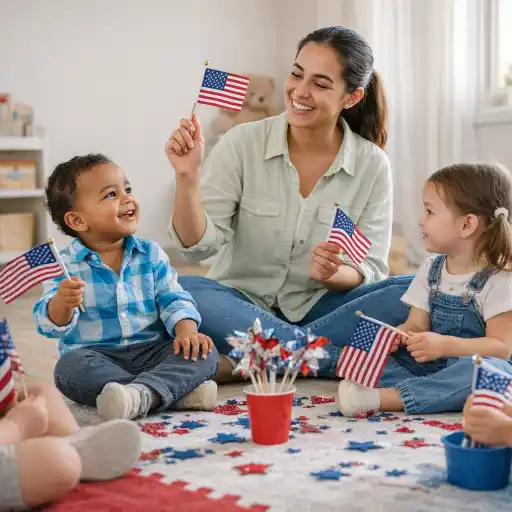
Why does this celebration matter for my classroom?
1) Celebrations are learning moments: simple activities support language, social skills, and early math when they are short and focused. See practical tips in ChildCareEd’s America’s 250th guide.
2) Place-based learning builds belonging: tie a short nature walk or local landmark story to your activity and help children connect to their community. Find North Dakota field trip ideas at ChildCareEd field trip ideas and local events at the State Historical Society of North Dakota.
3) Respect matters: center Indigenous voices and avoid stereotypes; resources about Indigenous early childhood practices can help (see Indigenous Head Start Initiatives). Also include African American history and age-appropriate discussions of emancipation and local Black history—ChildCareEd's Celebrate Juneteenth offers history, significance, and classroom activity ideas.
How can I plan short, age-appropriate activities that are easy to staff?
Use one clear learning goal per activity and rotate stations. Keep each activity 5–20 minutes, depending on age. Here are 7 low-prep ideas you can use tomorrow:
- 🎨 Freedom Collage: Offer red/white/blue paper, loose parts, and glue. Invite one-sentence talk prompts. (See ChildCareEd ideas.)
- ⭐ Star Math & Art: Stamp or sort stars to practice counting and patterns. (Use the simple counting idea at ChildCareEd counting.)
- 🫧 Sensory Celebration Bin: Dye rice or use water play with large scoops and stars. Supervise closely; find sensory tips at ChildCareEd sensory ideas.
- 📚 Story + Props: Read a short book about community or symbols and leave props for dramatic play. Use short, concrete language from Stars & Stripes activities. You can also tie this to national literacy events — for example, plan a short, inclusive reading moment during Read Across America to encourage book-sharing and family reading.
- 🌳 Local Nature Moment: Take a 10–15 minute walk and collect textures/colors tied to local ND places; share a one-line note with families afterward. See field trip suggestions at ChildCareEd and local free sites at TripAdviso in North Dakota.
- 🎈 Quiet Reflection Kits: Create sensory bottles or calm boxes for children who need a quieter choice (ideas at ChildCareEd sensory).
- 📎 Simple Parade Path: A short, calm indoor or outdoor march with scarves—limit to 5–10 minutes and keep ratios. See parade planning notes at ChildCareEd Stars & Stripes.
Tip: number steps for each station and post a photo cue so staff and substitutes can lead easily. For visual inspiration for room setups, activity invitations, and book lists you can adapt for these stations, see ChildCareEd's Pinterest boards (ChildCareEd on Pinterest).
How do I include Indigenous history and local voices respectfully?
1) Use Indigenous-authored books and resources first. Scholastic has printable America 250 and Indigenous resources (America 250, Indigenous Peoples).
2) Favor hands-on, non-sacred activities: nature collages, story stones, and land-based stories are appropriate. The Indigenous Head Start Initiatives write about land-based learning and cultural goals.
3) Invite community members with care: contact tribal educators early, offer an honorarium, co-plan the visit, and respect boundaries. ChildCareEd recommends co-planning and compensation in its guidance (see ND America 250 guide).
4) Avoid common pitfalls: do not use regalia as costumes, do not present sacred songs or ceremonies without permission, and don’t simplify complex histories into stereotypes. Ask a local tribal educator to review your materials when possible. For deeper historical context and reading lists about the nation’s story, see the UW America 250 reading list and museum programs at the State Historical Society of North Dakota.
- 🌍 Diverse perspectives in child care: To help staff approach the 250th celebration with cultural respect and confidence, ChildCareEd's Diverse Perspectives in Child Care
 Buy Now $16.00 is a 2-hour online course covering how to honor cultural differences, avoid stereotypes, and create inclusive environments where every child's background is respected — a direct match for the Indigenous inclusion steps, co-planning guidance, and avoid-sacred-items practices outlined in this guide.
How can I plan safe outings, involve families, and share what children learned?
1) Plan before you go: permissions, health info, emergency contacts, and a simple route plan. ChildCareEd’s field trip guide has handy checklists.
- 🌿 Natural outdoor classroom: For staff planning the local nature walks and place-based activities at the heart of this celebration, ChildCareEd's Creating the Natural Outdoor Classroom Buy Now $16.00 is a 2-hour online course covering how to design safe, engaging outdoor learning experiences that connect children to their local environment — directly supporting the field trip checklists, buddy systems, and nature moment steps described throughout this article.
2) Follow ratios and transportation rules: review your program’s policies and take transportation safety training—ChildCareEd offers courses and resources on transportation and active supervision (transportation safety Buy Now $16.00, active supervision Buy Now $0.00).
3) Involve families simply: send a 1–2 sentence note and a photo (with permission): e.g., “Today we found five red items on our walk!” Short documentation is powerful for families and licensing records.
4) Safety checklist on trips: first-aid kit, meds plan, charged phone, staff roles, and buddy systems. Use the Girl Scout and State Historical Society as community partners for safe event ideas (Girl Scout America 250 guide, ND Historical Society camps).
5) Funding and partners: look for small grants and community partners to support materials or transportation (preschool grants) and connect with UND for student helpers or partnership ideas (UND Early Childhood).
Conclusion: What should I do next?
- Pick one clear goal for each activity (language, fine motor, or social skills).
- Choose 2–3 low-prep stations: a sensory bin, an art invitation, and a short story or walk.
- Center Indigenous voices and local places—invite community partners respectfully and pay them when possible.
- Follow safety, ratios, and licensing rules; remember: state requirements vary - check your state licensing agency.
Common mistakes and fixes:
- ❌ Too many goals at once — ✅ Pick one goal per activity.
- ❌ Using sacred items as costumes — ✅ Use public stories and invite community review.
- ❌ Forgetting documentation — ✅ Send short family notes and keep a simple record for licensing.
FAQ
- Q: How long should activities be? A: Infants: 1–3 minutes repeated; Toddlers: 10–15 minutes; Preschool: 15–25 minutes. See ChildCareEd.
- Q: Can families join a parade? A: Yes—if you keep ratios, get permission, and plan the route. See parade tips at ChildCareEd Stars & Stripes.
- Q: Where can I get free printables? A: Scholastic offers America 250 printables (Scholastic America 250).
- Q: How do I pay for supplies? A: Check small grants for preschools (grant listings) or community donations.
You are the heart of the celebration. Keep activities short, joyful, and respectful. Try one small change this week and build from it—your thoughtful planning helps our #children and #preschoolers enjoy #America250 learning through playful #activities.
- Building Bridges for Dual Language Learners: For Workforce Solutions
- 45 Hour Preschool Methods and Materials
- Family Connections: Creating Inclusive Relationships
- Inclusive Lessons for Preschoolers
- Recognize, Respond, Respect: Supporting Diverse Learners
- Creating Engaging and Meaningful Learning Experiences
- Texas Director Credential
- Montessori Cultural Activities: Exploring the World Through Play and Learning
- Building Bridges for Dual Language Learners
- Professional Integrity in Child Care
- ⏰📘 ¿Cuáles son los requisitos de capacitación anual en el cuidado infantil en Dakota del Norte?
- 👶 ¿Cuáles son las proporciones y grupos requeridos en Dakota del Norte? 🏫
- 10 Ejemplos de Cómo la Cultura Influye en el Desarrollo Infantil
- Proporciones de Cuidado Infantil y Tamaños de Grupo por Edad en Maryland (Guía Rápida para Centros y Hogares)
- Proporciones de Cuidado Infantil y Tamaños de Grupo por Edad en Virginia (Guía Rápida para Centros y Hogares)
- Lista para Abrir una Guardería en Casa en Dakota del Norte: Cómo Empezar
- Lista para Guardería en Casa en Texas: Cómo Iniciar una Guardería en el Hogar
- Cómo Trabajar en el Cuidado Infantil en Carolina del Norte: Requisitos y Pasos
- Cómo Trabajar en el Cuidado Infantil en California: Requisitos y Pasos
- Cómo Trabajar en el Cuidado Infantil en Wisconsin: Requisitos y Pasos
- Cómo Ser Maestra de Preescolar en Dakota del Norte
- Capacitación Previa al Servicio para Proveedores de Cuidado Infantil en Dakota del Norte
- Las Mejores Ideas de Excursiones para Guarderías en Dakota del Norte
- Celebrando la amistad en el cuidado infantil durante el Día de los Mejores Amigos
- Diversión fresca de verano: actividades del Día Nacional del Helado para niños
- How can North Dakota providers celebrate America’s 250th in age-appropriate ways?
- Cómo simplificar la capacitación para sus empleados de daycare
- How can North Dakota child care providers celebrate America’s 250th in simple, respectful ways?
- How can Michigan providers teach community and citizenship with America’s 250th activities?
- How Can North Dakota Child Care Providers Help Families Facing Economic Stress?
