Every greeting, shared laugh, and moment of patient listening can become part of a child’s emotional foundation. Strengthen those everyday connections with Teacher-Child Interactions for Stronger CLASS® Outcomes  Buy Now $24.00, a focused course that offers practical strategies for improving relationships, engagement, guidance, and classroom interactions while supporting professional learning goals.
Why Do Positive Teacher-Child Relationships Matter?
Children learn within relationships. A child who experiences a responsive, respectful adult is more likely to explore, communicate, seek help, and participate in classroom experiences. Research summarized by the Center on the Social and Emotional Foundations for Early Learning connects secure teacher-child relationships with stronger peer interactions, fewer challenging behaviors, and greater competence in school.
Relationship-building is not an additional task reserved for quiet moments; it is embedded in arrival, meals, diapering, transitions, play, and departure. Head Start emphasizes that young children learn best through consistent, live, back-and-forth interactions with trusted adults. These exchanges support language, emotional security, problem-solving, and resilience.
For directors, relationship quality also influences the overall classroom climate. When teachers spend more time connecting and teaching desired behaviors, they often spend less time repeating corrections. A relationship-centered approach can therefore support both children’s well-being and staff effectiveness.
- 😊 Warm interactions help children feel safe enough to explore and take learning risks.
- Responsive conversations strengthen language and shared attention.
- Consistent guidance helps children understand expectations without feeling rejected.
- Respectful relationships create a foundation for family partnerships.
What Teacher Behaviors Build Trust?
Trust develops through repeated, predictable experiences. Teachers do not need elaborate activities to communicate care; small behaviors, practiced consistently, are powerful. CSEFEL recommends one-to-one interactions, face-to-face positioning, calm voices, simple language, warm greetings, attentive listening, and acknowledgment of children’s efforts.
Physical proximity should be thoughtful and responsive. With infants and toddlers, narrating caregiving routines and responding to cues can make care feel predictable and respectful. With preschoolers, teachers can offer a high-five, handshake, lap visit, or hug when welcomed and appropriate. Always consider the child’s preferences, family expectations, cultural context, and program policies.
Specific language communicates genuine attention. Instead of saying only “Good job,” try, “You waited for Maya to finish, and then you asked for a turn.” This identifies the behavior and shows the child that the teacher noticed the effort.
- Greet every child by name and make the greeting personal.
- Move to the child’s level when listening or giving guidance.
- Pause other tasks briefly when a child begins to speak.
- Follow the child’s interests during play and extend the conversation.
- Use a calm tone even when setting limits.
- Notice effort, persistence, kindness, and problem-solving—not only finished products.
How Can Teachers Respond to Challenging Behavior Without Damaging Connection?
Challenging behavior often communicates a need, lagging skill, stressor, or mismatch between the child and the environment. A relationship-based response begins by separating the child from the behavior: “I care about you, and I will not let you hit.” This preserves belonging while establishing safety.
Positive guidance is proactive. Teachers can teach expectations, model social skills, offer choices, adjust overly long group experiences, and provide transition warnings. The NAEYC discussion of Powerful Interactions highlights being present, connecting with children, and extending learning as mutually reinforcing practices.
When behavior escalates, use brief, clear language. First regulate yourself, then acknowledge the child’s emotion, state the limit, and teach the next step: “You are angry because the truck is being used. I will not let you grab. You can ask for a turn or choose the blue truck.” After the child is calm, practice the replacement skill rather than delivering a lengthy lecture.
Teams should examine patterns without labeling children. Ask what happens before the behavior, what the child may be communicating, and what environmental change could support success. For persistent concerns, collaborate with families and appropriate specialists. State requirements vary - check your state licensing agency.
How Should Relationships Reflect Culture, Language, and Individual Differences?
There is no single way to appear respectful, connected, or emotionally expressive. Families may differ in preferred greetings, physical affection, eye contact, communication styles, expectations for independence, and approaches to adult-child interaction. Culturally responsive practice begins with curiosity rather than assumptions.
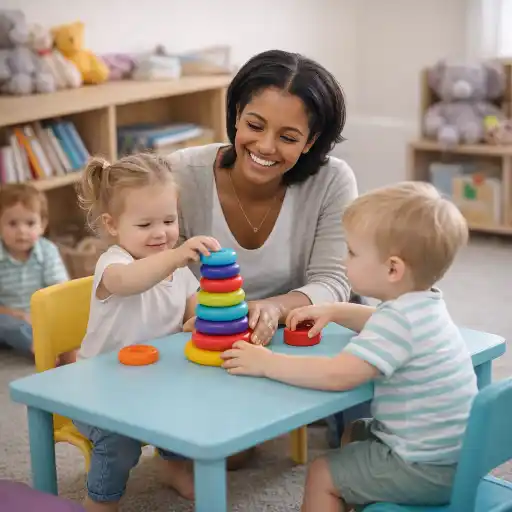
Invite families to share what comforts their child, which names and pronunciations matter, what languages are used at home, and how the child expresses excitement, distress, or connection. Incorporate children’s home languages, family photographs with permission, familiar songs, and materials that reflect children’s lived experiences. Representation should be integrated throughout the environment rather than limited to special events.
Dual language learners may communicate through gestures, home-language words, observation, or a period of reduced verbal English. Responding to these forms of communication demonstrates that the child’s voice matters. Use visuals, gestures, repetition, peer modeling, and descriptive language while continuing to value the home language.
Individualization also includes temperament, disability, sensory needs, trauma history, and developmental differences. Some children seek close interaction; others need space before joining. Watch, ask, and adapt. The goal is not identical treatment but equitable access to connection, participation, and learning.
- Learn and correctly pronounce each child’s name.
- Ask families about comforting routines and communication preferences.
- Offer multiple ways to participate: speaking, pointing, drawing, moving, or using visual supports.
- Review classroom materials for authentic and varied representation.
- Reflect on assumptions that may influence expectations or discipline decisions.
How Can Directors Help Staff Make Relationships Consistent?
Strong relationships are easier to sustain when programs support teachers rather than relying on individual goodwill. Directors can establish shared expectations for greetings, guidance language, family communication, and responsive caregiving. A short staff agreement might include: greet children warmly, use behavior-specific feedback, protect children’s dignity, and seek support before frustration becomes overwhelming.
Coaching should be strengths-based and specific. During observation, identify one effective interaction before discussing a growth area: “You noticed Jordan’s frustration and offered two choices. Next, let’s consider how a visual cue might help during cleanup.” This approach models the same respectful relationship principles expected with children.
Team consistency matters particularly during transitions and challenging moments. Clarify adult roles, use common phrases, share relevant observations, and conduct brief check-ins. Staff need protected planning time, manageable workloads, and opportunities to discuss emotional demands. A regulated adult is better positioned to co-regulate with children.
Programs can monitor progress through simple indicators rather than excessive paperwork:
- Are all children greeted individually?
- Does each child receive frequent positive, specific attention?
- Are expectations taught and modeled before problems occur?
- Do families receive strength-based communication?
- Do teachers report feeling supported when behavior is difficult?
For deeper professional learning, consider Social Foundations and Responsive Classrooms Buy Now $24.00, which addresses supportive relationships, self-regulation, positive guidance, conflict resolution, and responsive classroom practice.
What Common Mistakes Can Programs Avoid?
Even caring educators can fall into patterns that unintentionally weaken connection. One common mistake is giving children attention primarily when they misbehave. This can make challenging behavior more efficient than appropriate communication. Instead, intentionally notice children who are waiting, cooperating, listening, or attempting a new skill.
Another mistake is confusing compliance with relationship quality. A quiet child is not necessarily secure, and an active child is not necessarily defiant. Observe engagement, communication, play, and emotional expression across contexts. Avoid public comparisons, sarcasm, threats, and labels such as “bad” or “difficult.” Address the behavior privately and preserve the child’s dignity.
Inconsistency can also create uncertainty. If one adult allows a strategy and another reacts harshly, children receive conflicting messages. Use team meetings to agree on a few predictable responses and revisit them as children’s needs change.
Finally, avoid treating family involvement as a one-way report. Share positive observations, invite family expertise, and collaborate on goals. If concerns arise, begin with strengths and objective examples rather than judgment.
- Mistake: General praise. Better: Name the specific effort or skill.
- Mistake: Long explanations during escalation. Better: Use short phrases and teach later.
- Mistake: Assuming one cultural norm applies to every family. Better: Ask, listen, and adapt.
- Mistake: Waiting for a crisis to seek help. Better: Use observation, consultation, and team planning early.
Summary: What Is the Central Practice?
Building positive teacher-child relationships means communicating, through countless ordinary interactions, “You are safe, valued, capable, and worthy of my attention.” Teachers create that message by greeting children warmly, listening at eye level, following interests, responding to cues, teaching expectations, and maintaining connection while setting limits.
Directors strengthen this work by offering coaching, consistent team practices, culturally responsive policies, and meaningful support for staff wellness. Relationships grow when adults reflect on their own responses, learn from families, and adapt strategies to each child’s temperament, language, abilities, and experiences.
Begin with one manageable commitment: greet each child by name, schedule brief one-to-one moments, or replace one repeated correction with specific encouragement. Over time, these moments shape a classroom where children can participate, recover from mistakes, build relationships, and learn with confidence.
To continue developing your practice, explore Positive Attention: Infants and Toddlers Buy Now $24.00 for focused strategies with younger children, or review the Head Start resource on responsive interactions. Positive relationships are not a separate curriculum; they are the foundation through which every curriculum becomes meaningful.
- 45 Hour Child Growth and Development
- Language and Literacy Foundations in Pre-K
- The Montessori Assistant's Toolkit
- Family (or Parent) Conferencing: Developing Trust ONLINE
- Connections That Count: Building Relationships in Child Care
- Texas Director Credential
- Every Moment Matters: Schedules and Transitions
- Bridging Cultures: Family Communication & Collaboration
- Supporting Families and Caregivers in Language and Literacy
- Supporting Social Relationships Among Young Children
- 👶 ¿Cuáles son las proporciones y grupos requeridos en Dakota del Norte? 🏫
- Curso de Comunicación de 9 Horas de Maryland
- ¿Qué Calificaciones Necesitas para Trabajar en Cuidado Infantil?
- Proporciones de Cuidado Infantil y Tamaños de Grupo por Edad en Maryland (Guía Rápida para Centros y Hogares)
- Proporciones de Cuidado Infantil y Tamaños de Grupo por Edad en Virginia (Guía Rápida para Centros y Hogares)
- How Teachers Make a Difference in Children’s Lives Every Day
- Talk, Listen, Connect: Build Stronger Child Care Relationships in 9 Hours
- What Makes a Great Home Daycare? 10 Things Parents Notice First
- Child Care Worker Skills and Qualities That Matter Most on a Difficult Day
- Lead Teacher vs. Assistant Teacher: What’s the Difference in a Child Care Classroom?
- Attention Signals: Which Ones Work Best for Toddlers, Preschoolers, and School-Age Kids?
- What Does Compassion Look Like in Child Care? 10 Everyday Moments That Matter
- When a Child Refuses to Follow Directions, What Should Teachers Do?
- How Can New Teachers Build Confidence in the Classroom?
- Why Do Children Behave Differently With Different Teachers?
- How Can Child Care Providers Build Positive Relationships With Difficult-to-Reach Children?
- Why Do Two Teachers Respond Differently to the Same Classroom Choice?
- How Can Child Care Providers Respond When a Child Publicly Names a Favorite Teacher?
