During respiratory illness season, missing tissues or an empty soap dispenser can interrupt the routines your program relies on. Use the Classroom Supply Inventory Resource Guide Buy Now $1.49 to review stock, identify replenishment needs, and assign regular supply checks so staff have essential materials available. For focused professional learning on reducing the spread of illness, explore Prevention and Control of Infectious Diseases. To strengthen everyday hygiene policies and routines, consider How To Keep A Healthy Class: Six Tips for Germ Control Buy Now $35.00. Read on for a practical approach to keeping supplies organized, accessible to staff, and ready for daily use.
Why does supply preparation matter before illness season?
Respiratory illness season puts pressure on child care programs in several ways at once: more children may need tissues and handwashing reminders, staff may need protective equipment for specific care tasks, and cleaning routines may require closer attention. Preparing supplies ahead of time helps educators respond calmly instead of improvising during a busy day.
Supplies alone do not prevent illness. They support a layered approach that includes ventilation, hand hygiene, cleaning and disinfecting when appropriate, vaccination encouragement, and clear illness policies. The CDC notes that early care programs can reduce infection risks by making everyday prevention practices part of the environment and routine.
Thoughtful planning is also a staff-support strategy. When materials are easy to find, clearly labeled, and replenished consistently, educators can spend less time searching and more time supervising and comforting children. This preparation is not about creating a sterile classroom or predicting every shortage. It is about identifying essential items, assigning responsibility, and having a practical backup plan.
Which essential supplies should programs stock?
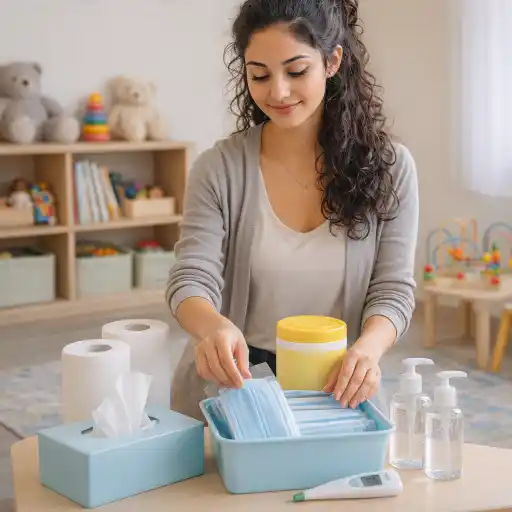
Start with the basics used repeatedly across classrooms. Estimate quantities based on enrollment, age groups, current inventory, and how quickly items are normally used. Separate routine supplies from items used for illness response or body-fluid cleanup.
- Handwashing: liquid soap, paper towels, and child-accessible step stools where needed.
- Respiratory etiquette: tissues and lined, no-touch waste containers placed within reach.
- Personal protective equipment: disposable gloves for tasks where contact with body fluids is possible; other protective items only as program policy and applicable guidance indicate.
- Cleaning: detergent or soap, approved sanitizers and disinfectants appropriate for intended surfaces, cleaning cloths, and labeled measuring tools if dilution is required.
- Health response: a working thermometer and any approved accessories, along with a stocked first-aid kit.
- Organization: clearly labeled storage containers, inventory sheets, and a secure, locked area for chemicals and medicines.
Prioritize age-appropriate, safe placement: supplies children may use independently should be accessible, while chemicals, sanitizer, and equipment that could create hazards must remain secured. Keep each child’s personal belongings separate, including masks or toothbrushes if used by the program.
How should programs select and safely store cleaning products?
Choose products based on the task and surface—not simply on which product seems strongest. Cleaning removes soil and many germs; sanitizing reduces germs on items such as food-contact surfaces or toys children may mouth; disinfecting is used for designated situations, including certain toileting or body-fluid cleanup tasks. Follow the relevant rules and the product label.
Head Start guidance emphasizes that sanitizers and disinfectants should be applied to clean surfaces and used according to label directions. Check the product’s approved use, dilution, required contact time, rinsing instructions, ventilation precautions, and personal protective equipment. Where possible, select a less hazardous effective product and review the safety data sheet.
- Keep products in original containers with labels intact; label any secondary containers as required.
- Store chemicals locked and out of children’s reach, away from food and children’s belongings.
- Never mix cleaning products, and do not use a product outside its label directions.
- Maintain adequate ventilation when using products that may create fumes or vapors.
- 🧼 Place a clearly marked “to be cleaned” bin in each classroom for mouthed or soiled toys.
State requirements vary - check your state licensing agency and local public-health guidance for product, storage, and sanitation procedures.
How can directors build a reliable inventory and restocking routine?
A practical inventory system should be simple enough to maintain during a demanding week. Assign a staff member to check central stock on a regular schedule and ask classroom teams to report low supplies before they run out. Use a short form or shared digital list that records item, location, quantity on hand, minimum stock level, and date restocked.
Store supplies where staff need them, while preserving secure storage for hazardous products. For example, tissues and paper towels can be placed near classroom sinks and learning areas; gloves and cleanup materials should be available to authorized staff; and disinfectants should remain locked away. Avoid moving supplies into children’s reach just to make them convenient.
Plan for interruptions without overbuying. Identify acceptable substitute products in advance, establish who can approve purchases, and keep a small reserve of essential items if storage and budget allow. Review use patterns after the season: Which classrooms depleted supplies fastest? Were items difficult to locate? Did a particular routine use more materials than expected? These observations make next season’s budget and ordering more accurate.
Make the checklist part of opening or weekly procedures rather than relying on memory. Assigning clear ownership prevents the common “someone else will restock it” problem and helps teams notice gaps early.
How do supplies connect to everyday prevention practices?
Having materials available is only useful when they support consistent practice. Build handwashing into predictable moments: arrival, before meals, after toileting or diapering, after outdoor play, and after coughing, sneezing, or nose wiping. The CDC recommends washing with soap and water for at least 20 seconds and drying hands thoroughly. If soap and water are unavailable, hand sanitizer containing at least 60% alcohol may be used according to guidance, with close supervision and safe storage around young children.
Keep tissues visible and model covering coughs and sneezes with a tissue or elbow, followed by hand hygiene. Establish a supervised, comfortable area for a child who becomes ill while waiting for pickup; keep tissues, gloves, and a lined waste container available for staff use. Maintain adult supervision and protect the child’s dignity.
Supplies also support environmental measures. The CDC recommends regularly cleaning frequently touched items and surfaces and disinfecting when someone is sick, as appropriate. Programs can review ventilation and filtration with facilities personnel; supplies do not replace clean air or staying home when ill. Encourage families to monitor children at home and communicate the program’s illness policy clearly. Consider professional development such as [Shoo, Germs! Don’t Bother Me!](https://www.childcareed.com/courses-shoo-germs-don-t-bother-me.html) to deepen staff knowledge of communicable-disease practices.
What common supply-planning mistakes can programs avoid?
Even well-run programs can discover a shortage at the least convenient moment. A brief preseason review helps prevent recurring problems and makes expectations clearer for the whole team.
- Relying on one supply category: Cleaning products do not replace soap, tissues, ventilation, or clear health policies.
- Buying without checking labels: Confirm the product is intended for the surface and task, then follow directions for use and contact time.
- Storing products where they are convenient but unsafe: Keep hazardous materials secured and inaccessible to children.
- Using one inventory for the entire building: Track classroom-level needs as well as central stock so a shortage is visible before supplies are depleted.
- Forgetting replenishment responsibility: Assign a specific role and set a regular check date.
- Overlooking staff communication: Show staff where supplies are, what to use, and how to report low stock or a product concern.
Use a brief preseason walkthrough to inspect handwashing stations, tissue placement, waste containers, cleaning-product storage, and the illness-response area. Then revisit the plan during the season if community illness levels or program needs change.
Conclusion: What is the best way to prepare supplies for respiratory illness season?
Prepare early, focus on essentials, and connect inventory to prevention routines. Stock soap and paper towels, tissues and waste containers, task-appropriate gloves and cleaning products, basic health-response items, and clear labeling and tracking materials. Store hazardous supplies safely, follow product labels and local requirements, and make restocking ownership explicit.
Most importantly, treat supplies as one part of a layered health plan. Clean air, consistent hand hygiene, suitable cleaning practices, family communication, vaccination encouragement, and a compassionate response when someone becomes ill all work together. Start with a simple checklist, involve staff in identifying classroom needs, and adjust the plan based on what you learn throughout the season.
Five practical takeaways:
- Review inventory before seasonal illness activity increases.
- Keep everyday hygiene items accessible and hazardous products secured.
- Use cleaning, sanitizing, and disinfecting products only for appropriate tasks and according to their labels.
- Assign an owner and schedule for inventory checks and restocking.
- Pair supplies with prevention practices and a clear illness-response plan.
For additional professional learning, explore Prevention and Control of Infectious Diseases  Buy Now $16.00, How To Keep A Healthy Class: Six Tips for Germ Control Buy Now $35.00, Shoo, Germs! Don’t Bother Me! Buy Now $24.00, Handling and Storage of Hazardous Materials Buy Now $10.00, and Health and Safety Orientation Buy Now $55.00. Review course details and confirm whether any training meets your particular program or state requirements.
- 45 Hour Child Growth and Development
- Basic Life Support (BLS) Blended Healthcare Providers
- CPR & AED Adult, Child, Infant - Blended
- CPR & AED Adult, Child, Infant - In Person
- 45 Hour School Age Methods and Materials
- Positive Attention: Interactions & Supervision for Infants & Toddlers
- Texas Director Credential
- Ah-Choo!
- CDA Certification en Español: Recursos y Consejos para Educadores Bilingües
- Recursos en Español sobre el Sueño Seguro del Bebé
- Cómo Empezar una Guardería en Casa: Requisitos y Pasos
- Normas de Licenciamiento de Cuidado Infantil en Virginia para Centros Diurnos Infantiles y Hogares Diurnos Familiares
- Proporciones de Cuidado Infantil y Tamaños de Grupo por Edad en Maryland (Guía Rápida para Centros y Hogares)
- Proporciones de Cuidado Infantil y Tamaños de Grupo por Edad en Nueva Jersey (Guía Rápida para Centros y Hogares)
- Proporciones de Cuidado Infantil y Tamaños de Grupo por Edad en Virginia (Guía Rápida para Centros y Hogares)
- How can childcare programs prevent the spread of illness?
- Canciones, juegos y preguntas de círculo para niños
- Cómo simplificar la capacitación para sus empleados de daycare
- How can group child care programs effectively prevent the spread of illness?
- How should I prepare my classroom for cold and flu season beyond cleaning?
- How Can You Prepare Your Classroom for Fall While Prioritizing Safety, Health, and Learning?
- How Can Daycare Programs Prevent the Spread of Common Illnesses?
- What Are the Best Practices for Diapering and Handwashing Procedures in Child Care?
- How Can Classrooms Prevent the Spread of Illness During Cold and Flu Season?
- Can a Child Attend Daycare With a Cough or Runny Nose?
- What Handwashing Rules Should Every Child Care Provider Teach?
- How Can Child Care Programs Make Handwashing Possible During the Busiest Part of the Day?
