A child should not have to attend a family event—or explain why their family could not attend—to know they belong. Child care providers can make classroom connection part of everyday practice, and Family Connections: Creating Inclusive Relationships  Buy Now $55.00 offers focused learning on respectful partnerships, cultural responsiveness, and inclusive environments. For ready-to-use ideas to help children connect with the classroom community, explore the Everyone Belongs Classroom Connection Pack Buy Now $0.00 as you consider what belonging looks like beyond a single celebration.
Why does belonging need to extend beyond the fall celebration?
Fall celebrations can be joyful, but they are only one moment in a child’s experience of care. Families may miss an event because of work schedules, transportation, health, caregiving responsibilities, language access, cost, privacy, or simply a preference not to attend. A child’s absence—or a caregiver’s absence—does not tell us how much that family values the child’s learning. Treating attendance as proof of commitment can create an unfair story about a family and leave a child feeling that connection depends on showing up.
Belonging is built through repeated signals: an educator greets a child warmly, peers make room in play, classroom materials reflect varied lives, and a child’s ideas are taken seriously. Head Start describes belonging as part of children’s identity and early learning; its guidance on sense of identity and belonging emphasizes supportive relationships and experiences. A celebration can strengthen community, but it cannot carry the entire responsibility for inclusion.
For directors and teachers, this shift matters because it places connection within the program’s daily reach. A child can be included without a family contribution, a photograph, a special outfit, or a public explanation. This approach supports #belonging while respecting family choice and the many realities that shape participation.
- Do not interpret low attendance as lack of care or interest.
- Make representation and connection visible in ordinary routines, not only special events.
- Offer genuine choices without asking a child to explain a family’s absence.
How can educators respond when a child misses the event?
Keep the response warm, matter-of-fact, and free of pity. Avoid comments such as “Your family missed all the fun” or “Why didn’t anyone come?” Even when well meant, these remarks can make a child feel responsible for something outside their control. Instead, welcome the child into the next classroom moment: “I’m glad you’re here. We’re looking at the leaves we found outside. Would you like to explore with us?”
If children talk about the celebration, make room for different experiences without ranking them. You might say, “Some people came, some couldn’t, and families make different choices. We’re glad everyone is part of our group.” Keep the conversation focused on shared classroom life rather than on who was present. If a child expresses disappointment, listen and validate: “You wanted someone from home to be here. That can feel hard.” Then offer a choice—look at a class book, join an activity, or take a quiet moment with a trusted adult.
After the event, avoid giving the absent child a conspicuously inferior substitute or making them repeat an activity alone. Share the group’s experience through a brief, accessible update when appropriate, and make clear that no family needs to respond or make up for missing the event. A caring community is sustained by warm relationships and respect, as described in Head Start’s guidance on creating a caring community.
- Use inclusive language that does not single out one child or household.
- Offer a meaningful way to reconnect with the group’s learning, not a “catch-up” penalty.
- Follow the child’s cues; listening or observing can be participation too.
How can classroom practices make every child’s family visible?
Representation does not need to depend on caregivers attending in person. Children can see family life reflected in books, dramatic play, artwork, classroom conversations, greetings, and routines. Review the environment for varied family structures, languages, abilities, and everyday experiences. Choose books that show many kinds of caregivers doing ordinary things—playing, preparing food, solving problems, resting, or caring for one another—rather than presenting diversity only as a special theme.
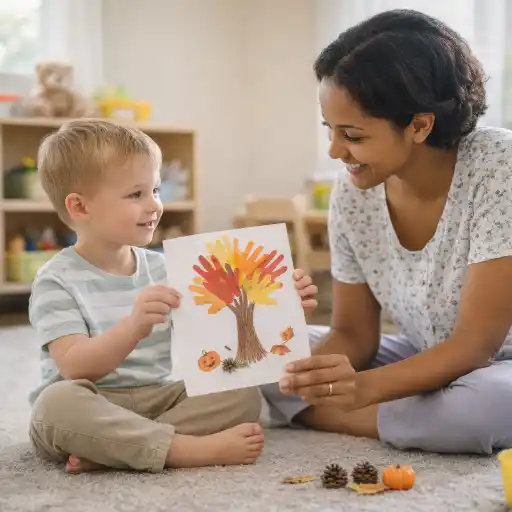
Invite children to represent people who matter to them through drawings, dictated words, block constructions, or pretend play. Keep prompts open: “Who are the people who care about you?” or “What is something you enjoy doing with someone important to you?” A child may share, observe, or pass. Never require family photographs, private details, or a child’s explanation of their household. Ask permission before displaying any family-provided material, and follow program privacy practices.
Everyday play can also create a sense of shared membership. Set out varied dolls, figures, pretend-play props, and books; include home-language words families choose to share; and pronounce each child’s name carefully. These small, steady choices show that family life belongs in the classroom throughout the year—not only at the fall celebration. The Everyone Belongs Classroom Connection Pack can help teachers reflect on participation options and plan practical ways to make children’s perspectives visible.
- Use flexible words such as “family,” “caregiver,” and “grown-up.”
- Include multiple ways for children to communicate: speech, gesture, drawing, home language, or observation.
- Make sure classroom materials reflect identities without asking any child to represent a whole group.
How can families connect without attending or contributing materials?
Think of participation as a menu, not a requirement. Some families may want to attend; others may prefer a short message, a phone conversation, a drawing made with their child, a song suggestion, or no contribution at all. Make every option voluntary and avoid requests that require spending money, taking time off work, preparing food, or sharing private information. Before asking for input, explain why it may help the child and how the information will be used.
Ask open-ended, nonjudgmental questions: “What helps your child feel connected?” “Is there a story, routine, or word you would like us to know?” “What is the easiest way for us to stay in touch?” Offer the family’s preferred communication channel and language when feasible. If language support is needed, use qualified interpretation where available rather than asking a child to translate sensitive information. Keep relevant preferences confidential and revisit them as circumstances change.
Communication after an event can be brief and specific. A photo or short note about what children explored may invite a caregiver into the learning story, but only follow program consent and privacy procedures. Share what children learned rather than implying that a family needs to recreate the experience at home. Strong partnership comes from ongoing two-way communication—not from measuring how many adults appear at a school gathering.
- Offer choices such as attending, sending a note, sharing an idea, or simply receiving an update.
- Ask before displaying or circulating photos, recordings, or family stories.
- Close the loop by letting families know how their input shaped classroom plans.
What common pitfalls can weaken a child’s sense of inclusion?
A common mistake is assuming that a missed event means a family is uninterested. Attendance is influenced by access and circumstances; it is not a reliable measure of care. Replace “Why didn’t you come?” with “What is the easiest way for us to stay connected?” This invites collaboration rather than requiring a defense. If a family does not reply, keep communication welcoming and predictable without increasing pressure.
Another pitfall is putting a child in the spotlight by asking them to report on their family, explain an absence, or speak for a culture or tradition. Avoid public comparisons such as “Everyone else had someone there.” Do not use family participation as a reward, or make access to an activity depend on bringing supplies. Nor should the program assume that a seasonal event is meaningful or comfortable for every family. Keep alternatives engaging and available to all children, not just those whose caregivers are absent.
Directors can help staff avoid these patterns through shared expectations for invitations, communication, consent, and follow-up. Reflect as a team: Who is represented in our materials? Are families offered more than one way to connect? Do our words imply that attendance is expected? State requirements vary - check your state licensing agency, particularly for consent, photographs, confidentiality, event supervision, and family communication records.
- Do not treat silence as permission or as evidence of disinterest.
- Do not make a child responsible for explaining an adult’s decision or circumstances.
- 🍂 Keep the celebration optional, and make everyday belonging a program-wide commitment.
How can programs sustain belonging after the celebration?
Turn the event into one point in a year-round cycle: listen to families, plan with flexibility, observe children’s experiences, and adjust. Staff can briefly document what supported connection: Did children have choices? Could a child join without speaking or bringing something from home? Did any activity unintentionally center one tradition or family structure? Use observations to improve the next experience rather than to judge an individual child’s response.
Directors can build consistency by including inclusive event planning and family communication in staff discussions and orientation. Establish clear practices for optional participation, private family preferences, photo permissions, and equivalent classroom alternatives. Ask caregivers for feedback in short, accessible ways and report back when a suggestion leads to a change. Professional learning such as Family Voices Matter: Tools for Meaningful Collaboration Buy Now $55.00, Bridging Cultures: Family Communication & Collaboration Buy Now $55.00$42.00, Connections That Count: Building Relationships in Child Care Buy Now $55.00, and Diversity, Equity, and Inclusion in Education Buy Now $16.00 can further develop relevant professional knowledge.
Conclusion: How can a program create belonging when a child misses the fall celebration? By making welcome, representation, choice, and family partnership part of ordinary classroom life. A child’s membership is never contingent on attendance, a caregiver’s availability, or a contribution from home. When educators honor family circumstances and create multiple ways to connect, every child can experience the message: “You are part of this community.”
- CDA Certification en Español: Recursos y Consejos para Educadores Bilingües
- Recursos en Español sobre el Sueño Seguro del Bebé
- Cómo ser director de cuidado infantil en Maryland
- 10 Ejemplos de Cómo la Cultura Influye en el Desarrollo Infantil
- Cómo Empezar una Guardería en Casa: Requisitos y Pasos
- ¿Cómo solicito la licencia para una guardería en California?
- Normas de Licenciamiento de Cuidado Infantil en Virginia para Centros Diurnos Infantiles y Hogares Diurnos Familiares
- Proporciones de Cuidado Infantil y Tamaños de Grupo por Edad en Maryland (Guía Rápida para Centros y Hogares)
- Proporciones de Cuidado Infantil y Tamaños de Grupo por Edad en Nueva Jersey (Guía Rápida para Centros y Hogares)
- Proporciones de Cuidado Infantil y Tamaños de Grupo por Edad en Virginia (Guía Rápida para Centros y Hogares)
- Lista para Abrir una Guardería en Casa en Dakota del Norte: Cómo Empezar
- Retraso del Habla en la Guardería: Cómo Pueden Ayudar los Proveedores
- Las Mejores Ideas de Excursiones para Guarderías en Texas
- Canciones, juegos y preguntas de círculo para niños
- Cómo simplificar la capacitación para sus empleados de daycare
- How Can Child Care Providers Make Fall Activities Inclusive for Every Child?
- How Can You Create a Fall Story Basket That Reflects Every Family in Your Classroom?
- How Can You Invite Families to Share Fall Traditions Without Making Anyone a Spokesperson?
- How Can You Plan Fall Celebrations Every Child Can Follow, Including Children With Different Hearing Needs?
- How Can Child Care Programs Create Belonging When a Child Misses the Fall Celebration?
