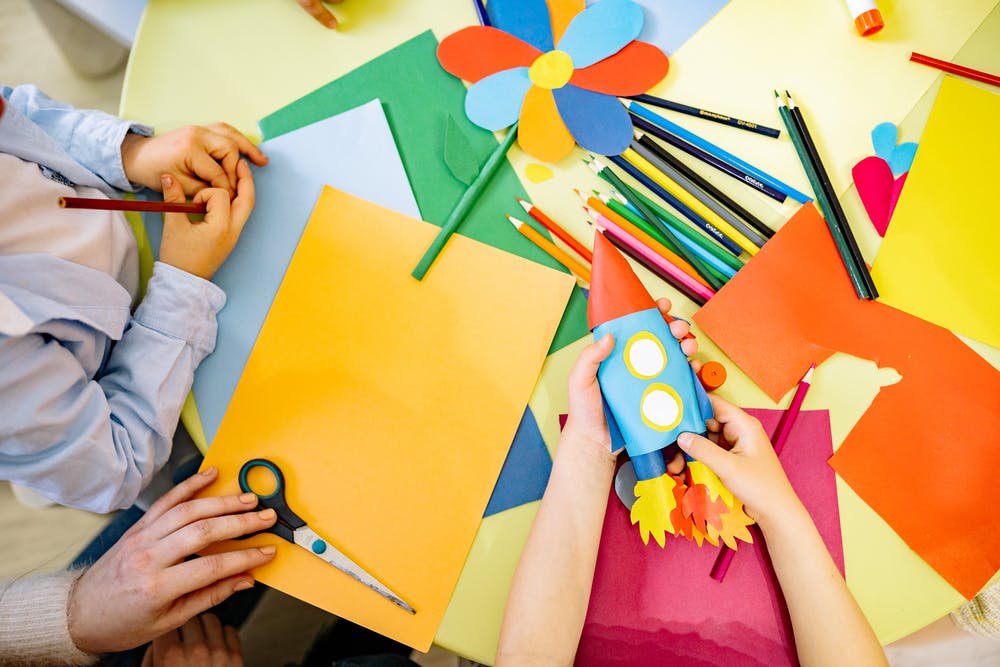
 The early years are a critical time for fostering creativity in children. As a child care provider, you play a vital role in nurturing this essential skill. But with busy schedules and packed #classrooms, it can be challenging to come up with fresh, engaging activities that spark a child's imagination.
This is where ChildCareEd training courses can be your secret weapon! Our extensive library of courses provides you with the tools and strategies to create a stimulating environment that ignites children's natural curiosity and love for learning. Start with practical, hands-on options such as Art from the Heart for Preschoolers Buy Now $35.00 and The Best Promotion is Play  Buy Now $24.00, which model open-ended art and playful learning approaches you can implement the next day.
Here are some key benefits of ChildCareEd courses for fostering creativity in young children:
- Creative Curriculum Development: Our courses delve into the power of open-ended play and project-based learning. You'll learn how to design activities that encourage exploration, experimentation, and problem-solving, all while fostering a love for learning.
- Art and Music Integration: Discover the magic of integrating art and music into your curriculum. ChildCareEd courses provide practical strategies for using music and art materials to spark children's creativity and self-expression.
- Understanding Different Learning Styles: Every child learns differently. Our courses equip you with the knowledge to cater to diverse learning styles, ensuring every child has the opportunity to thrive creatively.
- The Power of Storytelling: Uncover the power of storytelling as a tool for igniting young imaginations. Learn how to use storytelling to spark curiosity, build vocabulary, and encourage creative thinking.
- Creating a Sensory-Rich Environment: Children learn best through exploration and #sensory-play. ChildCareEd courses offer guidance on creating a stimulating environment filled with materials that encourage children to touch, see, hear, smell, and taste, fostering their creativity.
How do ChildCareEd courses help providers design a creative curriculum?
ChildCareEd courses focus on pedagogies and practical techniques that make creativity reliable rather than accidental. Courses emphasize open-ended materials, process art, purposeful music integration, and project-based sequences so teachers can plan provocations that invite exploration, iteration, and reflection. These courses also provide classroom-ready lesson sequences and documentation templates so creative work becomes part of assessment and learning plans rather than one-off activities. For example, training that models process art and adult prompts will show how to set up materials, pose an invitation, and capture children's thinking in photographs or learning stories.
Research and practice agree that sustained blocks of play and opportunities to revisit materials support creative problem solving and emotional expression; see guidance on the role of creative play from PBS for early-care providers: The Whole Child – Creativity and Play (PBS). Embedding those principles into daily routines helps creativity become part of standards-aligned learning rather than an optional add-on.
What classroom activities reliably spark imaginative play?
- Open-ended art centers: Provide diverse materials (papers, loose parts, recycled items) without step-by-step instructions so children make choices and experiment. (See practical ideas in Tiny Hands, Big Dreams: Fostering Creativity in Preschoolers.)
- Provocation tables: Offer a theme with ambiguous materials (e.g., boxes, fabrics, small figures) to prompt narrative play that grows over days.
- Song and movement invitations: Use simple music to suggest scenarios and let children extend rhythms into storytelling (connects to music-integration strategies from ChildCareEd courses).
- Loose-parts construction: Provide loose parts outdoors or indoors for building and iterative problem solving (related strategies in STEAM Learning in the Early Childhood Education Classroom).
- Process drama and storytelling: Turn a story page into an acting invitation and let children add props, dialogue, and endings—this extends language and creative thinking (see Hungry for Play: The Power of Play-Based Learning).
Each activity can be taught as a routine so it scales across a classroom. ChildCareEd's arts-focused trainings model routines for transitions, documentation, and family-sharing so teachers can show parents children's creative progress with concrete examples.
How can providers assess and document creative development?
Assessment of creativity should be descriptive and developmental rather than scores-based. Use observation notes, learning stories, child-made portfolios, and photo narratives to document process: what choices the child made, how they solved problems, and how play ideas evolved. Link these observations to learning objectives (language, fine motor, social-emotional) so creativity is visible in program assessment. ChildCareEd guidance and printable templates (see the Creative Arts training description on ChildCareEd) help teachers convert snapshots of play into documented learning artefacts suitable for family conferences and professional portfolios.
These three question-form sections add actionable guidance, introduce classroom examples, and link readers to practical ChildCareEd training and relevant site articles while also providing a verified external reference to support the claims about play and creativity.
Continued professional #development training offers a treasure trove of benefits for both child care providers and the children they nurture. Here's a breakdown of the key advantages:
- Enhanced Skills and Knowledge: Training keeps child care providers up-to-date on the latest research and best practices in #early-childhood development. This includes advancements in areas like child psychology, effective teaching methods, and age-appropriate activities. With this renewed knowledge, providers can create a more stimulating and nurturing environment for the children in their care.
- Improved Classroom Quality: By honing their skills and incorporating new strategies, child care providers can significantly enhance the quality of their classrooms. This translates to a more engaging and effective learning experience for the children. From better classroom management techniques to fostering positive social-emotional development, the impact of ongoing training is undeniable.
- Increased Confidence: Continued professional development equips child care providers with the tools and knowledge they need to feel confident in their abilities. This newfound confidence shines through in their interactions with children, creating a more positive and secure learning atmosphere.
- Boosted Career Prospects: Many childcare facilities prioritize ongoing professional development for their #staff. By actively seeking out training opportunities, providers demonstrate their commitment to continuous improvement and become more attractive candidates for #career advancement.
- Meeting Licensing Requirements: In many regions, child care providers are required to complete a certain number of training hours each year to maintain their licenses. Continued professional development ensures they meet these requirements and remain compliant with regulations.
- Reduced Stress and Burnout: Feeling overwhelmed? Training can actually help! By providing new tools and strategies for managing challenging situations, it can help child care providers reduce #stress and prevent #burnout.
- Improved Communication with Parents: Effective communication between caregivers and #parents is vital. Training can equip providers with better communication skills, allowing them to effectively share children's progress and build stronger relationships with families.
Overall, continued professional development training is an investment in the future of early childhood education. It empowers child care providers to become even more effective #educators, fostering a positive and enriching learning environment for the young minds they nurture.
Summary: How can I put creativity into practice?
Put simply: plan for creative time, provide open-ended materials, document process, and share outcomes with families. Professional development makes those steps practical. If you want a focused module on art strategies that build self-esteem and support behavior, consider Power of Art: Bldg Self-Esteem & Positive Behavior for ALL Abilities Buy Now $35.00. Pair training with daily classroom routines (provocations, process art, sustained play blocks) and simple documentation so creativity is both visible and supported by developmental goals.
By investing in your professional development with ChildCareEd, you're investing in the future of the children you care for. Empower yourself to become a facilitator of creativity and watch your young learners blossom!
- 45 Hour Child Growth and Development
- Balancing Physically Active Play in Child Care
- CDA Bridge Bundle: Family Child Care without Portfolio Review
- 45-Hour Infant and Toddler Curriculum
- CDA Home Visitor Credential Birth to 5
- Texas Director Credential
- Balancing Active Play in Child Care
- 45 hour Growth and Development Birth-age 12 ONLINE
- Montessori Cultural Activities: Exploring the World Through Play and Learning
- Healthy Cooking for Picky Kids
- Cultivating Literacy, Language, and Cultural Awareness: The Hanukkah Minibook in Early Childhood Education
- Celebrating International Women's Day
- Specialized Child Care for Special Needs
- Invest in Your Skills, Invest in Children: ChildCareEd Training for Michigan Providers
- Supporting Social Relationships Among Young Children
- Slaying Metaphorical Dragons of Fear and Self-Doubt in Childcare Educators
- Save Lives With Skill: CPR Training
- Tiny Hands, Big Dreams: Fostering Creativity in Preschoolers
- How Neurodivergent Kids Shine During the Holidays
- DIY Snow Globes: The Fine Motor Craft That’ll Keep Kids (and Adults) Busy for Hours
- CDA Certification en Español: Recursos y Consejos para Educadores Bilingües
- Regulaciones de Licenciamiento de Cuidado Infantil en California para Centros y Hogares de Cuidado Infantil Familiar
