Latest Blog & News

Emergency and Disaster Preparedness Training Online: What Will You Learn?
08/11/2026When an emergency interrupts the routines of a child care program, prepared adults can turn uncertainty into coordinated action. Online training helps providers strengthen safety practices, earn relevant professional development hours, and build a response plan that reflects the children, families, ... Emergency and Disaster Preparedness Training Online: What Will You Learn?

Supporting Children's Self-Esteem
02/20/2023Creating art can give children opportunities to exercise creativity and experience pride in their decisions and effort. Educators can support self-expression by offering varied materials and allowing children to determine how to use them. Because children differ in how readily they communicate verba... Supporting Children's Self-Esteem

How Can Teachers Support Children Who Struggle With Changes Between Activities?
10/12/2026When a child cries, lingers, or refuses to move on, the transition may feel confusing or too abrupt—not simply like “misbehavior.” A predictable, responsive routine can make the next step easier for children and reduce stress for the whole classroom; ChildCareEd’s Self-Regula... How Can Teachers Support Children Who Struggle With Changes Between Activities?
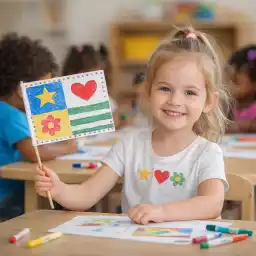
How Can Flag Design Help Children Explore Symbols, Patterns, and Individual Expression?
09/23/2026A blank flag can become a child’s map of ideas, relationships, and identity. By inviting children to design rather than copy, providers can build language, pattern awareness, fine-motor coordination, and confidence; Art from the Heart for Preschoolers: Open Ended Art Projects that Build Self-E... How Can Flag Design Help Children Explore Symbols, Patterns, and Individual Expression?
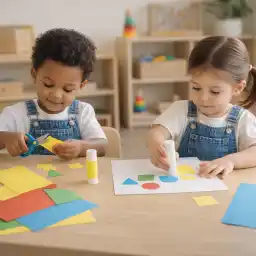
How Do Cut-and-Paste Activities Build Fine-Motor Control and Planning?
09/23/2026Cut-and-paste activities turn simple paper pieces into meaningful practice for hand strength, coordination, decision-making, and follow-through. The Art from the Heart for Preschoolers: Open Ended Art Projects that Build Self-Esteem course can help you extend this work beyond a finished craft by str... How Do Cut-and-Paste Activities Build Fine-Motor Control and Planning?
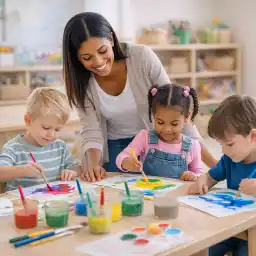
How Can Early Childhood Programs Support Creativity Through Process Art?
07/28/2026Looking for a practical way to strengthen children’s decision-making, resilience, and creative thinking in your classroom? Process art — open-ended, choice-driven making — gives children time and materials to experiment, solve problems, and express ideas; to go deeper, consider Chi... How Can Early Childhood Programs Support Creativity Through Process Art?
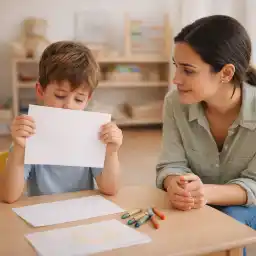
How Can Educators Respond When a Child Says Their Drawing Is “Nothing”?
09/30/2026A child’s “It’s nothing” can sound like a dead end, but it may be an invitation to slow down, listen, and make room for the child’s own meaning. Explore supportive ways to respond, and consider Creating Engaging and Meaningful Learning Experiences for deeper training in... How Can Educators Respond When a Child Says Their Drawing Is “Nothing”?
What Should Educators Do When a Child Copies Another Child’s Challenging Behavior?
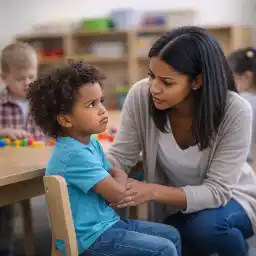
10/12/2026When one child’s hitting, yelling, or refusal suddenly becomes a group pattern, educators need to protect safety without turning the behavior into a performance. The ABCs of Behavior: Turning Challenges into Learning Opportunities course offers practical ways to examine what happens befor... What Should Educators Do When a Child Copies Another Child’s Challenging Behavior?

The Power of Play
06/21/2024In early childhood education, play-based learning is a powerful approach to fostering children's development. This method recognizes that young children are natural explorers, driven by curiosity and imagination. By harnessing the power of play, educators can create rich learning environments ... The Power of Play
How Can Preschool Teachers Build Confidence in Children Who Are Afraid to Make Mistakes?
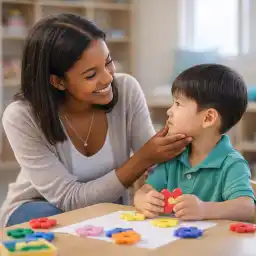
10/12/2026When a child whispers “I can’t” before trying, fear of getting it wrong may be blocking curiosity and participation. Preschool teachers can help by making errors emotionally safe, offering attainable challenges, and showing children what to do next; Opportunity for Growth: Emotiona... How Can Preschool Teachers Build Confidence in Children Who Are Afraid to Make Mistakes?
