Latest Blog & News

How Can Child Care Providers Support Children Who Dislike Applause or Public Recognition?
09/30/2026When a child shrinks from applause or avoids being singled out, the most supportive response is not to insist they enjoy the spotlight—it is to learn what helps them feel seen and safe. Explore practical, respectful ways to recognize children’s efforts, and deepen your relationship-cente... How Can Child Care Providers Support Children Who Dislike Applause or Public Recognition?

How Can You Respond When a Child Changes Their Mind After You Prepare an Activity?
09/30/2026A child’s last-minute change of heart can leave you with a carefully prepared activity and a real-time question: how do you stay responsive without losing the structure of the day? Explore The ABCs of Behavior: Turning Challenges into Learning Opportunities to strengthen your understanding of ... How Can You Respond When a Child Changes Their Mind After You Prepare an Activity?

How Can Child Care Providers Respond When a Child Publicly Names a Favorite Teacher?
09/30/2026A child’s public declaration—“You’re my favorite teacher!”—can feel affirming, awkward, or even painful for colleagues nearby. Responding with warmth while protecting every child’s sense of belonging takes practice; Connections That Count: Building Relations... How Can Child Care Providers Respond When a Child Publicly Names a Favorite Teacher?

How Can You Fix a Supply Shelf That Creates a Classroom Traffic Jam?
09/30/2026A supply shelf that draws a crowd can turn an inviting activity into a daily bottleneck, leaving children waiting and educators pulled away from supervision. With a simple traffic audit, you can identify where movement gets stuck and make practical adjustments that support independence and smoother ... How Can You Fix a Supply Shelf That Creates a Classroom Traffic Jam?

How Can a Classroom Sound Map Reveal Unexpected Noise Hotspots?
09/30/2026A classroom can feel generally busy while one overlooked corner quietly disrupts listening, rest, or conversation. A simple sound map helps child care teams pinpoint where noise begins, when it peaks, and which practical changes may help; for a deeper look at designing supportive spaces, explore Cre... How Can a Classroom Sound Map Reveal Unexpected Noise Hotspots?

How Can Adult Standing Positions Accidentally Block Children’s Play?
09/30/2026Have you ever noticed a group’s play stall when an adult steps into the middle of the action? Small adjustments to where we stand can protect children’s space to explore while keeping supervision strong. The Creating Environments that Nurture Growth and Community course offers practical ... How Can Adult Standing Positions Accidentally Block Children’s Play?
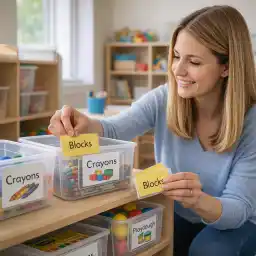
How Can Classroom Labels Stay Useful When Materials Move Between Centers?
09/30/2026When materials travel between centers, labels can quickly stop matching the classroom children see—making cleanup confusing and independence harder to practice. A flexible system of portable labels and location cards can keep cues accurate as materials move; for deeper guidance on inclusive cl... How Can Classroom Labels Stay Useful When Materials Move Between Centers?

When Children Can Reach Materials but Cannot Carry Them Safely, What Should Providers Do?
09/30/2026When a child can reach a classroom material but struggles to lift or carry it, the issue may be more than an individual skill—it may be a cue to adjust the environment. Explore practical ways to improve safe access, support children’s independence, and reduce preventable strain with the ... When Children Can Reach Materials but Cannot Carry Them Safely, What Should Providers Do?
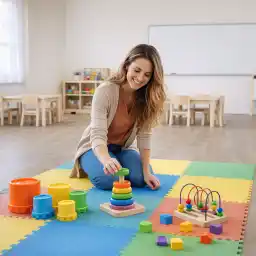
Does an Empty Classroom Space Need to Stay Empty?
09/30/2026An unused corner can be a missed opportunity—or a valuable breathing space that helps children move, focus, and feel at ease. Learn how to observe before filling it, then use evidence to decide whether the area needs a new purpose; [Creating Environments that Nurture Growth and Community](http... Does an Empty Classroom Space Need to Stay Empty?

How Can You Clean Up Mixed-Material Play Without Dismantling Children’s Ideas?
09/30/2026When blocks, fabric, natural objects, and pretend-play props spill across a center, the mess may be evidence of a meaningful idea taking shape—not a reason to end it abruptly. Build a cleanup routine that protects children’s thinking while keeping the day manageable, and explore Every Mo... How Can You Clean Up Mixed-Material Play Without Dismantling Children’s Ideas?
