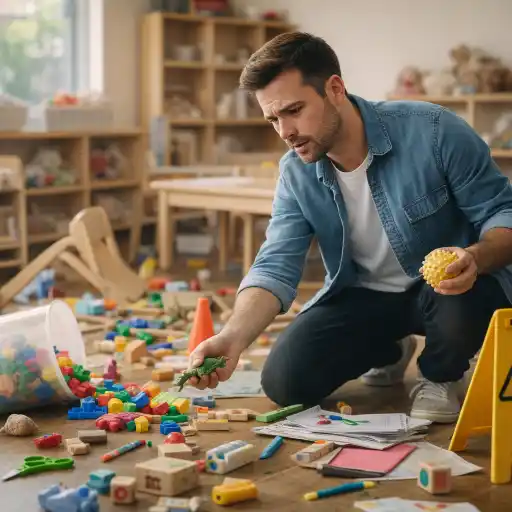
When toys, supplies, or cords spill into walkways, everyday classroom clutter can quickly become a preventable safety hazard. A brief reset routine can help protect children, support smoother transitions, and make the room easier to supervise; for deeper guidance on identifying and addressing hazards, explore ChildCareEd’s Creating Safe & Healthy Child Care Environments  Buy Now $55.00 course. You can also use the practical 5-Minute Classroom Reset Checklist Buy Now $0.49 as a daily prompt while you read on.
Why can ordinary classroom clutter create a safety risk?
Young children move quickly, change direction without warning, and often carry objects while playing. A block left in a pathway, a loose cord near a table, or a bin placed beside an exit can increase the chance of a trip, collision, or delayed evacuation. Clutter can also make it harder for adults to scan the room, reach children promptly, or notice a hazard before someone encounters it.
Not every busy-looking room is unsafe. The key question is whether materials interfere with safe movement, supervision, access, or the appropriate use of classroom areas. A lively play space can remain inviting when its pathways are open, materials have clear homes, and adults can see and reach children.
Federal Head Start safety standards call for facilities and materials to be free of accessible hazards and designed to support appropriate supervision. These principles underscore that safety is an ongoing responsibility, not simply an end-of-day cleaning task. A clear route to an exit and an unobstructed view across the room matter even during active play.
- Floor-level hazards include blocks, puzzle pieces, spilled water, curled rugs, and dropped art materials.
- Overfilled shelves may tip, hide damaged items, or make materials difficult for children to return safely.
- Visual and spatial congestion can narrow sight lines and make busy areas harder to supervise.
Approach clutter as a feature of the environment to improve—not a reason to blame children or staff. Thoughtful #safety routines help everyone respond consistently.
Which kinds of clutter should providers look for?
A useful safety scan looks beyond a messy floor. Clutter can involve objects, storage, furniture, cords, or the way activities overlap. Walk through the room at children’s eye level and consider how a child might move from one play area to another while holding a toy or following a friend.
- Trip and slip hazards: Toys, bags, loose paper, spills, unsecured rugs, and materials left in pathways can cause falls. Clear spills promptly and follow program procedures for marking a wet area until it is safe to walk on.
- Blocked access: Furniture, stacked supplies, or dramatic-play props should not block exits, emergency equipment, doors, or routes staff need to move quickly.
- Unstable or overloaded storage: Bins piled high and crowded shelves can make items fall or encourage unsafe reaching. Keep heavy materials low and furniture stable.
- Entanglement and electrical concerns: Loose cords, strings, and charging cables may pose hazards, particularly near children’s play and sleep spaces.
- Material and age-fit concerns: Mixed or scattered materials can place small pieces within reach of younger children or obscure broken toys that should be removed.
Notice where clutter repeatedly accumulates: near the art table, block area, cubbies, or doorway. That pattern may show that the storage location, number of available materials, or traffic flow needs adjustment. Consider using a brief daily cleaning checklist Buy Now $0.00 alongside a safety walk to keep responsibilities visible.
Prioritize the hazards that could cause immediate injury or interfere with supervision and evacuation. Then address the underlying setup so the same hazard is less likely to return.
How can a five-minute reset reduce hazards without disrupting play?
A short reset works best when it is predictable, focused, and shared by adults and children in developmentally appropriate ways. It is not a substitute for continuous supervision or required cleaning; it is a quick opportunity to restore safe pathways and return materials to their designated places.
Use the 5-Minute Classroom Reset Checklist Buy Now $0.49 to support a consistent routine. The checklist prompts staff to organize materials, straighten tables and chairs, sweep debris, and complete a safety walk that includes checking exits, trip hazards, cords, broken toys, locked cabinets, cleaning supplies, and room temperature.
- Stay with and supervise children. If attention must shift to a hazard, arrange coverage according to your program’s supervision procedures.
- Clear the most important routes first: exits, doorways, and paths between activity areas.
- Return loose toys and supplies to their labeled containers; remove broken or unsafe items from children’s access.
- Check tables and chairs for safe placement, wipe surfaces as required, and address spills using program procedures.
- Scan the room at child height, then look across the space from an adult’s supervision position.
- 🧺 Give children simple jobs—such as returning blocks to a picture-labeled basket—while adults handle chemicals, broken items, and other hazards.
Choose a regular time, such as between activities or at closing, and teach the routine before expecting children to manage it independently. A reliable reset can reinforce #organization while preserving time for meaningful play and interaction.
How should classroom layout and routines prevent clutter from returning?
The most sustainable solution is a room that makes safe organization easy. Place materials near the activity where they are used, keep pathways open, and make age-appropriate supplies accessible without creating overloaded shelves. Clear zones help children understand where play happens and where items belong. Picture labels can support children who are not yet reading and make it easier for the whole team to follow the same system. For a broader framework connecting room setup, health, and children's development, see this guide to planning a safe and healthy learning environment.
Review the classroom through the lens of traffic flow and supervision. Can children move between centers without squeezing past furniture? Can adults see children across the room? Are high-use items stored where children can reach them safely, and are restricted or hazardous materials secured? Keep emergency exits and access to safety equipment clear at all times.
Pair the layout with routines children can learn: give a transition cue, name a specific cleanup task, and model how to return materials. Avoid turning cleanup into a race; rushing may create new collisions and spills. If clutter returns to the same spot, reduce the number of materials available, adjust the storage location, or reconsider how many children use that area at once.
Invite staff to identify recurring trouble spots during brief huddles. Directors can support consistency with a shared checklist and routine review. State requirements vary - check your state licensing agency before making changes to exits, room arrangements, equipment, or required safety procedures.
When the environment offers children clear cues and manageable choices, #children can build independence without being left to manage hazards on their own.
What common mistakes can make a clutter problem worse?
Cleaning up quickly is useful, but an inconsistent or poorly planned response can leave risks in place. One common mistake is focusing on appearance rather than hazard reduction. A neat shelf does not compensate for a blocked exit, an unstable cabinet, or a cord crossing a walking path. Address the highest-risk concerns first.
- Expecting children to handle every task: Children can help with safe, simple jobs, but adults should manage cleaning chemicals, broken materials, sharp objects, and contaminated waste.
- Moving furniture without checking visibility: A new arrangement may clear one pathway while creating a blind spot. Confirm that adults can maintain appropriate supervision.
- Using vague or rushed cleanup directions: “Pick everything up” can overwhelm children. Give one clear task at a time and allow enough time to move safely.
- Returning damaged items to the shelf: Set broken toys or furniture aside so they cannot be used until repaired or discarded according to program procedures.
- Relying on a checklist instead of active supervision: A list supports consistency, but adults still need to watch, listen, and respond to children throughout the day.
Use observation rather than blame when a hazard keeps returning. If blocks repeatedly cover a walkway, consider whether the block area is too small, the storage bin is too far away, or the transition needs clearer cues. Small changes to the environment can prevent repeated reminders and support children’s participation.
Review applicable rules with your director and staff. Federal Head Start safety guidance emphasizes hazard-free environments, supervision, and systems for ongoing correction and improvement. Each program should also follow its own policies and local requirements.
Conclusion: How can you keep classroom clutter from becoming a safety issue?
Classroom clutter becomes a safety concern when it obstructs movement, hides hazards, limits supervision, or blocks access to exits and equipment. Providers can reduce risk by recognizing patterns, maintaining clear pathways, storing materials intentionally, and teaching short, consistent reset routines.
- Scan floors, cords, shelves, furniture, and exits for immediate hazards.
- Use a brief, repeatable reset supported by the 5-Minute Classroom Reset Checklist Buy Now $0.49.
- Make safe storage and clear pathways part of classroom design, not just end-of-day cleanup.
- Keep active supervision in place and follow program procedures and local licensing requirements.
Start with one recurring trouble spot and make one practical adjustment this week. To build broader knowledge about identifying hazards, supervision, and environmental safety, consider the relevant ChildCareEd courses below. Check course details and your state’s training requirements before enrolling.
- 45 Hour Child Growth and Development
- Moving About the Classroom: Effective Transitions for Everyday
- CDA Home Visitor Subject Area 3 Part 3 Birth to 5
- Teacher-Child Interactions for Stronger CLASS® Outcomes
- Pediatric RSV First Aid & CPR/AED
- Preventative Health and Safety
- Everyday Safety: Creating Healthy Environments
- Family Child Care: Building, Premises, and Outdoor Safety
- Moving About the Classroom: Effective Transitions for Everyday
- Communicating with Parents by Writing the Perfect Newsletter
- Cómo Abrir Una Quardería En Casa Sin Dinero?
- Recursos en Español sobre el Sueño Seguro del Bebé
- Normas de Licenciamiento de Cuidado Infantil en Virginia para Centros Diurnos Infantiles y Hogares Diurnos Familiares
- Lista para Guardería en Casa en Texas: Cómo Iniciar una Guardería en el Hogar
- Retraso del Habla en la Guardería: Cómo Pueden Ayudar los Proveedores
- What Happens After You Complete Georgia’s 40-Hour Director Training?
- How Can Child Care Directors Use Glow and Grow Feedback With Staff?
- Time-In or Time-Out? 7 Real Classroom Scenarios and What to Try
- Sensory Break: How Do You Know When a Child Needs One Before a Meltdown Starts?
- Active Supervision Examples: 10 Real Classroom Scenarios—Safe or Unsafe?
- I Already Took the ADA Course—Do I Need It Again? Maryland Child Care Training Questions Answered
- Why Is My Preschool Classroom So Chaotic? 7 Classroom Management Fixes to Try
- What Qualifications Do You Need to Be an Assistant Director at a Daycare?
- How Can Child Care Providers Create Effective Learning Centers in Small Spaces?
- What Is Classroom Clutter Communicating About Children’s Behavior?
- What Does a Neurodiversity-Affirming Classroom Look Like?
- When Does Classroom Clutter Become a Safety Issue?
- How Can Child Care Teachers Prevent Burnout Without Leaving the Profession?
