 Starting or running a family home daycare can feel big. This guide helps child care providers and directors understand North Carolina rules in clear steps. Why it matters: good rules keep children safe, help your program run smoothly, and build trust with parents.
Read on to learn the main steps, safety rules, staff needs, and how to stay inspection-ready. Remember: state requirements vary - check your state licensing agency. If you're comparing state rules or considering opening a program in another state, our step-by-step guide on how to open an in-home daycare in Indiana explains Indiana's licensing steps and training expectations.
1) What license do I need and how do I apply?
Short answer: it depends on how many children you care for and where you operate. In North Carolina a family child care home is usually in a residence with more than two and fewer than 11 children. For a clear how-to, see the step-by-step In-Home Daycare Requirements in North Carolina and the full application steps at NC DHSR ACLS: License a Family Care Home (2-6 Beds).
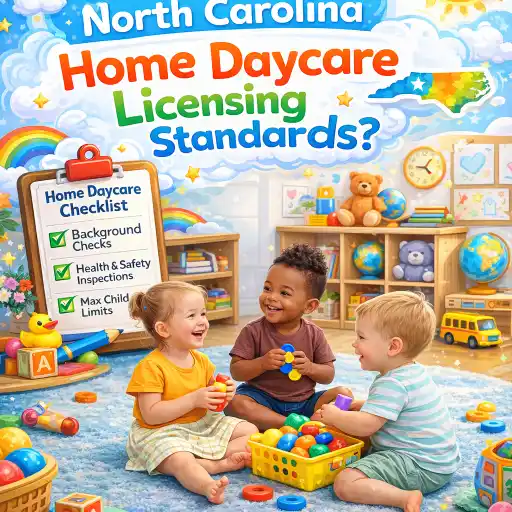
1. Decide your program type:
- 🏠 Family child care home (operator lives at the home): more than 2 and less than 11 children. See How to Open a Home Daycare in North Carolina.
- 🏫 Child care center: different rules for larger groups (see G.S. 110-91).
2. Gather required items (numbered):
- Floor plans, color photos, and zoning approval.
- Background check and fingerprint forms (start in NC ABCMS).
- Training certificates and health forms for staff.
- Application fees and the completed initial license application. See the licensing steps at NC DHSR ACLS.
3. Turn in your packet and schedule inspections with your county licensing worker. For a friendly checklist aimed at home providers, use ChildCareEd’s starter guide. These steps help you meet #licensing rules and protect your #home business.
2) What safety, space, and health rules must I meet?
Safety and health are the top priorities. The law and state rules set the basics (see G.S. 110-91 and 10A NCAC Chapter 09).
Important steps you can do now:
- 🔍 Measure and zone rooms: plan play, rest, eating, and diapering spaces. Use the ChildCareEd room checklists in How to Open a Home Daycare.
- 🧰 Childproof: cover outlets, anchor furniture, lock medicines and cleaners, remove small choking hazards.
- 🚒 Fire and emergency readiness: install smoke and CO detectors, post evacuation maps, keep a fire extinguisher, and practice drills. Keep drill logs for inspection.
- 🧼 Sanitation: follow the public health sanitation rules referenced in G.S. 110-91. Keep cleaning logs and wash toys regularly.
- 🛏️ Infant safe sleep: follow ITS‑SIDS training and safe sleep policies from NC Healthy Start. Providers must place babies on their backs and keep cribs clear of soft items.
Why this matters: safe spaces reduce accidents and illness, and show families you care. Keep a tidy licensing binder with photos, floor plans, cleaning logs, and drill records to make inspections easier. These steps protect children and build trust with #families. state requirements vary - check your state licensing agency.
3) What training, staff qualifications, and background checks are required?
Staff and household members must meet education, training, and criminal history rules. The details are in NC rules like 10A NCAC Chapter 09 and the criminal check law G.S. 110-90.2.
Key items:
- 📚 Training basics: pediatric CPR/First Aid, Basic Health & Safety, ITS‑SIDS for infant care, and medication rules where needed. ChildCareEd lists NC-approved trainings and courses at In-Home Daycare Requirements.
- 🔐 Background checks and fingerprints: submit state and FBI checks before employment. See detailed rules in 10A NCAC 09 .2703. Provisional staff may work under supervision while checks process.
- 🎓 Teacher and administrator qualifications: lead teachers usually need a high school diploma plus the NC Early Childhood Credential or an approved equivalency. Check DCDEE WORKS: Teacher Requirements and Administrator Requirements.
Keep staff files with training certificates, qualification letters, and re-check dates. Criminal history rechecks are required every five years. Good records help you meet rules and keep children safe. Put reminders on a calendar so no one’s #training or background check lapses.
4) How do I stay compliant, avoid common mistakes, and answer families’ top questions?
Staying compliant is about steady habits and clear paperwork. Use the tips below to avoid stress and keep your license in good standing.
Common mistakes and how to avoid them:
- ⚠️ Missing renewals — Set calendar reminders for CPR renewals, training renewals, and fingerprint rechecks (every five years).
- 📂 Piled-up paperwork — Do a 10-minute weekly file check: child files, staff files, cleaning logs, and drill records.
- 👥 Over-enrolling — Always follow staff/child ratios. For exact ratios see 10A NCAC 09 .0713 or ChildCareEd’s ratios guide at NC Ratios and Group Sizes.
Quick tips for daily operation (numbered):
- 📋 Keep a licensing binder for inspections with everything easy to find.
- 🤝 Share a clear parent handbook with hours, fees, sick policies, and safe sleep rules. Use ChildCareEd templates like the Medication Administration Template Buy Now $0.00.
- 📣 Communicate often with families. Daily notes and quick messages build trust with #families.
FAQ (short):
- Q: How many children can I care for in a home? A: Usually more than 2 and fewer than 11 for a family child care home; check NC rules and your county licensing worker.
- Q: Do I need CPR/First Aid? A: Yes — pediatric CPR and First Aid are usually required.
- Q: Can staff start before fingerprint results come back? A: Provisional staff may work under supervision; follow the guidance in 10A NCAC 09 .2703.
Following these steps keeps your program safe, trusted, and ready for inspections. Keep your focus on children’s #safety and continuous improvement. Use local licensing staff and trusted resources like ChildCareEd and DCDEE when you need help.
Summary
1) Pick the right license and gather application items. 2) Make your space safe and follow public health and safe-sleep rules (see NC Healthy Start). 3) Keep staff trained, qualified, and cleared by criminal history checks. 4) Use simple routines: a licensing binder, weekly file checks, and calendar reminders.
Remember: state requirements vary - check your state licensing agency. You are doing important work for children and #families — small steady steps make your program stronger and safer.
- Lista para Abrir una Guardería en Casa en Carolina del Norte: Cómo Empezar
- Lista para Abrir una Guardería en Casa en Dakota del Norte: Cómo Empezar
- Cómo Trabajar en el Cuidado Infantil en Virginia: Requisitos y Pasos
- Best Daycare Field Trip Ideas in North Carolina
- In-Home Daycare Requirements in North Carolina
- Daycare Center Requirements in North Carolina
- How to Get a Daycare License in North Carolina
- Daycare Teacher Certification Requirements in North Carolina
- How to Become a Licensed Childcare Provider in North Carolina
- Daycare Jobs in North Carolina: How Old Do You Have to Be?
- How to Become a Daycare Director Without a Degree
- Starting an In-Home Daycare in North Carolina: Requirements and Tips
- North Carolina Home Daycare Licensing Standards
- How Many Kids Can You Watch Without a License in North Carolina?
- Grants for In-Home Daycare Providers in Wisconsin
- What Counts as Training Hours for Daycare? Clock Hours, CEUs, and Licensing Explained
- Can You Become a Daycare Lead Teacher Without a Degree?
- What Certifications Do I Need to Open a Child Care Center? Owner vs. Director Requirements Explained
- Do You Need a Childcare License to Watch Kids in Your Home?
- Can You Open a Daycare Just for Children With Special Needs? Licensing, Training, and Staffing Explained
