A broken family photo, small toy, or comfort object can feel like a major loss to a young child—and your response can help restore their sense of safety and trust. The ChildCareEd course Trauma-Sensitive Care: Supporting Young Children with Empathy  Buy Now $16.00 offers deeper learning about responding to children and families with compassion; it can help you strengthen trauma-sensitive classroom practices and professional knowledge. Read on for a practical approach you can use in the moment and when partnering with the family.
Why can a broken item from home feel so significant?
A treasured object may connect a child to family, culture, a familiar routine, or a person they miss during the day. For an infant or young child, a blanket, small toy, or keepsake can also provide comfort in an unfamiliar setting. When it breaks, the child may experience sadness, anger, worry, or a sense of lost security—not simply disappointment about a possession.
Adults may be tempted to say, “It’s only a toy,” or to quickly offer a replacement. But minimizing the loss can leave a child feeling misunderstood. Acknowledging the meaning does not require you to know exactly why the object matters. Start with curiosity and respect: “You really care about this bear. It’s hard to see that it broke.”
Children’s reactions will vary. Some may cry or become quiet; others may yell, throw the pieces, or move away. As NAEYC’s guidance on helping children understand and manage emotions emphasizes, responsive adult support can help children make sense of strong feelings and develop regulation skills.
- Recognize the meaning the child may attach to the item without assuming.
- Make room for the child’s feelings while keeping everyone safe.
- Remember that comfort and connection come before problem-solving.
What should you do in the first moments after it breaks?
Pause, check safety, and regulate your own response before speaking. If the object has sharp edges, loose parts, or other hazards, calmly move it out of reach and follow your program’s safety procedures. Avoid blaming the child or rushing to determine fault. A calm, attentive adult helps the child feel that the situation is manageable.
Use short, concrete language and offer a tentative feeling label rather than insisting on one. For example: “The little wheel came off. You look upset. I’m here.” If the child does not respond, stay nearby and allow time. Young children may need a trusted adult’s calm presence before they can listen, speak, or make choices.
Try a simple sequence:
- Connect: Get to the child’s level if appropriate and acknowledge what happened.
- Comfort: Offer presence, a quiet space, or a familiar calming choice without forcing it.
- Coach: When the child is ready, ask whether they want to look at the item together or wait before deciding what to do.
🧸 You might say, “You can sit with me while we look at it, or we can leave it here for now.” If the child declines, respect that choice while maintaining supervision and safety. Avoid lengthy explanations, demands to “calm down,” or promises that the item can definitely be repaired.
How can you validate feelings while maintaining safety?
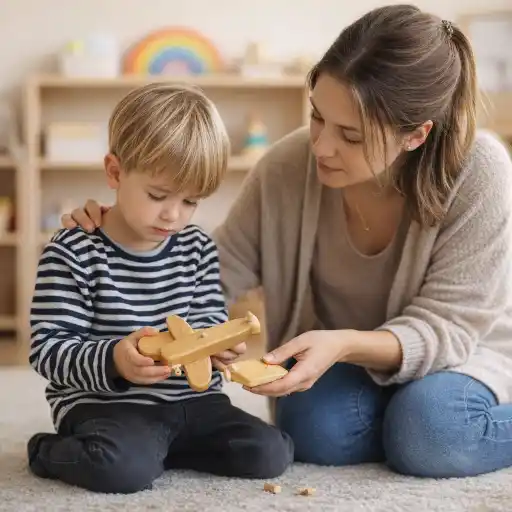
Validation means recognizing a child’s emotional experience; it does not mean approving unsafe actions or promising a particular outcome. You can say, “You’re angry that your car broke. I won’t let you throw the pieces. I’ll help keep them safe.” This communicates both acceptance and a clear boundary.
During intense distress, keep words brief and reduce stimulation where possible. A child may need to cry, sit close to a trusted provider, or have some space within sight. Offer one or two realistic choices, not a stream of questions. The goal is not to stop the feeling immediately, but to help the child move through it safely.
Once the child is calmer, help them identify what might support them now. Depending on the child and the situation, that might include:
- Holding a safe, familiar comfort object or looking at a family photo.
- Taking slow breaths together, squeezing play dough, or choosing a quiet activity.
- Drawing the object, telling a story about it, or asking an adult to stay nearby.
- Deciding whether the pieces should be saved for the family to inspect.
Do not require an apology or a detailed explanation in the middle of distress. If another child or adult was involved, address accountability and repair later, when the child can participate. The ChildCareEd article What Is Co-Regulation and Why Does It Matter in Early Childhood? explains why children often need adult support before they can use coping strategies independently.
How should you handle the item and communicate with the family?
Be transparent, factual, and prompt. First secure the item and any loose pieces, keeping potential hazards away from children. Do not attempt a repair, discard the item, or send pieces home without following program policy and communicating with the family. A well-intended fix may change the object in a way the family does not want—or may not be safe.
When speaking with the family, share what you observed without speculation or defensiveness. Explain when and where the break happened, what the child was doing, how staff responded, and where the item is now. A simple message might be: “During free play, the clasp on Sam’s bracelet came loose. We set the pieces aside and stayed with Sam while they were upset. The bracelet is in a labeled bag for you.” If the cause is unclear, say so honestly.
Invite the family’s perspective and preferences. Ask whether the object has a particular meaning, whether they would like the parts returned, and what language or comfort routine might help the child. This is especially valuable when the item reflects a family tradition or has personal significance that staff may not know.
- Follow center procedures for incident communication and documentation.
- Protect the child’s privacy; share details only with relevant staff and caregivers.
- Listen to the family’s concerns before proposing a repair or replacement.
State requirements vary - check your state licensing agency and program policies for relevant documentation, supervision, and incident-notification expectations.
How can you support recovery and prevent avoidable problems?
There may be no quick fix. If the item can be repaired, let the family decide whether and how. If it cannot be repaired, avoid suggesting that an identical replacement will erase the loss. The child may benefit more from having their feelings recognized, telling the story of the object, or choosing a small next step with a trusted adult.
When the child is ready, support age-appropriate agency: “Would you like to put the pieces in this container for your family, or draw a picture of your bear?” A toddler may choose by pointing; a preschooler may explain what they hope will happen. Accept silence, gestures, or a change of mind. Revisit the conversation only if the child welcomes it or needs support.
Programs can reduce avoidable breakage without making children feel that meaningful possessions are unwelcome. Work with families to plan where personal items are stored, identify which objects are safe for classroom use, and clarify how staff will handle delicate keepsakes. Consider a labeled cubby or a designated place for objects that should remain close but not be used in active play.
- Ask families about the object’s significance and the child’s comfort routines.
- Set predictable expectations for where personal belongings are kept.
- Check items for choking, breakage, or other safety hazards before use.
- Use neutral observation to notice whether certain transitions or activities put items at risk.
These thoughtful steps support both the child’s emotional security and the program’s responsibility to provide safe care.
Conclusion: What is the most helpful response?
When a treasured item from home breaks, respond to the child’s experience—not only to the damaged object. Check safety, stay calm, acknowledge the possible loss, and offer comfort without minimizing feelings or promising what cannot be guaranteed. Once the child is ready, support a manageable choice and communicate openly with the family about what happened and what happens next.
For providers and directors, the key takeaways are simple:
- Connection and emotional validation come before problem-solving.
- Use clear safety limits while treating the child with respect.
- Handle the object according to program policy and family preferences.
- Plan with families for how meaningful personal belongings can be protected in care.
A broken keepsake can become a moment of trust-building when adults respond with steadiness, honesty, and care. Your calm presence helps children learn that hard feelings can be shared and that supportive adults will help them through.
Further professional learning:
- 45 Hour Child Growth and Development
- Bienvenido! Welcoming All Families
- CDA Family Child Care Credential with Portfolio Review
- Pediatric RSV First Aid & CPR/AED
- 45 Hour School Age Methods and Materials
- CDA Bridge Bundle: Family Child Care without Portfolio Review
- CDA Bridge Bundle: Infant/Toddler without Portfolio Review
- Texas Director Credential
- 😫🧸 ¿Qué hacer cuando un bebé no quiere dormir la siesta en el aula?
- Recursos en Español sobre el Sueño Seguro del Bebé
- ¿Cuáles son las mejores actividades del Día de la Tierra para niños en casa o en el aula?
- ¿Cómo solicito la licencia para una guardería en California?
- Regulaciones de Licenciamiento de Cuidado Infantil en California para Centros y Hogares de Cuidado Infantil Familiar
- Normas de Licenciamiento de Cuidado Infantil en Virginia para Centros Diurnos Infantiles y Hogares Diurnos Familiares
- Proporciones de Cuidado Infantil y Tamaños de Grupo por Edad en Maryland (Guía Rápida para Centros y Hogares)
- Proporciones de Cuidado Infantil y Tamaños de Grupo por Edad en Virginia (Guía Rápida para Centros y Hogares)
- Lista para Abrir una Guardería en Casa en Virginia: Cómo Empezar
- Lista para Abrir una Guardería en Casa en Carolina del Norte: Cómo Empezar
- Lista para Abrir una Guardería en Casa en Dakota del Norte: Cómo Empezar
- Lista para Abrir una Guardería en Casa en Georgia: Cómo Empezar
- Lista para Guardería en Casa en California: Cómo Iniciar una Guardería en el Hogar
- Lista para Guardería en Casa en Texas: Cómo Iniciar una Guardería en el Hogar
- Retraso del Habla en la Guardería: Cómo Pueden Ayudar los Proveedores
- Cómo Trabajar en el Cuidado Infantil en California: Requisitos y Pasos
- Capacitación Previa al Servicio para Proveedores de Cuidado Infantil en Georgia
- Capacitación Previa al Servicio para Proveedores de Cuidado Infantil en Virginia
- How Should Child Care Providers Respond When a Treasured Item from Home Breaks?
- “That’s Mine—I Have One at Home!” How Can Children Learn What Belongs at Home and What Is Shared at School?
